
Why Cellar Doors Matter More Than Most Property Owners Realize
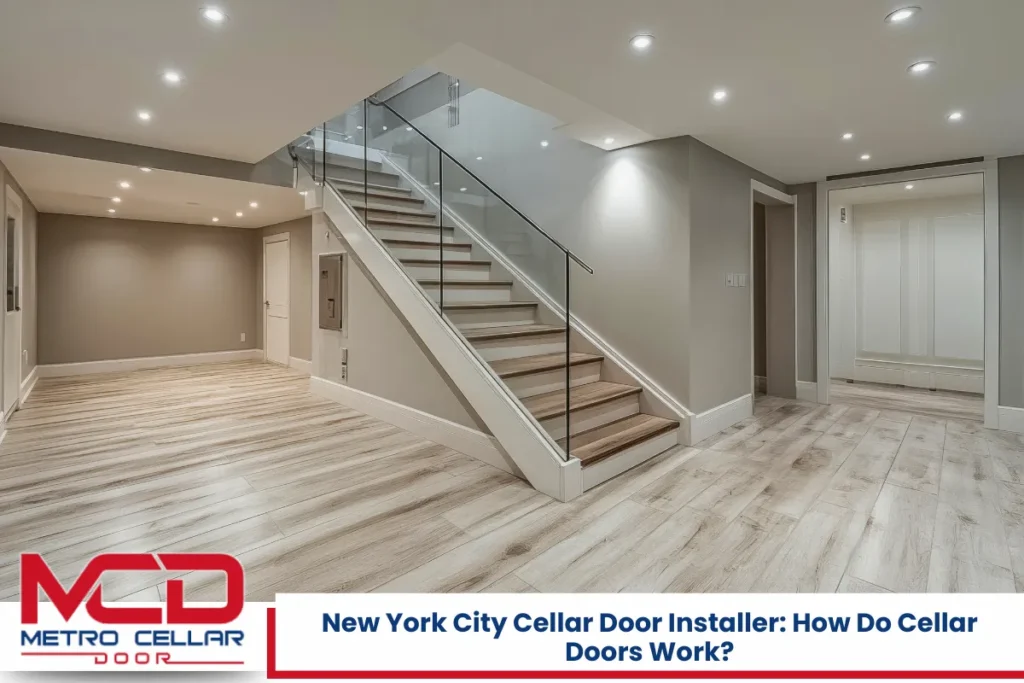
New York City Cellar Door Installer is a phrase many property owners search only after a problem becomes unavoidable. Rusted panels, warped frames, water leaks, or unsafe access points often go unnoticed until they cause structural damage or code violations. In dense urban environments, cellar doors do far more than cover an opening; they protect basements from flooding, maintain safe egress, and preserve the integrity of the building envelope. When these systems fail, moisture intrusion, pest entry, and safety hazards quickly follow. The solution begins with understanding how cellar doors function, how they are built, and how proper installation ensures long-term performance. This article explains how cellar doors work in New York City, what regulations govern them, and what property owners should know before repair or replacement.
The Role Cellar Doors Play in New York City Buildings
Cellar doors are exterior access systems designed to provide entry to below-grade spaces, commonly basements and cellars. In New York City, these doors are most often found on sidewalks, front yards, rear alleys, or are built into the foundation wall of residential and mixed-use buildings.
Unlike interior doors, cellar doors must withstand constant exposure to weather, foot traffic, and temperature changes. Their purpose goes beyond access. Properly designed systems manage water runoff, prevent air leakage, and maintain security.
In many boroughs, cellar doors are also part of emergency egress planning. Buildings that store mechanical systems, boilers, or commercial inventory rely on safe cellar access to meet operational and safety requirements.
How Cellar Doors Work From a Structural Perspective
Framing and Opening Integration
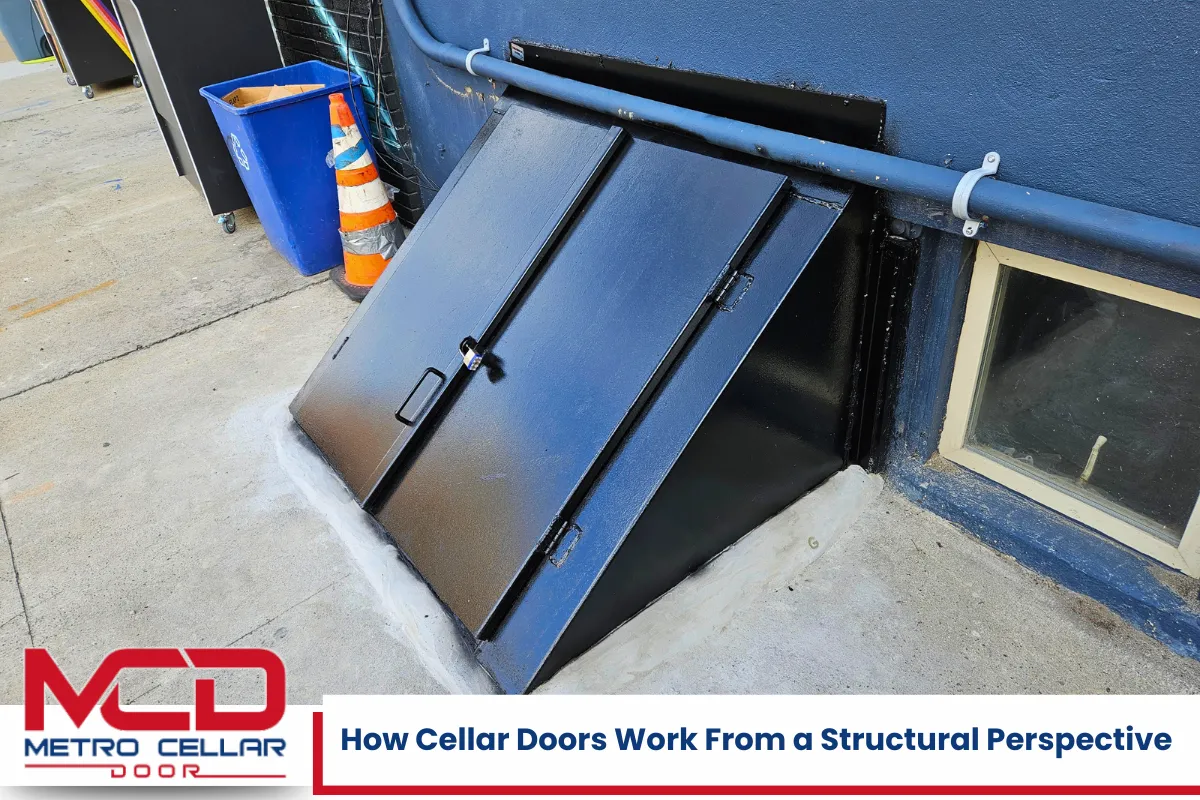
A cellar door system begins with a framed masonry or concrete opening. The opening must be square, level, and structurally sound. The door frame is anchored directly into the foundation wall or slab, creating a sealed interface between the building and the exterior environment.
The frame supports the door panels and distributes load evenly. In sidewalk installations, it must also bear pedestrian weight and occasional equipment loads.
Door Panels and Hinges
Most cellar doors use paired panels that open outward or upward. Heavy-duty hinges allow the doors to swing open while supporting significant weight. These hinges are typically welded or bolted to reinforced frames to prevent sagging over time.
Counterbalance systems, including torsion springs or gas-assisted mechanisms, may be incorporated to allow safer and easier opening, especially for larger steel doors.
Weatherproofing and Drainage
Cellar doors rely on perimeter seals, overlapping edges, and sloped surfaces to shed water. When properly installed, rainwater flows away from the opening rather than pooling at the threshold.
Drainage channels or subsurface drains are often installed beneath sidewalk cellar doors to redirect water away from the foundation. This is especially important in New York City, where heavy rainfall and aging infrastructure increase flood risks.
Materials Commonly Used in Modern Cellar Doors
Galvanized Steel Systems
Galvanized steel is the most common material used in cellar doors across New York City. The zinc coating protects the steel from corrosion caused by moisture, road salt, and pollutants. These systems are known for durability and load-bearing strength.
Powder-Coated Finishes
Powder coating adds an extra layer of protection and allows for improved aesthetics. This finish helps resist chipping and fading, making it suitable for residential properties where appearance matters.
Aluminum and Composite Options
While less common in sidewalk applications, aluminum and composite materials may be used in private yard or rear-access installations. These materials offer corrosion resistance but may require additional reinforcement to meet load requirements.
Types of Cellar Doors Found in New York City
Sidewalk Cellar Doors
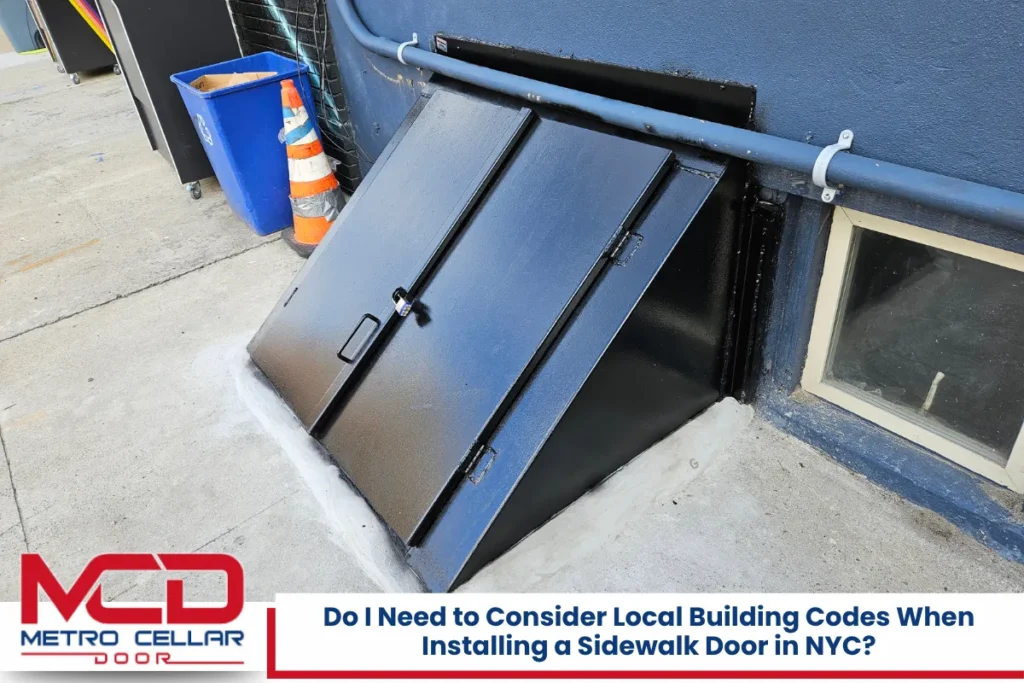
These are installed flush with the sidewalk and must comply with strict load and safety standards. They are designed to support pedestrian traffic and are often required to include anti-slip surfaces.
Areaway and Yard Cellar Doors
Areaway doors are typically installed in front yards or below-grade courtyards. These systems may include stairwells leading to basement entrances and often incorporate handrails and guard systems.
Bulkhead-Style Cellar Doors
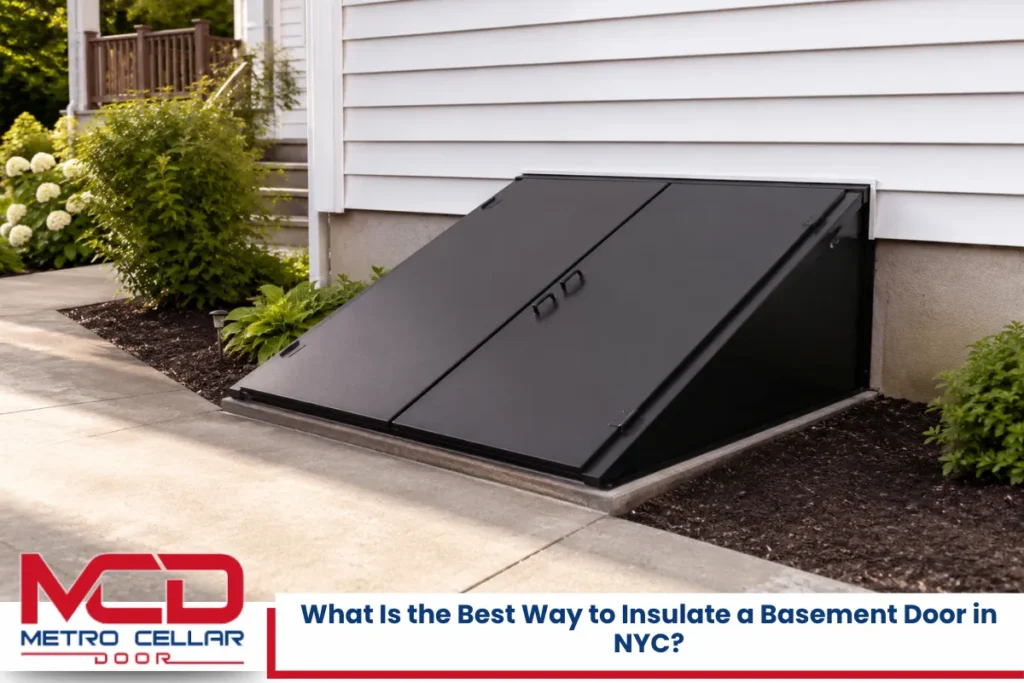
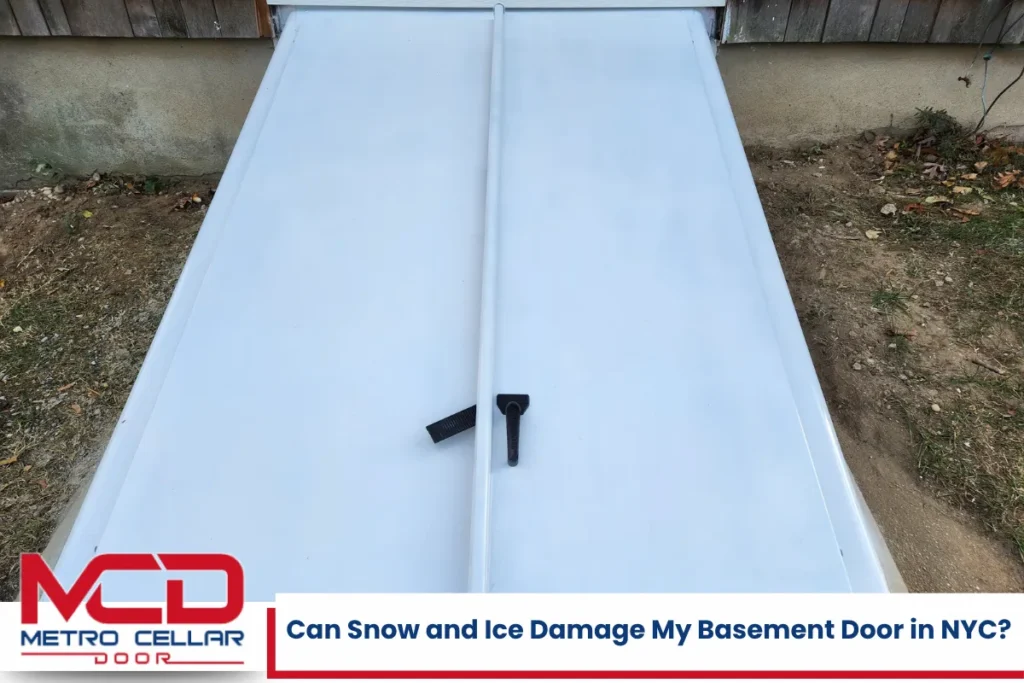
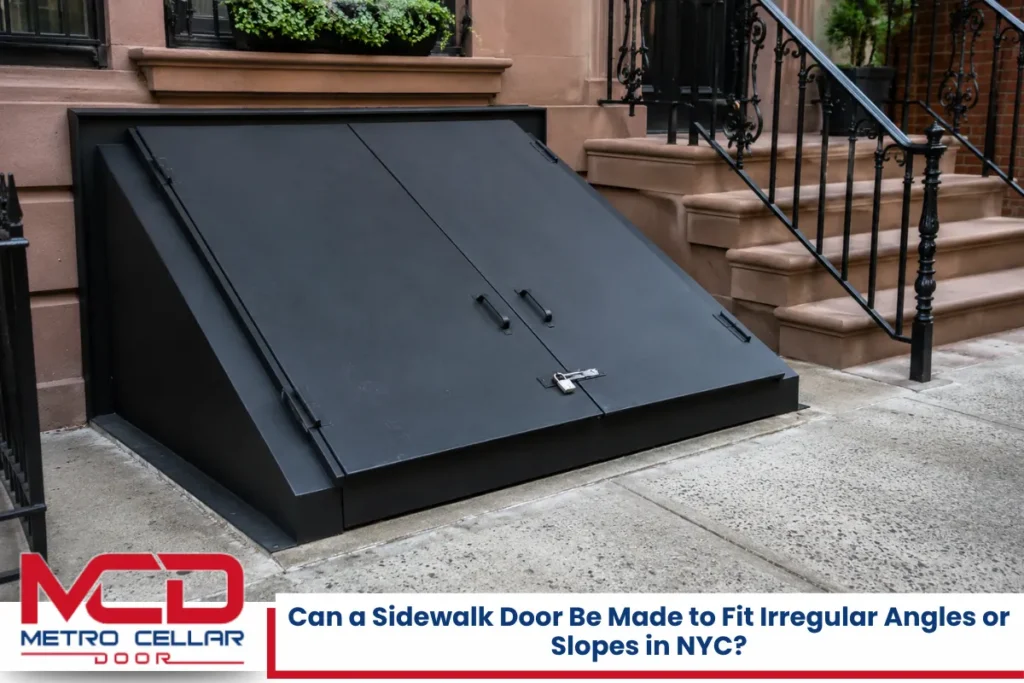
Bulkhead doors slope upward from the foundation wall and are commonly used in residential settings. They provide wide access for equipment and materials and are often paired with exterior basement stairs.
How New York City Regulations Affect Cellar Door Installation
Cellar doors in New York City are regulated by the New York City Building Code and enforced by the New York City Department of Buildings. These regulations address safety, structural integrity, and public accessibility.
Load-Bearing Requirements
Sidewalk cellar doors must support minimum live loads consistent with pedestrian use. This ensures that doors do not flex or fail under normal conditions.
Accessibility and Safety Standards
Doors must be properly secured, self-closing when required, and free from trip hazards. Hardware must function smoothly to prevent sudden closure or uncontrolled movement.
Permits and Inspections
Most cellar door replacements or structural modifications require permits. Inspections verify that installations meet code and do not compromise adjacent sidewalks or building foundations.
Failure to comply can result in violations, fines, or mandatory corrective work.
Read New York City Cellar Door Installer: Are Cellar Doors Safe?
Why Proper Installation Matters More Than the Door Itself
Even high-quality cellar doors can fail if installed incorrectly. Common issues include improper slope, inadequate sealing, and insufficient anchoring.
Poor installation may lead to:
- Chronic water leaks into the basement
- Accelerated corrosion
- Uneven door operation
- Safety hazards for occupants and pedestrians
Professional cellar door installer services ensure precise measurements, proper anchoring, and compliance with city requirements.
Signs Your Existing Cellar Door Is No Longer Working Properly
Property owners should watch for early warning signs that indicate replacement or repair may be necessary:
- Visible rust or corrosion on panels and hinges
- Water infiltration after rainfall
- Doors that are difficult to open or close
- Warped frames or misaligned panels
- Failing seals or missing hardware
Addressing these issues early can prevent more extensive structural damage.
Maintenance Practices That Extend the Life of Cellar Doors
Routine maintenance plays a major role in preserving cellar doors in New York City’s harsh climate.
Recommended practices include:
- Cleaning debris from hinges and drainage channels
- Inspecting seals annually
- Touching up protective coatings when damaged
- Lubricating moving parts to prevent binding
Regular inspections help identify small problems before they escalate.
The Installation Process Explained Step by Step
Site Evaluation and Measurement
Accurate measurements ensure the door fits the opening without gaps or stress points. Existing conditions, drainage patterns, and surrounding surfaces are assessed.
Removal of Existing Door
Old systems are carefully removed to avoid damaging masonry or concrete. Any compromised framing is repaired before installation.
Frame Setting and Anchoring
The new frame is leveled, squared, and anchored according to manufacturer and code requirements.
Door Panel Installation and Adjustment
Panels are installed, hinges adjusted, and counterbalance systems calibrated for safe operation.
Final Sealing and Testing
Weather seals are applied, drainage paths confirmed, and the door is tested for smooth, secure function.
New York City Cellar Door Installer – Metro Cellar Door Bilco Pro
We specialize in professional cellar door installer services tailored to New York City buildings. At Metro Cellar Door Bilco Pro, we understand how cellar doors work, how local regulations apply, and how critical proper installation is for safety and longevity. Our team handles everything from evaluation and permitting to precision installation and final inspection. We work on sidewalk cellar doors, areaway systems, and bulkhead-style installations with a focus on durability and code compliance. If your cellar doors are leaking, rusted, or no longer safe, we are ready to help. Call us at (929) 979-7313 or fill out our contact form to schedule a consultation with a trusted Cellar Door Installer in New York City.
Frequently Asked Questions
Do cellar doors need to be watertight or just weather-resistant?
Cellar doors are designed to be weather-resistant rather than completely watertight. In New York City, exterior cellar doors must shed rain and snow efficiently while preventing water intrusion under normal conditions. Proper slope, overlapping panels, intact seals, and functional drainage systems work together to manage water. Fully watertight systems are impractical due to pressure buildup and movement. Instead, code-compliant installations focus on controlled water management and drainage beneath the opening to protect the basement and foundation.
Can cellar doors be customized for historic or older buildings?
Yes, cellar doors can be customized to suit historic or older buildings while still meeting current code requirements. Many older properties have irregular openings or unique masonry conditions that require custom fabrication. Materials, finishes, and profiles can be selected to match the building’s character without compromising structural integrity. Custom solutions often involve reinforced frames and tailored drainage details to address decades-old foundations and settlement patterns common in New York City buildings.
How long does a professionally installed cellar door typically last?
A professionally installed cellar door can last 20 to 30 years or longer, depending on material quality, exposure conditions, and maintenance. Galvanized and powder-coated steel systems tend to offer the longest lifespan in New York City environments. Regular maintenance, such as cleaning, lubrication, and seal inspection, significantly extends service life. Poor drainage or neglected coatings can shorten lifespan even in high-quality installations.
Are sidewalk cellar doors legally allowed on all properties?
Sidewalk cellar doors are only permitted where zoning, property lines, and building conditions allow. They must comply with New York City Building Code requirements and often require permits and inspections. In some cases, property owners may need additional approvals related to sidewalk use or public right-of-way considerations. Each installation is evaluated individually to ensure it does not obstruct pedestrian traffic or compromise sidewalk safety.
What happens if a cellar door fails a city inspection?
If a cellar door fails inspection, the property owner is typically issued a violation requiring corrective action. This may involve repairs, adjustments, or full replacement depending on the severity of the issue. Common reasons for failure include structural weakness, improper anchoring, trip hazards, or inadequate load capacity. Addressing violations promptly is important to avoid fines, legal liability, or additional enforcement actions.
Disclaimer: This article is for general informational purposes only and does not constitute legal, engineering, or construction advice. Requirements may vary by property and location. Always consult qualified professionals and local authorities for project-specific guidance.
Read Cellar Door Installer in Newark, NJ: What Are Cellar Doors Used for?