
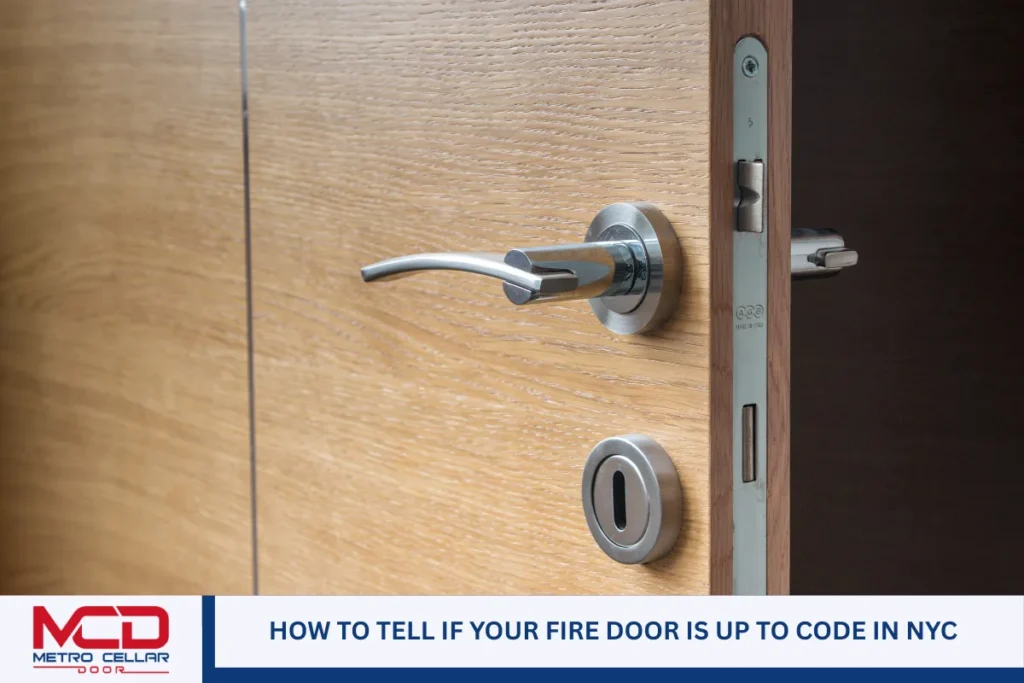
Why Fire Door Code Compliance Isn’t Optional in NYC
A fire door installer ensures that doors meet New York City’s strict fire safety standards. Still, even a professionally installed door can fall out of compliance if overlooked. In NYC, building regulations are exacting, especially when it comes to fire protection. Fire-rated doors are required in specific areas of residential and commercial buildings to slow the spread of flames and smoke during emergencies.
Yet many property owners assume their doors are compliant simply because they function like any other. That assumption can lead to violations, fines, and serious safety risks. Fire doors must meet specific construction, labeling, and performance criteria set by the city and national codes. Knowing how to assess whether a door is still up to code—and what features to look for—is essential for passing inspections and keeping people safe. This guide explains the standards that apply in NYC, how to check your existing doors, and what to do if they’re not fully compliant.
Understanding Fire Door Codes in NYC
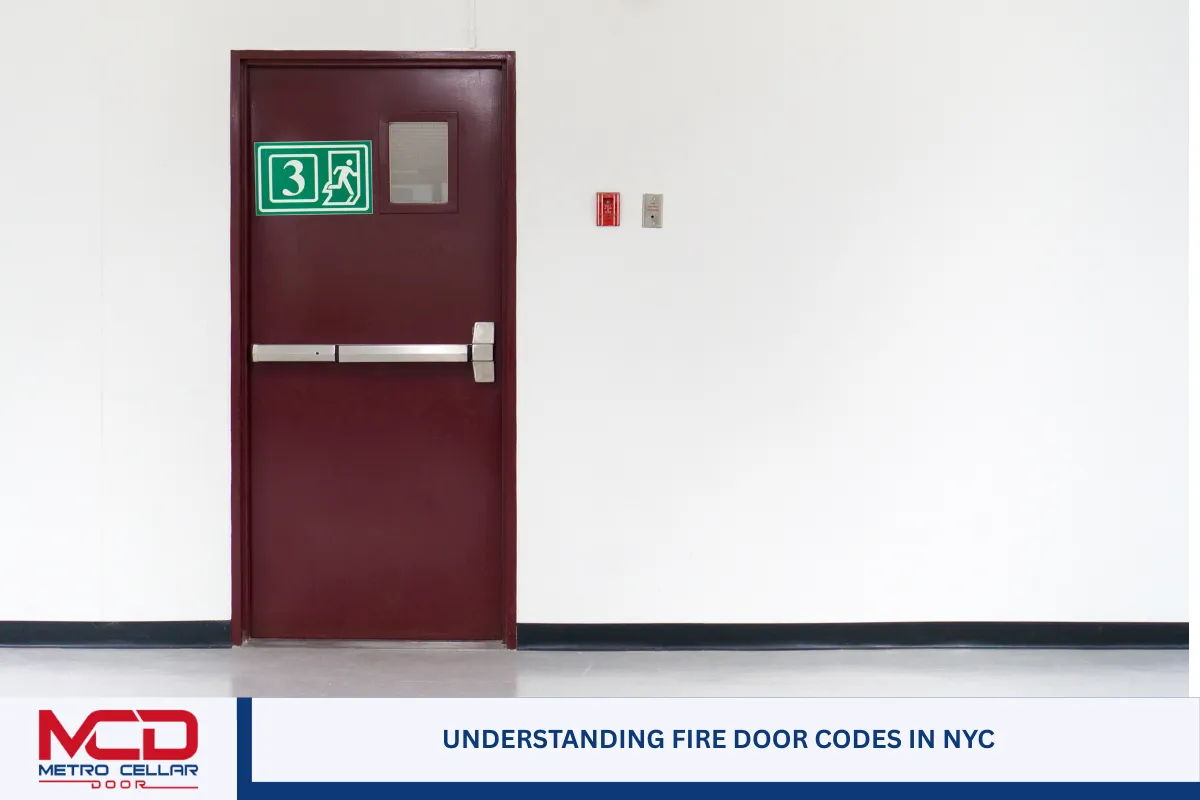
Fire doors serve as barriers that prevent the spread of smoke, heat, and flames through hallways, stairwells, and exit routes. Their main purpose is to compartmentalize fires, allowing occupants more time to escape and reducing structural damage. NYC’s unique building density and strict fire codes make these doors an essential part of construction and maintenance protocols.
In New York City, fire door compliance is governed by the NYC Building Code and the Fire Code administered by the FDNY. These codes establish detailed requirements for fire-resistance ratings, locations, materials, hardware, and installation procedures. Buildings classified under certain occupancies—like residential towers, commercial offices, hotels, and schools—must meet specific thresholds for fire protection, including where and how fire doors are installed.
Fire-rated doors are evaluated by national testing agencies such as UL (Underwriters Laboratories) and Intertek (Warnock Hersey). The door, frame, and associated hardware must be tested and certified as a complete assembly. The certification verifies how long the door can withstand fire—commonly 20, 45, 60, or 90 minutes. This rating determines its legal placement in a structure.
Compliance also includes adhering to NFPA 80, the national standard for fire door installation and maintenance, which NYC recognizes. It mandates annual inspections, proper recordkeeping, and strict limitations on door alterations.
What Makes a Fire Door Code-Compliant in NYC
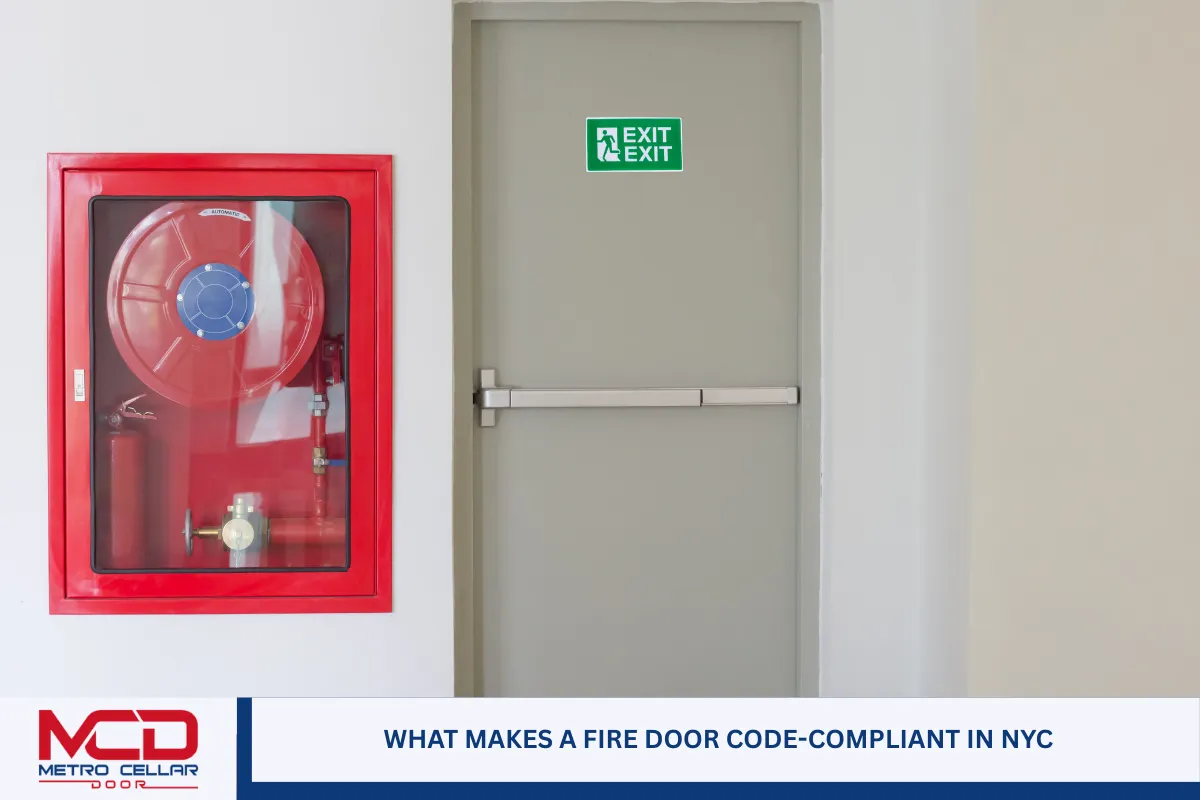
Fire doors must meet several physical and performance requirements to be considered compliant with NYC codes. Simply having a metal or heavy wooden door does not make it fire-rated or legal. The components, assembly, and installation process all matter.
Permanent Certification Label
Every fire-rated door must have a visible and legible certification label affixed by the manufacturer. This label is often found on the top edge or hinge side of the door. It provides critical information, including:
- The fire-resistance rating (e.g., 90 minutes)
- Manufacturer’s name
- Testing agency (UL, WHI, etc.)
- Serial number for verification
Any label that is missing, painted over, damaged, or unreadable invalidates the door’s certification. During inspections, unlabeled doors are automatically flagged as non-compliant.
Proper Fire-Rated Hardware
All hardware—hinges, latches, door closers, and vision panels—must be approved for use with fire-rated doors. For example:
- The door closer must ensure full, automatic closure from any open position.
- Latching hardware must secure the door without requiring a key or special tool.
- Any glass insert must be labeled as fire-rated and must be part of a tested assembly.
Substituting or modifying this hardware without approval compromises the door’s fire rating and results in violations.
Smoke and Intumescent Seals
Many NYC fire doors require smoke-resistant seals or intumescent seals. These components expand when exposed to heat, sealing gaps between the door and the frame to prevent smoke penetration.
Seals must be:
- Intact and unbroken
- Properly adhered to the door or frame
- Certified for the specific fire rating
Missing, brittle, or poorly installed seals reduce the door’s effectiveness and may lead to non-compliance during inspection.
No Unauthorized Modifications
Fire doors cannot be altered beyond their certified configuration. This means no drilling for new locks, adding mail slots, or trimming the door to fit a frame. Even minor changes can invalidate the fire rating.
Fire-rated doors are tested as a complete unit. Any change to their dimensions, components, or materials removes them from their certified condition and places the building at risk for fire code violations.
Visual and Functional Indicators of Non-Compliance
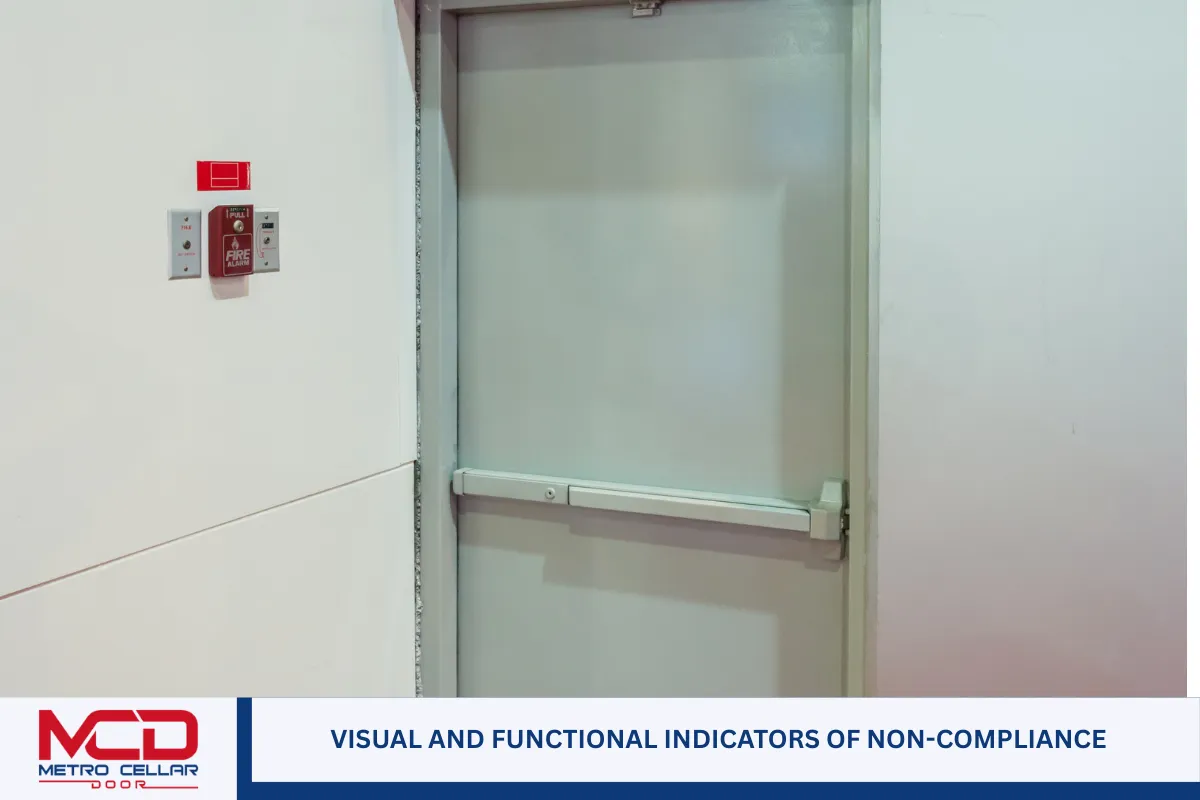
Identifying a non-compliant fire door often requires trained eyes, but several signs can indicate potential problems. Understanding these visual and functional indicators helps property managers address issues before official inspections.
Visible Gaps and Poor Fit
Fire doors must fit snugly within their frames, with no excessive gaps. In NYC, allowable clearance is typically:
- 1/8 inch along the top and sides
- 3/4 inch maximum at the bottom (if undercut is permitted)
Gaps larger than this allow smoke and heat to pass through, defeating the purpose of compartmentalization. Doors that rub against frames or fail to close fully are also red flags.
Failure to Close and Latch Automatically
Doors that do not close completely or latch securely fail compliance. Common causes include:
- Worn-out or missing door closers
- Misaligned frames
- Damaged hinges or latches
All fire doors must be self-closing and self-latching. If someone needs to push or pull the door shut, it’s not up to code.
Obstructions and Door Prop Open Devices
Fire doors are often propped open for convenience, but this is a serious violation. Unless the door is held open by an approved, fire-rated magnetic hold-open device linked to the fire alarm system, it must stay closed.
Wedges, hooks, or other makeshift methods of keeping doors open compromise fire protection and will result in citations.
Signs of Wear, Damage, or Tampering
Check for:
- Dents or holes in the door
- Warped or sagging frames
- Missing hardware or rusted components
- Unapproved locks or security bars
Fire doors in poor condition should be repaired or replaced by a qualified fire door installer as soon as possible.
Inspection, Testing, and Maintenance Requirements
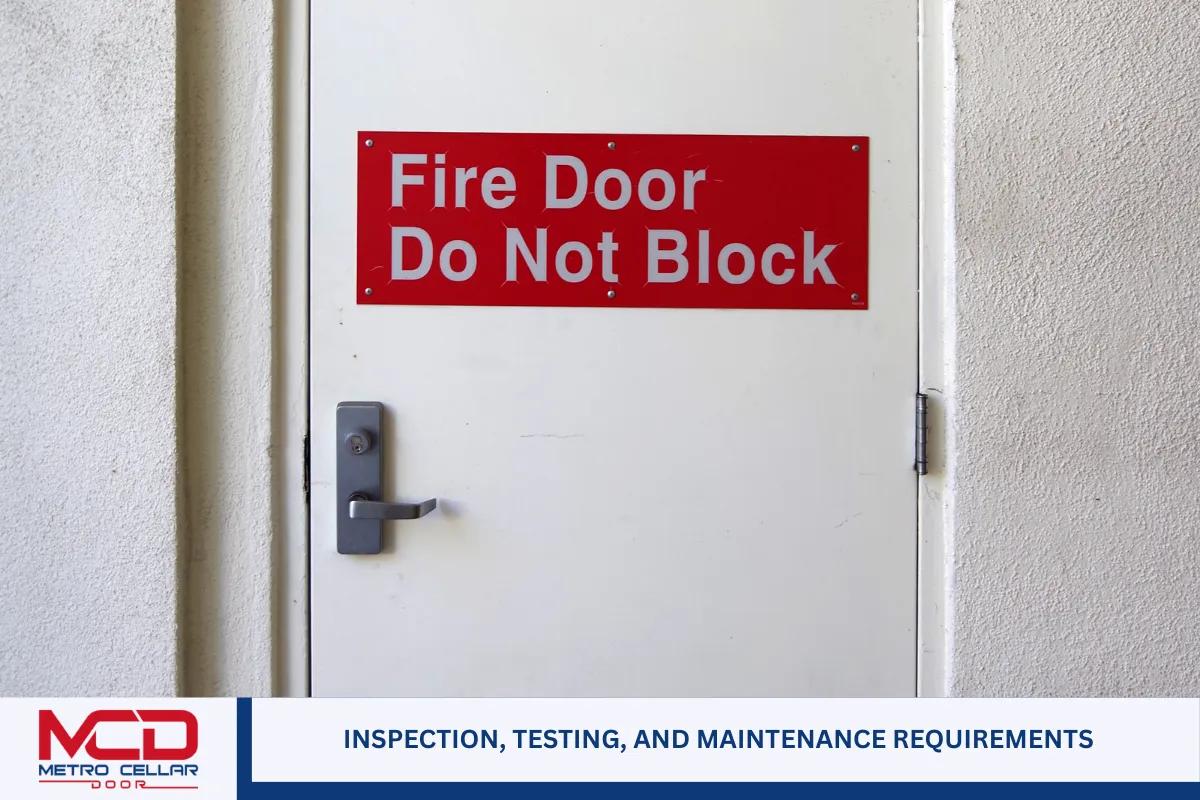
The FDNY and Department of Buildings require all fire-rated doors to be inspected at least once a year. These inspections ensure that doors:
- Remain in their original tested condition
- Operate correctly
- Meet labeling and sealing requirements
Who Performs Inspections
Inspections must be conducted by trained professionals familiar with NFPA 80 and NYC fire codes. Building owners often hire a certified fire door installer or fire protection company for this service. Inspectors review every component of the door assembly, including frame, hardware, seals, and labeling.
Recordkeeping and Documentation
Property managers must maintain detailed inspection records for each fire door. These should include:
- Door location and unique identifier
- Date of inspection
- Inspection results and noted deficiencies
- Corrections made and by whom
Records must be stored and made available to fire officials upon request. Failure to produce documentation during an audit or emergency investigation can result in immediate fines.
Corrective Actions for Non-Compliant Fire Doors
If a fire door is found to be non-compliant, property owners must act quickly. There are a few steps that should be taken to restore compliance:
Consult a Certified Fire Door Installer
Hiring a licensed fire door installer in NYC ensures that all corrective work is completed according to building and fire code requirements. Professionals assess whether a door can be repaired or must be replaced.
Replace or Retrofit Fire Doors
Some doors may be salvageable through repairs, like replacing the closer or sealing gaps. However, doors missing labels or altered beyond acceptable limits must be replaced. Modern fire-rated doors are available in custom sizes and styles to meet both safety and aesthetic needs.
Schedule Re-Inspection
After corrections are completed, a follow-up inspection should be conducted to verify compliance. Keep all updated records for future reference and fire safety audits.
Penalties for Violating NYC Fire Door Regulations
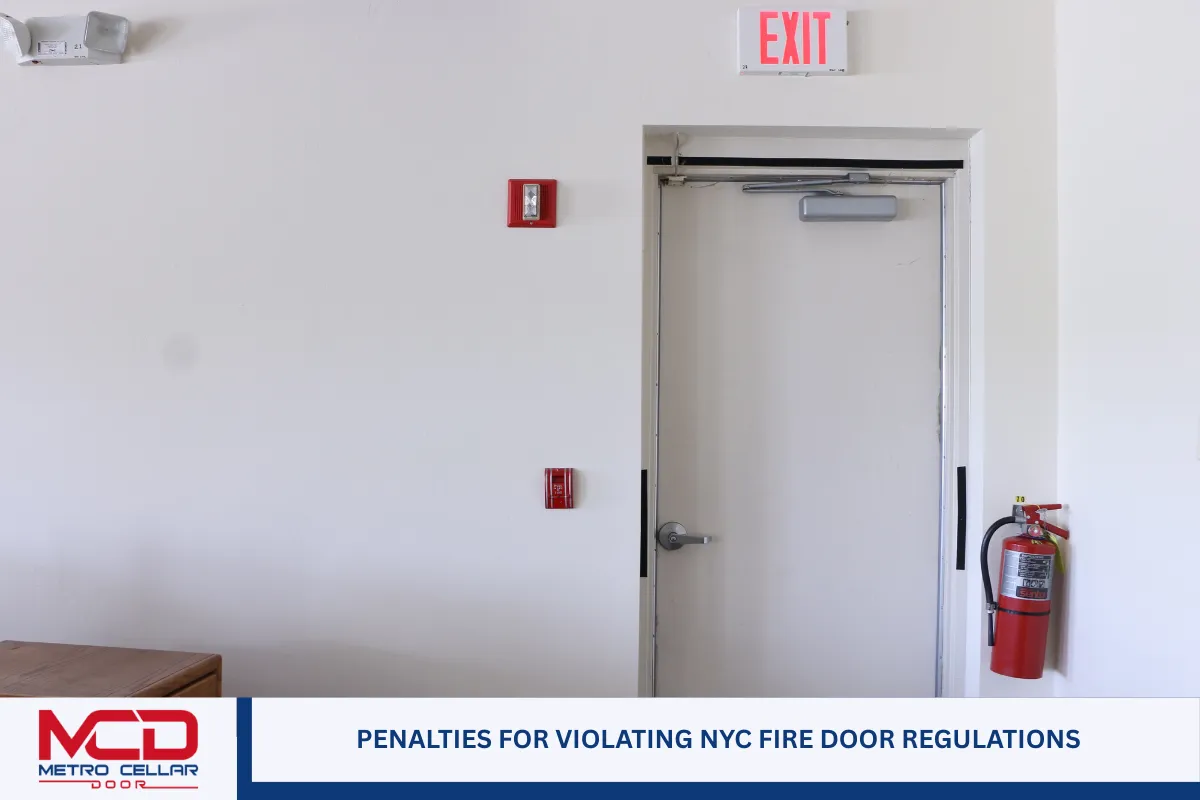
Failure to comply with NYC fire door codes can lead to severe consequences, including:
- Fines: Violations can result in civil penalties ranging from $500 to over $5,000, depending on the building type and nature of the offense.
- DOB or FDNY Summonses: Building owners may receive notices requiring immediate corrective action. Repeat violations increase the likelihood of aggressive enforcement.
- Insurance Issues: Non-compliance may void fire insurance claims in the event of property damage or injury.
- Legal Liability: If someone is harmed due to faulty fire protection systems, the property owner may be held liable in court.
Ensuring Code-Compliant Fire Doors in NYC
Ensuring that your building’s fire doors are up to code is a critical step in safeguarding your property, tenants, and reputation. A code-compliant fire door isn’t just about having a heavy door—it’s about meeting exact standards in materials, labeling, hardware, sealing, and installation. Regular inspections, accurate documentation, and proactive maintenance help you stay ahead of violations and increase your building’s overall safety profile.
Working closely with knowledgeable professionals, especially those familiar with NYC’s unique fire regulations, provides peace of mind and ensures long-term compliance. A certified fire door installer can help you assess, upgrade, or replace doors to meet current codes, avoid fines, and enhance fire protection across your property.
NYC Fire Door Installer – Metro Cellar Door Bilco Pro
Looking for a reliable fire door installer in New York City? Metro Cellar Door Bilco Pro is your go-to team for expert fire-rated door installations that meet all NYC building codes. We specialize in installing durable, code-compliant doors for residential and commercial properties of all sizes.
Our team offers secure and professional solutions, including cellar doors, sidewalk Bilco doors, and custom-fabricated fire doors. Every installation is done with precision and quality workmanship—at the most competitive rates in the city. We also provide free estimates, fast turnaround times, and tailored solutions for unique project needs.
To schedule your fire door inspection or installation, call us today at (929) 979-7313!
Fire Door Compliance FAQ – What NYC Property Owners Need to Know
What’s included in a fire door assembly, and why is it important in NYC?
A fire door assembly is more than just the door itself—it’s a complete system designed to protect life and property during a fire. In New York City, every component must meet fire safety regulations to comply with local fire codes.
The assembly includes:
- The fire-rated door
- The door frame
- Self-closing devices
- Latching hardware
- Gaskets and intumescent seals
- Vision panels (if any) with fire-rated glazing
- The fire door sign (usually on stairwell doors)
Each element must be tested together as one unit. Replacing or modifying a part without approval can break the certification and result in fire code violations. Fire code officials require that the entire fire door assembly functions as a unit to resist heat and smoke for a specific duration.
In NYC, non-compliant assemblies are flagged during inspections and may jeopardize a building’s fire protection systems. Proper installation and regular maintenance by a certified fire door installer ensure compliance and safety.
How does fire detection work with door compliance in NYC buildings?
Fire detection plays a crucial role in supporting fire door operation and evacuation in buildings throughout New York City. When smoke alarms or smoke detectors activate, they trigger automated building responses that may include unlocking fire door assemblies, releasing magnetic hold-opens, or alerting occupants through fire and life safety systems.
These systems work together as part of broader fire protection systems, which include:
- Smoke detection devices (smoke alarms, heat sensors)
- Alarm control panels
- Automated door release systems
- Notification appliances (sirens, strobe lights, voice alerts)
A properly functioning smoke detector ensures that fire doors can close automatically without obstruction. NYC fire codes require that detection systems be installed near fire partitions, exits, and stairwells. Integrating fire door hardware with fire detection is a best practice and often mandatory in newer constructions or high-occupancy buildings.
To ensure everything works as expected, all detection and suppression systems must be tested regularly and supported by current fire protection documentation, as required by local regulations.
What are the most common fire code violations related to fire doors in NYC?
New York City building inspectors frequently cite properties for fire door-related issues. These fire code violations are not just technicalities—they can pose real risks to safety during a fire event. Understanding these violations can help you prevent fines and keep your building protected.
Common violations include:
- Missing or illegible fire door labels
- Propping fire doors open with wedges or hooks
- Damaged door closers or broken latches
- Gaps around the door frame that exceed code allowances
- Blocked or obstructed fire escapes behind non-latching doors
- Use of unauthorized hardware or deadbolts
- Missing or incorrect fire door signage
These violations affect the integrity of fire partitions and fire walls, which are designed to compartmentalize fires. Property owners should work with a professional fire door installer to inspect and correct these issues before they lead to citations. Annual fire risk assessments and regular system checks are also part of NYC’s fire safety regulations and can reduce liability.
How do fire safety facilities and fire protection documentation work together in NYC inspections?
In New York City, maintaining updated fire protection documentation is just as important as having physical fire safety facilities in place. During inspections, fire code officials often request proof that fire and life safety systems are installed, serviced, and operating according to local fire codes.
Fire safety facilities include:
- Fire-rated doors and fire door assemblies
- Sprinkler systems
- Fire extinguishers
- Fire escapes
- Smoke alarms and smoke detectors
- Emergency lighting and evacuation signage
Documentation should cover:
- Installation and service dates
- Inspection reports from certified technicians
- Manufacturer certifications for rated components
- Fire risk assessment results
- Corrective actions taken for past violations
Without proper records, even a fully equipped building can be cited for non-compliance. This paperwork proves that you’ve met the requirements for fire detection, fire door performance, and occupant safety. Keeping your documentation in order is part of the larger system of managing risk, reducing liability, and meeting NYC fire safety expectations.
What is a fire risk assessment, and who should conduct one in NYC buildings?
A fire risk assessment is a structured evaluation of a building’s fire hazards, fire protection systems, and emergency procedures. It’s a foundational part of fire safety planning in New York City, required in many building types, including residential towers, office complexes, and public facilities.
A comprehensive fire risk assessment includes:
- Identifying potential ignition sources
- Evaluating the condition of fire safety facilities (fire doors, alarms, sprinklers)
- Reviewing escape routes and fire escapes
- Assessing the operation of smoke detectors and fire door assemblies
- Verifying compliance with NYC fire codes
- Checking maintenance schedules and documentation
Assessments must be conducted by trained professionals familiar with NYC’s fire safety regulations. This may include certified fire safety managers, licensed fire protection engineers, or experienced fire door installers.
The assessment helps property owners prioritize repairs, improve fire protection systems, and prepare for inspections. It also informs long-term planning and supports compliance with both local and federal fire codes.
Read more: 7 Signs Your Fire Door May Need Repair or Replacement