
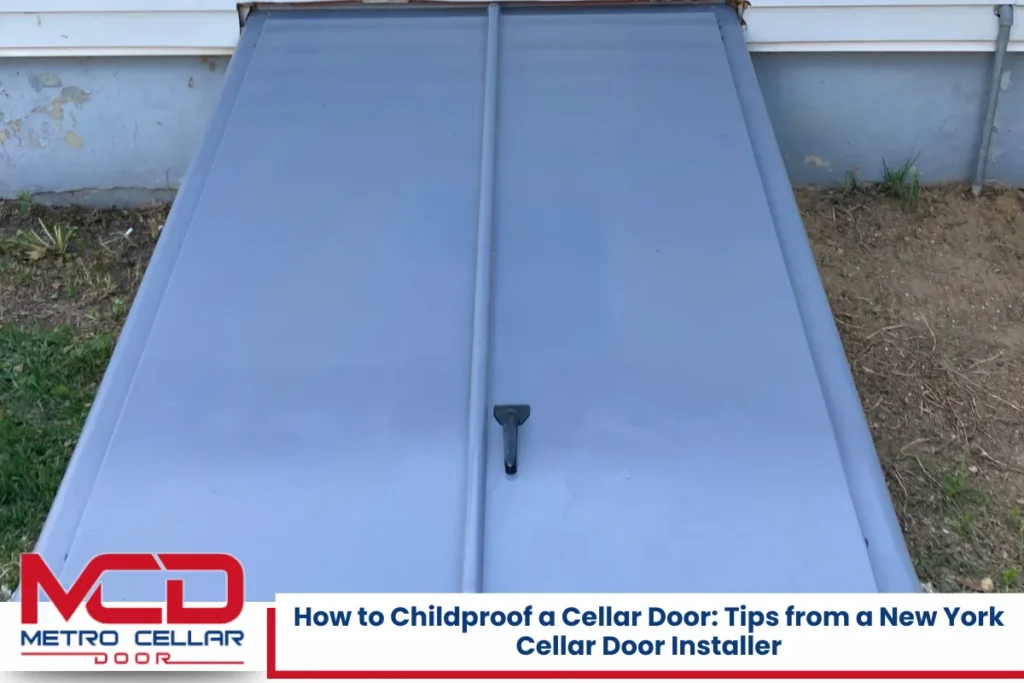
Why Childproofing Your Cellar Door Can’t Wait
As a cellar door installer working across New York, you see the same problem on nearly every job: families living with exterior basement entries that were never designed with small children in mind. Residential cellar doors provide external access to basements, which is convenient for storage and utility work, but that convenience becomes a serious hazard when toddlers are part of the household.
The problem is straightforward. Exterior basement entry doors are heavy, slippery when wet, and routinely missing child-safe hardware. Older brownstones and row houses in Brooklyn and Queens, many built before 1960, still rely on original steel panels with low-mounted latches that a curious three-year-old can reach. Cellar doors offer easy access, and that is precisely what makes them dangerous.
Picture a parent unloading groceries at the stoop while their toddler wanders toward a sidewalk hatch just a few feet away. One lifted edge and the child is looking down a steep concrete staircase with no railing, no light, and no way to catch themselves. Scenarios like this happen more often than most people realize.
The solution is a layered childproofing approach that combines code-aware cellar door installation, upgraded safety hardware, and simple household habits parents can actually stick with. This article walks through every step, written from the perspective of cellar door experts who work on bulkhead doors, basement doors, and sidewalk hatches across New York City year-round.
Key Takeaways
- Childproofing a cellar door includes reducing fall risks and preventing unsupervised access to steep basement stairwells common in new york city houses.
- Most child injuries around basement cellar doors involve falls down stairs, crushed fingers from heavy panels, and unauthorized basement entry through unlocked hatches.
- New York City property maintenance codes require exterior cellar doors to be secure, weather-tight, and structurally sound, giving homeowners both a safety and legal reason to act.
- Parents can make meaningful progress this weekend by mounting locks out of children’s reach, adding slow-closing hardware, clearing the landing area, and keeping toys away from bulkhead doors.
Understanding the Risks Around Basement Entry Doors
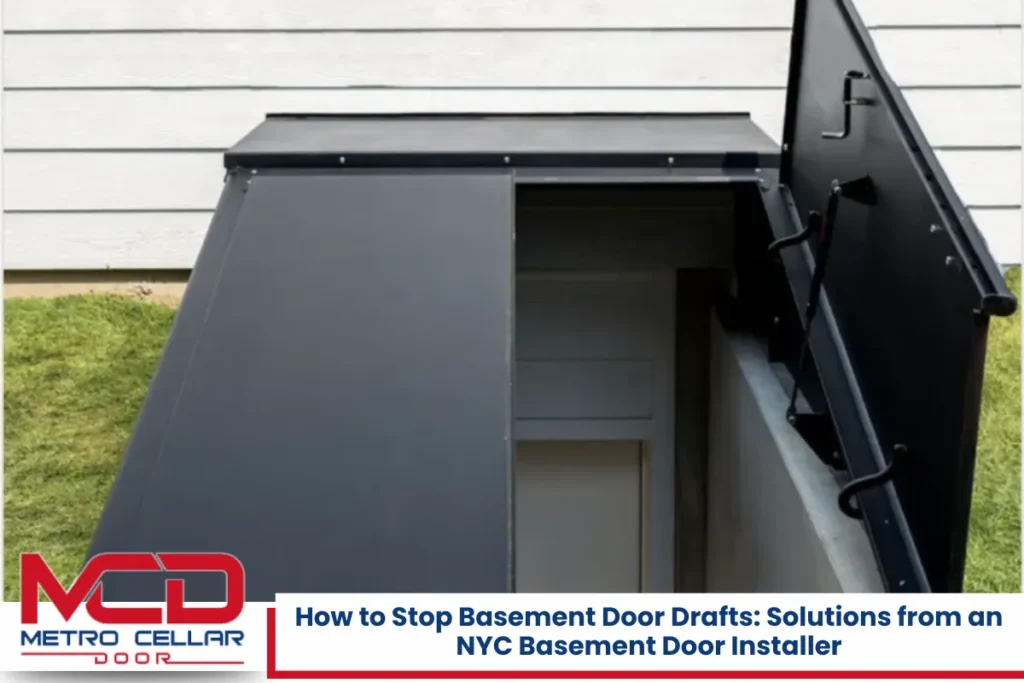
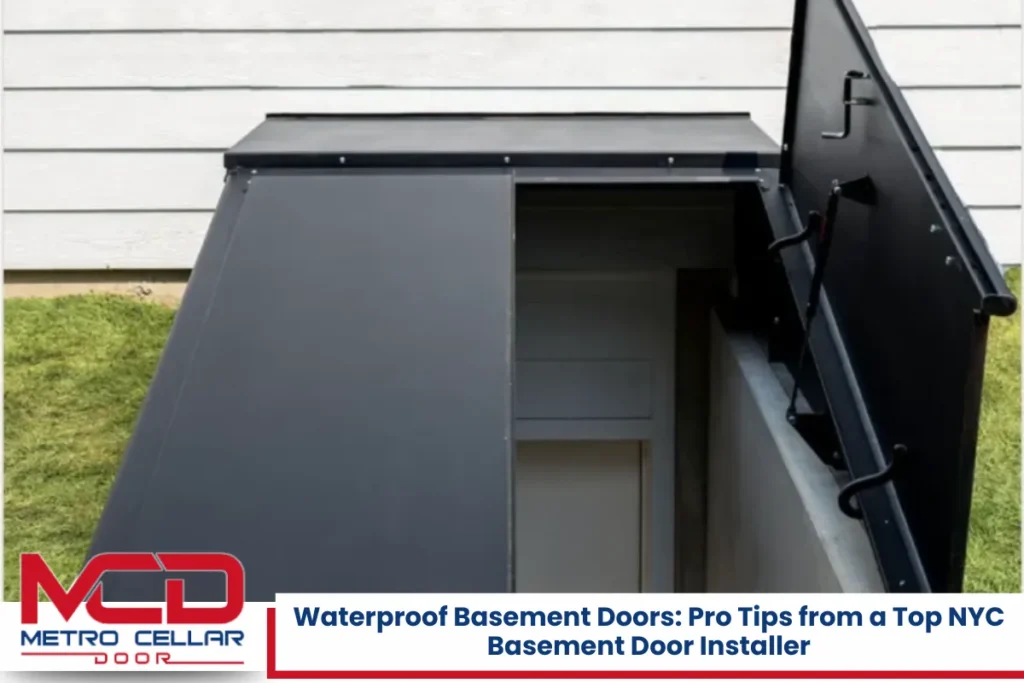
New York basements come in several configurations. Manhattan and dense commercial areas tend to have flat sidewalk cellar doors set into the pavement. Brooklyn backyards often feature rear-yard bulkhead doors angled over a stairwell. Semi-detached homes in Queens and the Bronx may have side-entrance basement access doors opening directly into a narrow exterior stairwell.
Each layout carries distinct hazards:
- Unprotected openings above steep, narrow staircases
- Rusted or misaligned hinges on heavy steel panels
- Slippery surfaces on wet or icy steel cellar doors
- Unsecured gas meters, electrical panels, or stored chemicals just inside the cellar room
- Worn springs that suddenly give way, letting a door wing drop
Physical security and stairwell risks must be addressed together because a child who gets past the door immediately faces a fall hazard. According to New York State injury data, falls are the leading cause of emergency department visits for children aged one through four, and slip-or-trip incidents rank at the top for ages five through nine. Hard concrete landings at the bottom of cellar basement doors make these falls far more severe than a tumble on carpeted interior stairs.
Mechanically, heavy steel wing panels create dangerous pinch points at hinges. A gust of wind can slam a door shut in seconds, and children’s fingers are often in the path. Cellar doors provide secure access to basements, but only when the hardware is maintained and children are kept clear.
New York City Codes and Safety Expectations for Cellar Doors
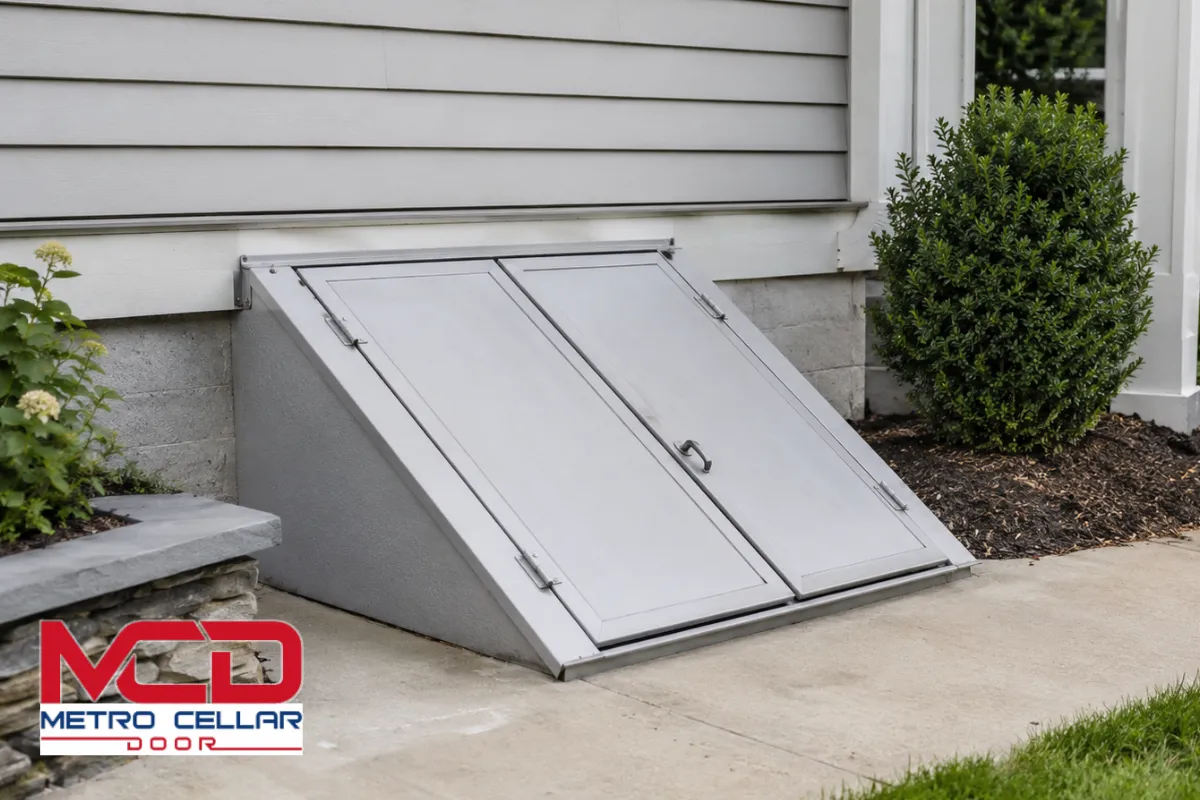
NYC Building Code and the New York State Property Maintenance Code set expectations for exterior basement doors that align closely with childproofing goals. Section 304.13 of the 2025 Property Maintenance Code requires every exterior door and door frame to be kept in sound condition, good repair, and weather-tight. Section 304.16 specifically addresses basement hatchways, mandating that they prevent the entrance of rodents, rain, and surface drainage water.
Cellar doors must function safely as part of overall building maintenance. A self-closing and self-latching mechanism prevents accidental door openings, and Local Law 62 of 2022 reinforces this by requiring self-closing hardware on certain egress doors in multiple dwellings, including bulkhead and public stairway doors.
While NYC code does not specifically spell out childproofing rules, owners are legally responsible for keeping doors and frames free of dangerous disrepair, sharp edges, and loose hardware. Sidewalk cellar doors carry additional scrutiny from the Department of Transportation, which expects them to close securely and not pose open hazards to pedestrians or children.
Cellar doors can serve as main access for businesses to receive goods, and in those commercial settings the code requirements are enforced even more strictly. For any property, consulting a local cellar door installer or licensed contractor about site-specific code compliance is a smart first move, especially for multifamily or mixed-use buildings.
Audit Your Existing Basement Door Before You Add Child Locks
Before buying new hardware, spend fifteen to twenty minutes inspecting your current setup. Effective childproofing starts with knowing whether the door itself is structurally sound enough to hold a lock.
Here is what to check:
- Wobble the panels by hand. If they shift at the hinges or rattle in the frame, fasteners are loose.
- Look for rust penetration. Surface rust is cosmetic, but holes, flaking steel, or compromised welds at hinge plates mean the panel is weakening.
- Close the door and check for daylight around the edges. Gaps indicate a poor seal and potential water entry.
- Test whether the door stays open on its own or drifts shut uncontrolled.
- Examine the stairway directly below: cracked treads, missing nosing, steep or uneven rise.
- Confirm the door frame is firmly anchored to the foundation with no cracks in the surrounding concrete.
- Check lighting at the basement entry. If you cannot see the bottom step at night, that is a fall risk for everyone.
Look for sharp metal edges, exposed anchor bolts, and broken concrete. A stuck cellar door that requires excessive force to open is a sign of frame distortion. Take clear smartphone photos of any issues and share them with cellar door services or your contractor for advice on whether you need basement cellar door repair or a full replacement.
A simple rule of thumb: if the door is severely rusted through, out of square, or completely lacks modern locking hardware, it is usually safer and more cost-effective to budget for a new cellar door installation rather than patching a broken cellar door repeatedly.
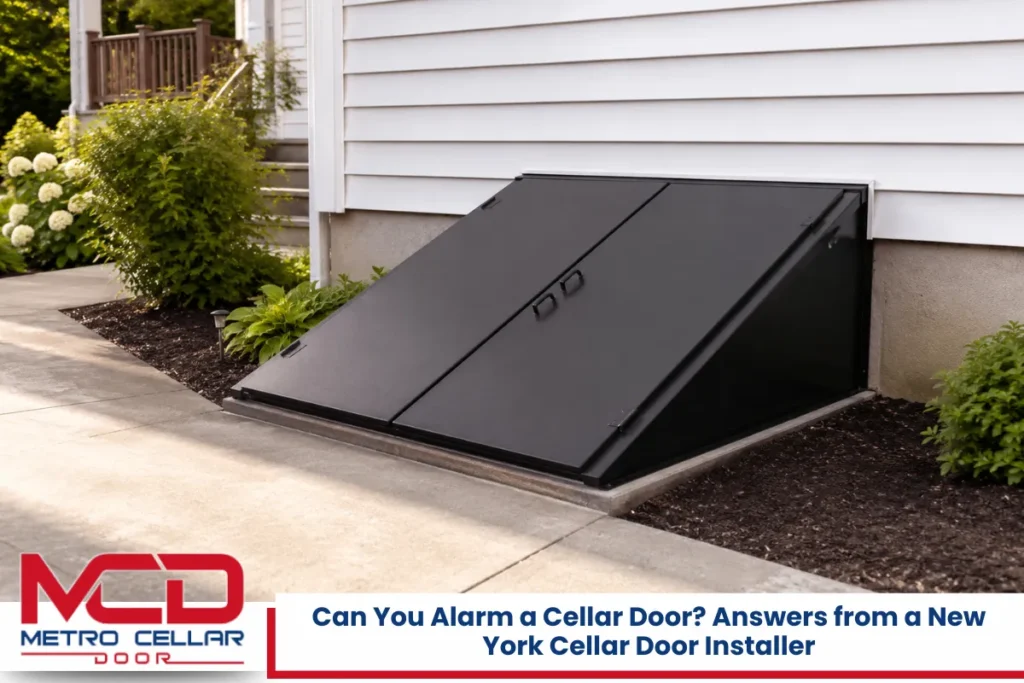
Read Can You Alarm a Cellar Door? Answers from a New York Cellar Door Installer
Essential Childproofing Hardware for Cellar Doors
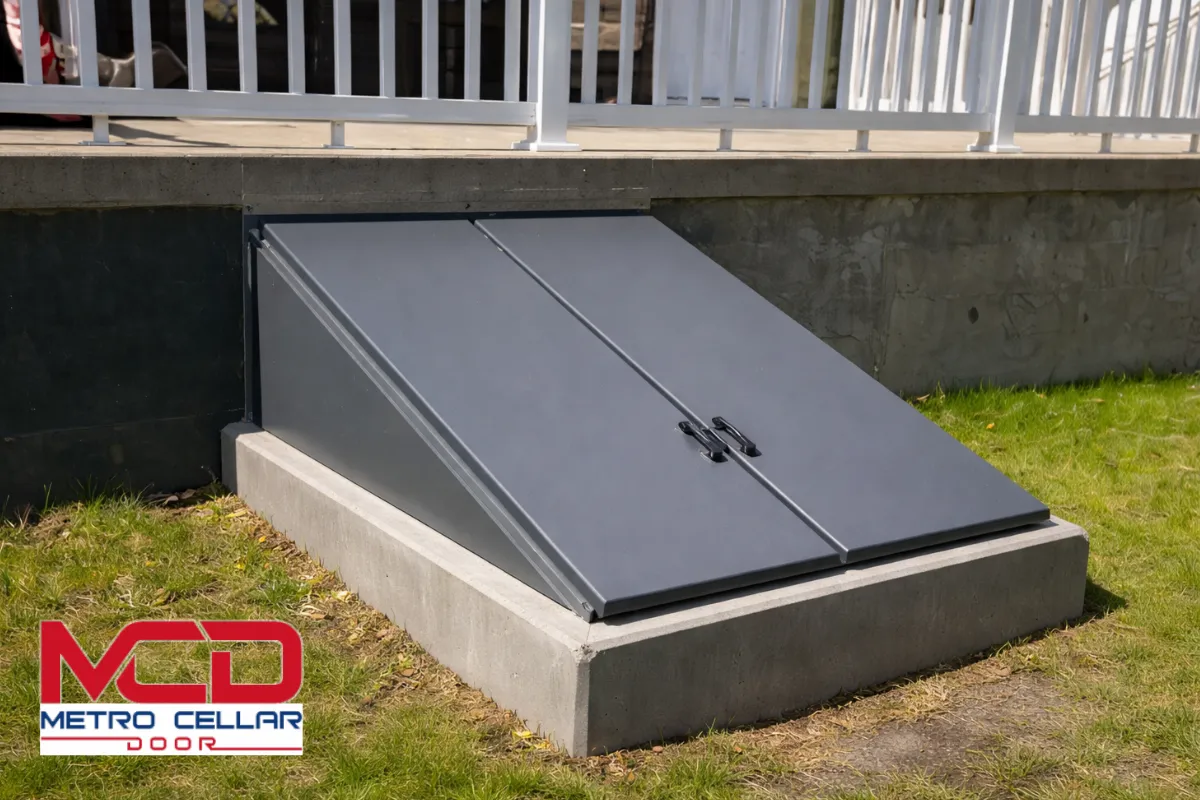
Effective childproofing methods include heavy-duty locks and barriers for cellar doors. Once you have confirmed the door is structurally sound, prioritize these safety add-ons:
- High-mounted keyed locks or sliding bolt locks positioned at least 54 inches above the ground, keeping them out of a young child’s reach while allowing fast adult operation
- Child-resistant latches or magnetic locks on basement doors, which require a specialized key to open and are nearly invisible to curious toddlers
- Slow-close or soft-close gas-spring hardware that prevents heavy panels from slamming shut
- Door pinch guards at hinge points, which can prevent injuries from heavy doors catching small fingers
- Non-slip tread tape or textured coatings on steel cellar door surfaces, because non-slip areas around cellar doors can reduce the risk of slipping on wet or icy steel
Sturdy hinges and a secure locking system are essential for cellar door safety. Exterior bulkhead doors should have sliding bolt locks or tamper-resistant hinges that cannot be removed from the outside. For basement steel doors, mounting often requires welding or through-bolts rather than simple wood screws.
Choose corrosion-resistant hardware. Galvanized or stainless steel fasteners hold up far better against New York winters, road salt, and constant moisture near ground level. Cheap surface hasps or bungee cords are not substitutes. A bungee cord can snap under the weight of a steel cellar panel, and a flimsy hasp can be pulled free by a determined six-year-old. Invest in hardware rated for the weight and exposure your door actually faces. Childproof knob covers can stop toddlers from opening interior basement doors as well, adding another layer at interior access points.
Childproofing a cellar door requires securing internal and external access points, so address both the exterior hatch and any interior door leading down to the same space.
Safe Operation: Teaching Children and Setting House Rules
Physical safeguards are more effective when accompanied by clear household rules. Hardware alone will not protect a child who has learned to drag a step stool to a lock or squeeze through a gate that is left open.
Start with age-appropriate conversations:
- For toddlers: the rule is simple. The cellar door is a no-touch zone.
- For school-age children: explain that basement stairs are steeper and harder than indoor stairs, and that falling on concrete causes serious injuries.
Supervision is necessary when a cellar door is open to prevent unsupervised access. Even during quick trips to retrieve a tool or move a box, keep children away from the opening. Establish a firm household standard: no playing on or around bulkhead doors, no sitting on sidewalk doors, no rolling toys down the steps, and no opening any basement door without an adult.
Model the behavior you expect. Always open both panels fully before descending, use the handrail, turn on the light, and close and latch the door every single time-even for a thirty-second errand. Safety gates should be placed at cellar stairs to prevent falls, especially at the top of interior basement stairways where you basement access may connect to main living areas.
Consider posting a simple visual reminder near the cellar door: “Door stays closed” or “Ask an adult first.” In multi-family homes this is especially helpful for babysitters, guests, and older siblings. Residential basement security depends as much on habits as it does on hardware.
Upgrading to a Safer Bulkhead or Basement Door System
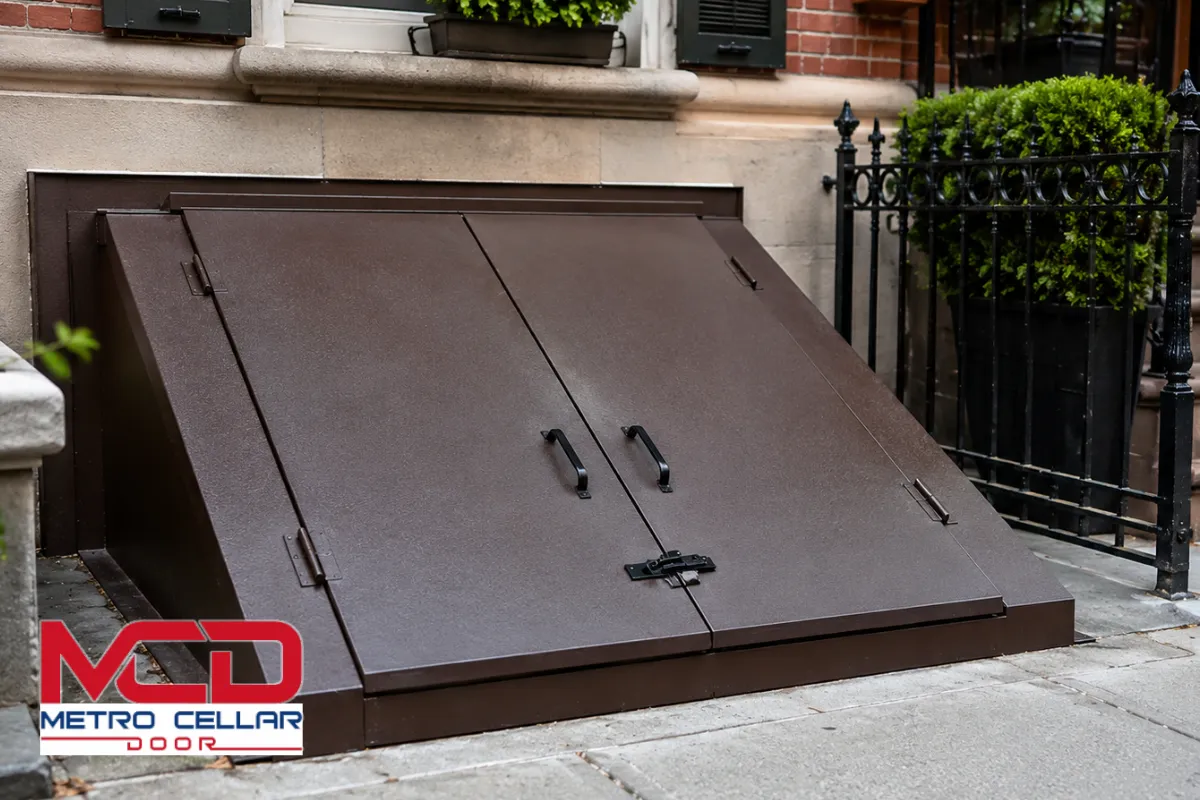
At some point, patching and adding hardware to a deteriorating door stops making sense. If your unit has severe corrosion, persistent water leaks, structural cracks, or repeated hinge and latch failures, it is time to install cellar doors built for modern safety standards.
Modern options from cellar door experts include:
- Insulated steel basement doors with powder-coated finishes
- Gas-spring-assisted bilco cellar doors that lift smoothly and descend slowly
- Flush sidewalk doors with textured anti-slip surfaces and integrated keyed locking systems
- Bulkhead basement cellar doors with pre-drilled mounting for child-safe hardware
High quality cellar doors deliver tangible advantages: smoother operation, reduced slam risk, better seals against water and ice, and stronger frames that stay square over time. Steel cellar doors are strong and hard to break, and with proper installation they can last over twenty years. By contrast, low quality cellar doors may need replacement every five to seven years, costing more in the long run.
Ask a local cellar door installer about self-closing or damped hinges that keep heavy door wings from dropping too fast. In many brooklyn new york neighborhoods with older foundations, a new cellar door installation also opens the door to repairing cracked concrete stairwells, loose railings, and poor drainage, all of which affect child safety. Quality cellar doors reduce long-term repair costs significantly, making the upfront investment in a good and strong door worthwhile. High quality cellar doors can last over twenty years when installed correctly and maintained.
Maintenance Habits That Keep Childproofing Working Long-Term
Regular maintenance is necessary to ensure the safety of cellar doors. Even the best childproofing hardware fails if the door is neglected. Corrosion, loose fasteners, and warped panels can defeat locks and latches over a few harsh seasons.
Follow a simple quarterly checklist for basement cellar doors maintenance:
- Test all locks and confirm they engage fully
- Lubricate hinges to prevent weather damage and stiffness using a silicone-based spray
- Tighten screws and bolts on latches, handles, and hinge plates
- Confirm soft-close hardware still slows the door to a safe speed
- Clear debris, leaves, and sediment from the stairwell drain
Seasonal attention matters too. After winter, rinse salt residue off steel panels and inspect for new rust. In spring, look for water infiltration or rot near wood framing around the basement door. Fix cellar basement doors issues early rather than waiting for them to compound.
Check steel cellar doors at least once a year with a thorough inspection beyond the quarterly basics. Inspect locking systems regularly for security, especially after storms or extreme temperature swings. As children grow taller, verify that high-mounted locks remain out of reach and adjust or upgrade hardware when kids can finally reach existing latches.
For heavy sidewalk doors exposed to constant pedestrian traffic, cellar door maintenance brooklyn homeowners handle seasonally can prevent expensive emergency repair calls down the road. Schedule professional door repair or inspection every few years to catch hidden problems behind paint or surface coatings.
Special Considerations for Different Types of Cellar Doors
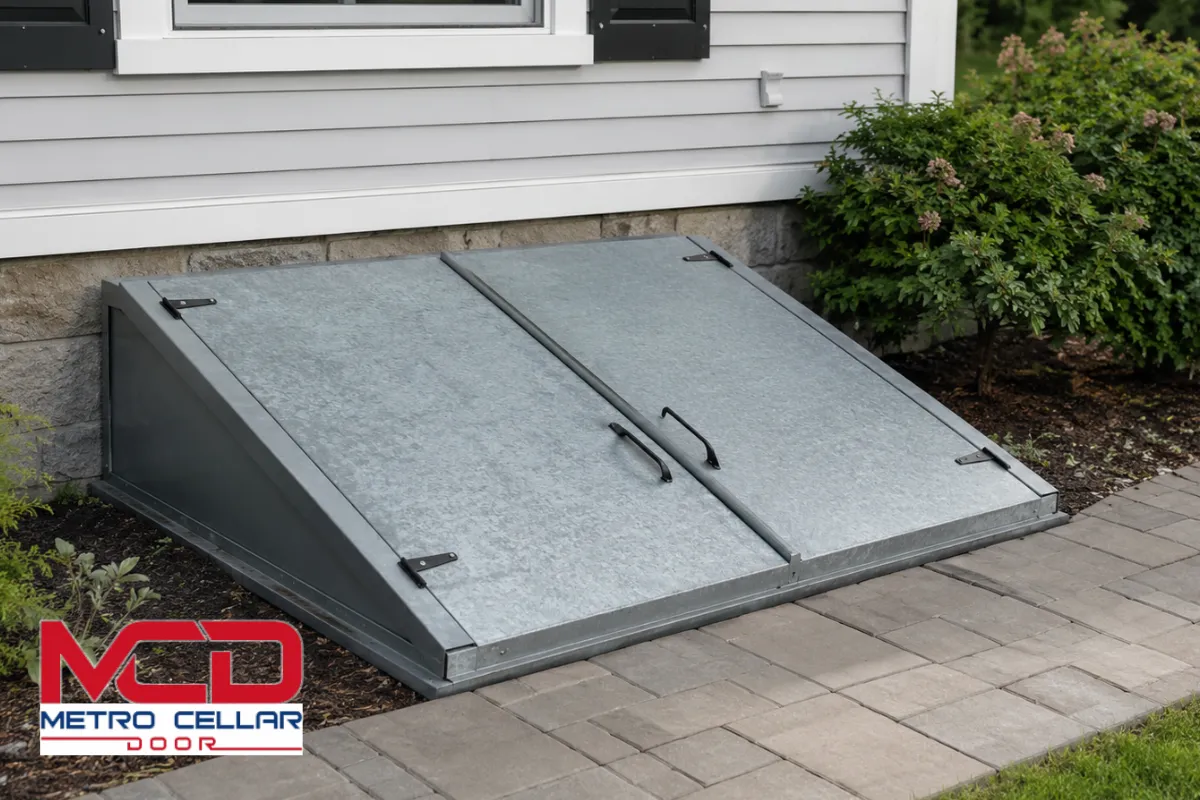
Not all basement entries are alike, and different cellar doors call for tailored childproofing strategies.
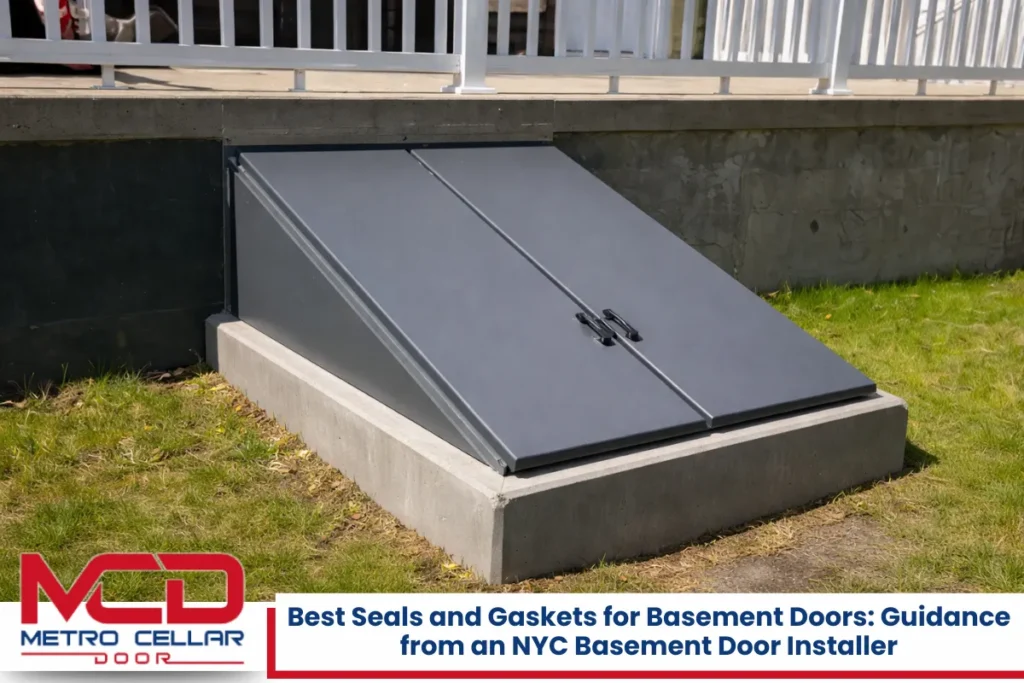
Backyard bulkhead doors: Bulkhead cellar doors are angled and cover basement stairwells, typically in rear or side yards. Prioritize visibility from the kitchen or living area. Add motion-activated lights so any approach after dark is illuminated. If the yard lacks fencing or iron gates, consider adding a barrier that limits unsupervised access to the basement entry area. Angled doors covering a stairwell need gas-spring assist to prevent free-fall closure.
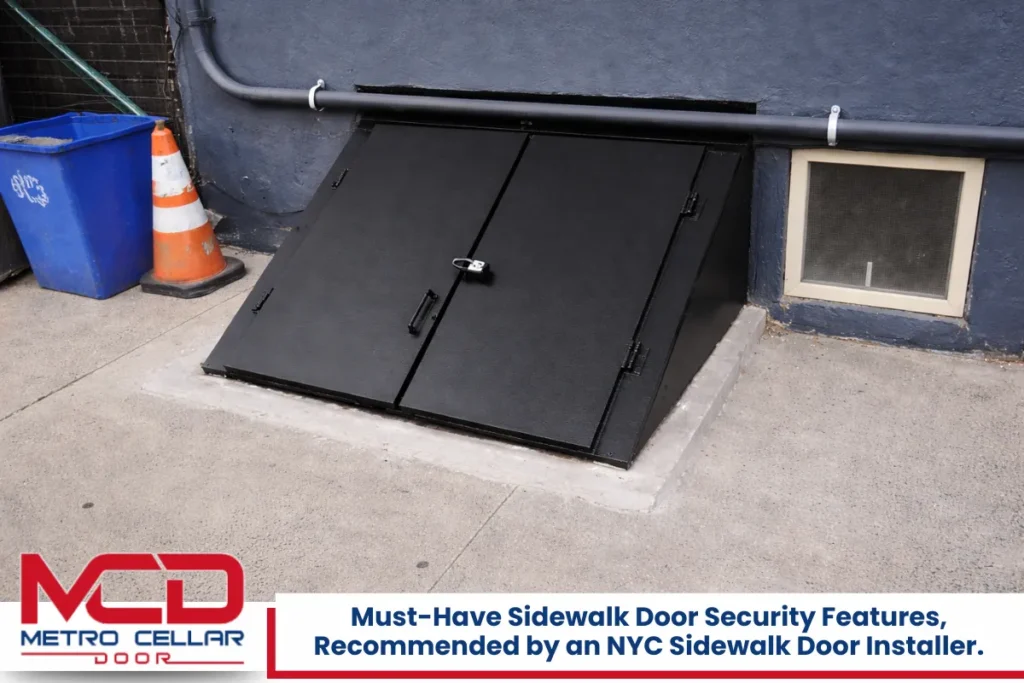
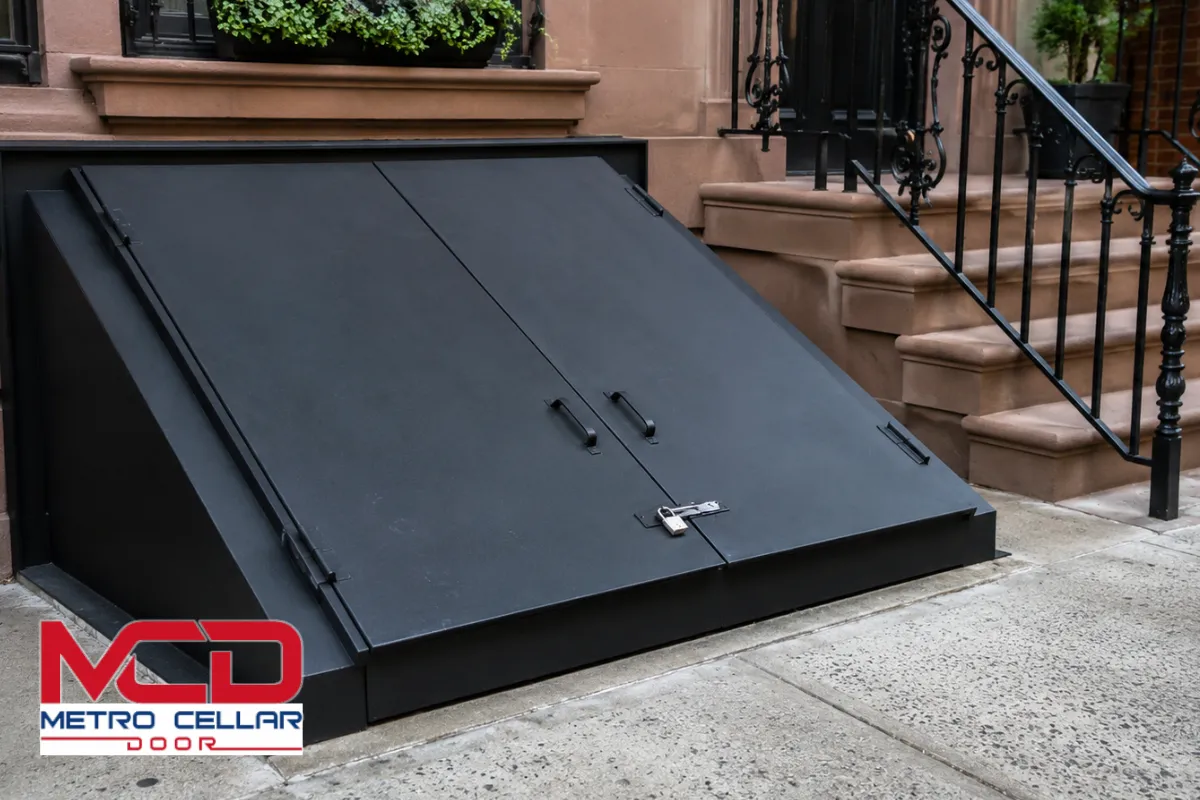
Sidewalk cellar doors: Flat sidewalk cellar doors are flush with ground level and common in Manhattan and Brooklyn mixed-use buildings. Commercial buildings often use flat cellar doors for delivery access, and storefront sidewalk cellar door units see heavy foot traffic. These need high-strength tamper-resistant hardware that deters tampering from the street. A sidewalk door in front of a commercial basement should latch automatically and resist prying. Sidewalk basement cellar doors face the most weathering and abuse of any type.
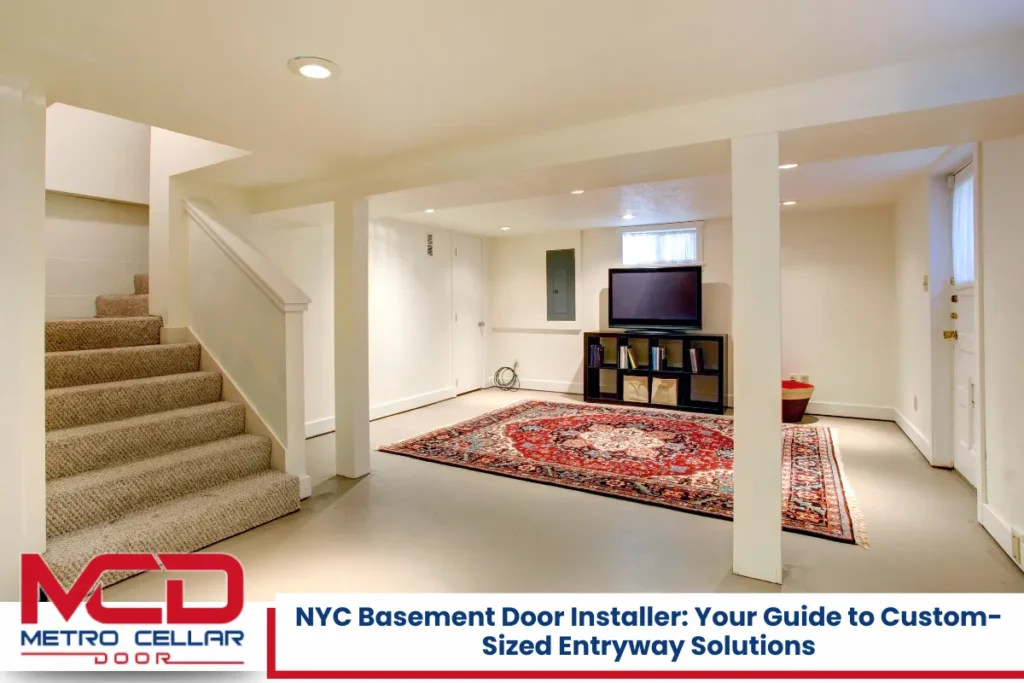
Interior basement doors: For single-swing doors at the bottom of stoops, combine a self-closing door closer with high-mounted latches and a baby gate at the top of interior stairs. Non-slip stair coverings on each tread reduce fall risk. Commercial cellar doors in mixed-use properties should follow the same principles. Flat cellar doors, angled doors, and basement access doors each demand a slightly different hardware approach, and a brief on-site visit from cellar door services can uncover hazards that might not be obvious. Cellar doors allow easy access for storing garden equipment, seasonal items, and utilities, so maintaining convenient adult access while restricting children is the core balancing act.
When to Call a Professional Cellar Door Expert
There are clear signs that diy door repair is not enough:
- Panels sag and will not close flush
- Visible holes from rust penetration
- Water leaking through the basement entry after rain
- Concrete stair treads crumbling or separating from the foundation
- A stuck cellar door that has been forced open repeatedly
Adding locks or childproofing devices to a structurally unsound door can create a false sense of security while the real risks remain. Professional installation requires knowledge beyond basic handyman skills. Cellar door installation involves welding and heavy duty power tools that most homeowners do not own, and professional installers can identify issues nonprofessionals might miss, such as hidden frame corrosion or incorrect spring tension.
If your unit is more than twenty years old, was never properly sealed, or has been patched multiple times, get a quote from an experienced cellar door company. A professional evaluation includes measuring door openings, testing balance and spring tension, checking for code-related issues, and recommending either targeted cellar door repair or full replacement. Professional installation ensures correct balancing of cellar door wings, which directly affects how safely the door operates around children. High quality cellar doors can last over twenty years with proper installation, and high quality doors from reputable manufacturers deliver the best return.
In New York City, multi-unit properties and commercial basement spaces should use licensed and insured contractors familiar with local rules. Cellar doors require knowledge of steel door welding service techniques, structural loads, and drainage. When day cellar door repairs are not enough to solve the underlying problem, a new cellar door installation is the responsible path forward. If your basement door repaired today still wobbles tomorrow, it is time for a professional. A reputable basement cellar doors service provider will walk you through every option and provide same day service for urgent safety concerns.
NYC Cellar Door Installer – Metro Cellar Door Bilco Pro
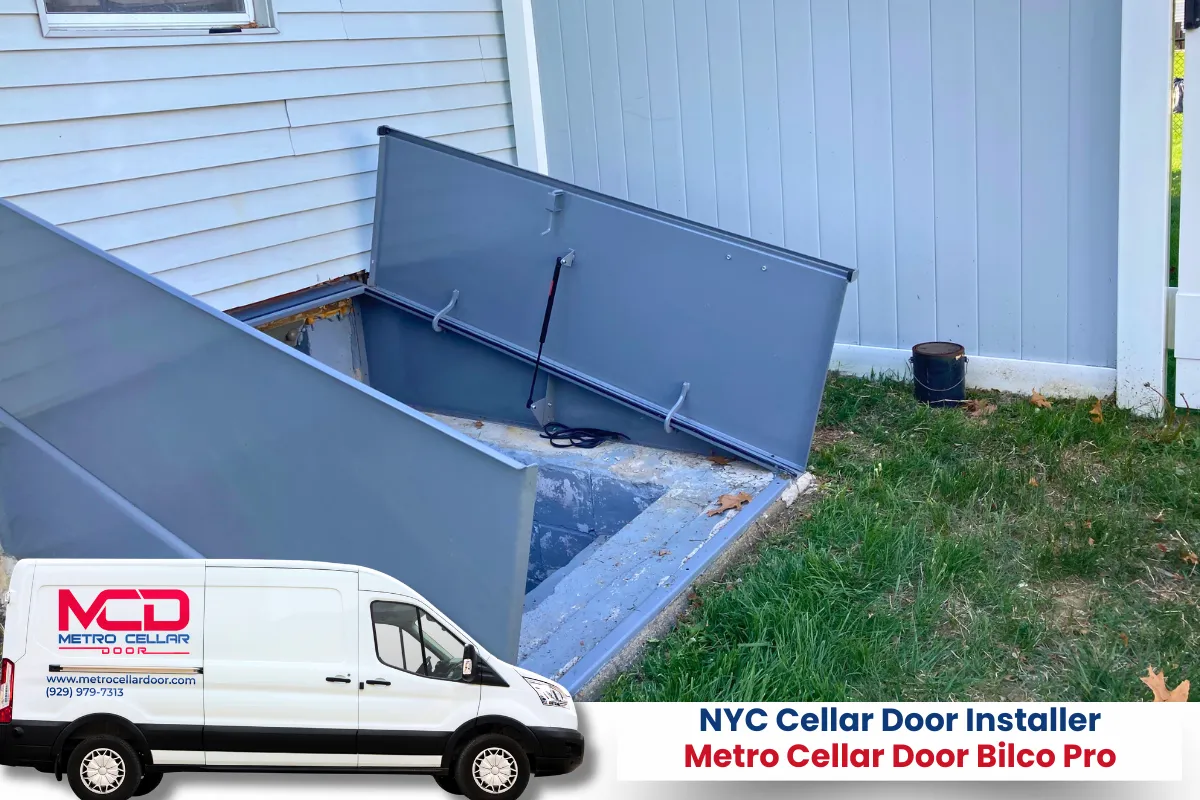
We are Metro Cellar Door Bilco Pro, and we specialize in keeping families safe around their basement entries. As a trusted nyc cellar door installation provider, we design, supply, and install cellar doors and bulkhead doors across New York City and the surrounding areas. Every unit we install is built to operate smoothly, latch securely, and stand up to the punishment of New York weather.
Our team has experience customizing basement entry solutions for brownstones, multifamily buildings, and mixed-use properties. We handle new installations, and safety upgrades with an eye on code compliance and family protection. We walk parents through lock options, soft-close hardware, and layout changes that keep dangerous cellar stairs off-limits to kids while preserving reliable access for adults.
Our nyc cellar doors customers trust us because we show up, explain the work clearly, and get it done right. Call us at (929) 979-7313 or fill out our contact form to schedule a site visit, safety inspection, or quote. If you need to purchase cellar doors or upgrade an aging unit, we are ready to help.
Frequently Asked Questions
How old should my child be before I remove special locks from the cellar door?
There is no universal age cutoff. Most child safety professionals suggest maintaining high-mounted locks and restricted access until a child can reliably demonstrate safe behavior on steep stairs, which typically does not happen before age ten or eleven. Maturity matters more than age alone. A child who follows household rules consistently, understands the danger of a fall onto concrete, and can operate heavy doors without assistance may be ready sooner. Consider your specific layout as well. A shallow three-step entry is far less dangerous than a full-flight exterior stairwell. Keep locks in place longer in homes with especially steep or poorly lit cellar stairs, and always pair the transition with clear conversations about the risks.
Can I just use an interior baby gate instead of securing the exterior bulkhead door?
A baby gate at the top of interior basement stairs is a valuable layer of protection, but it should never be the only one. If the exterior bulkhead or sidewalk door is left unsecured, any child playing in the yard or on the sidewalk can access the stairway from outside, bypassing the interior gate entirely. In many new york city homes, both access points exist, and both need to be addressed. Safety gates should complement exterior locks, not replace them. Additionally, most baby gates are rated for children up to about age two or three. Older children can climb over standard gates, so exterior hardware remains the more durable barrier over time for overhead door repairs or other work that leaves the door open.
Are there fire safety concerns with adding extra locks to my basement door?
Yes. Any locking system added to a basement door that also serves as an emergency egress route must allow rapid adult exit from the inside without a key or special tool. Keyed deadbolts that require a key from both sides can trap occupants during a fire and may violate local codes. Use locks that are keyed only on the exterior, with a thumb-turn or lever on the interior side. Keep any required keys on a hook within adult reach near the door. The goal is to make it difficult for a child to open the door from the outside while keeping emergency exit fast and simple for anyone inside the cellar room or stairwell. Never chain or padlock a cellar door from the inside.
What budget should I expect for replacing an old sidewalk cellar door with a safer model in New York?
Cellar doors can cost between four hundred and fourteen hundred dollars for the unit alone, depending on size, material, and features. Investing in a twelve-hundred-dollar cellar door saves money over time compared to cycling through cheaper units. Installation labor, concrete repair, drainage work, and permit fees can add substantially to the total, with full sidewalk cellar door replacement projects in NYC sometimes reaching several thousand dollars when structural repairs are needed. Low quality cellar doors may need replacement every five to ten years, while steel cellar doors with proper installation can last over twenty years. Unlike a standard garage door or steel roll up doors, sidewalk hatches face unique loads from pedestrian traffic and require specialized framing. Request at least two quotes before committing, and ask whether the estimate covers repair steel roll-up components, if applicable to your setup.
How often should a professional inspect my bulkhead cellar door if children use the yard daily?
If children play near the bulkhead regularly, schedule a professional inspection at least once every two years in addition to your own quarterly checks. A pro will test spring tension, measure door balance, examine welds and hinge plates for fatigue, and assess whether the frame has shifted due to frost heave or foundation settling. Properties near busy streets or in areas with heavy salt use may benefit from annual professional visits. Between inspections, homeowners should perform their own seasonal reviews. The cost of a professional visit is modest compared to the expense of an emergency repair or, worse, a preventable injury. Keep records of each inspection so the nest cellar door maintenance visit can build on prior findings.
Disclaimer: This article provides general guidance on childproofing cellar doors in New York City. It is not a substitute for professional inspection, licensed contractor advice, or legal counsel regarding local building codes. Always verify current regulations with your local Department of Buildings.
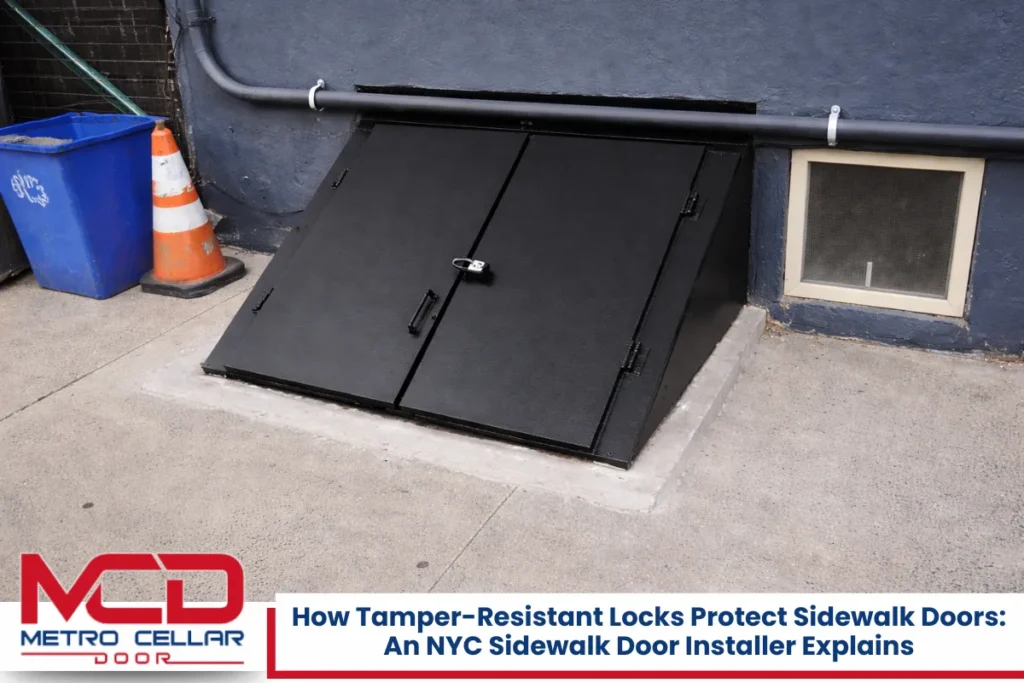
Read How Tamper-Resistant Locks Protect Sidewalk Doors: An NYC Sidewalk Door Installer Explains