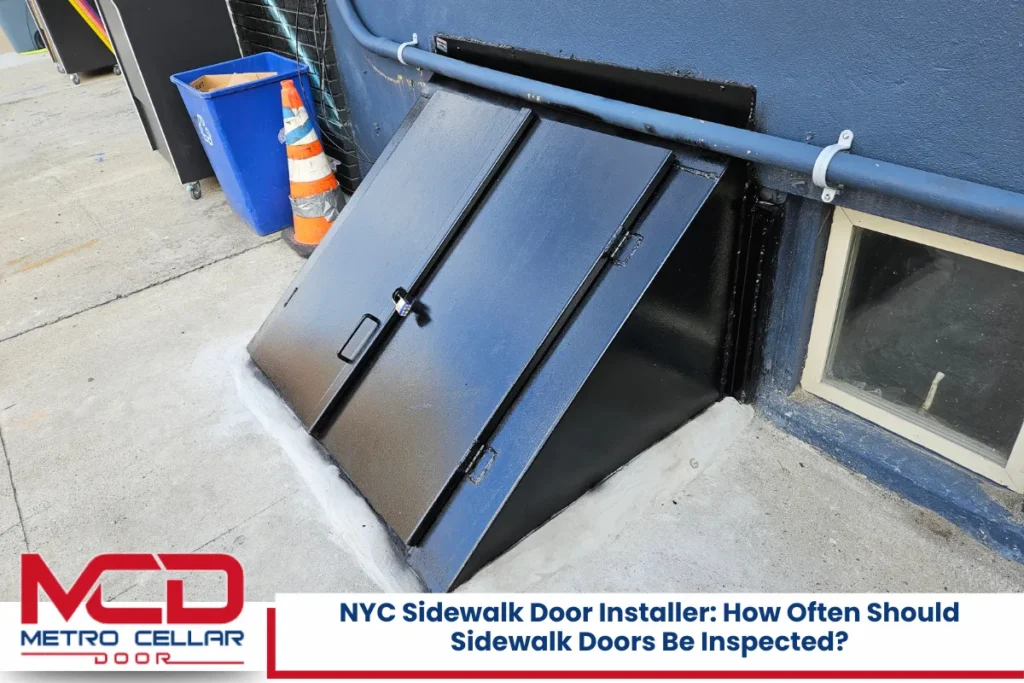

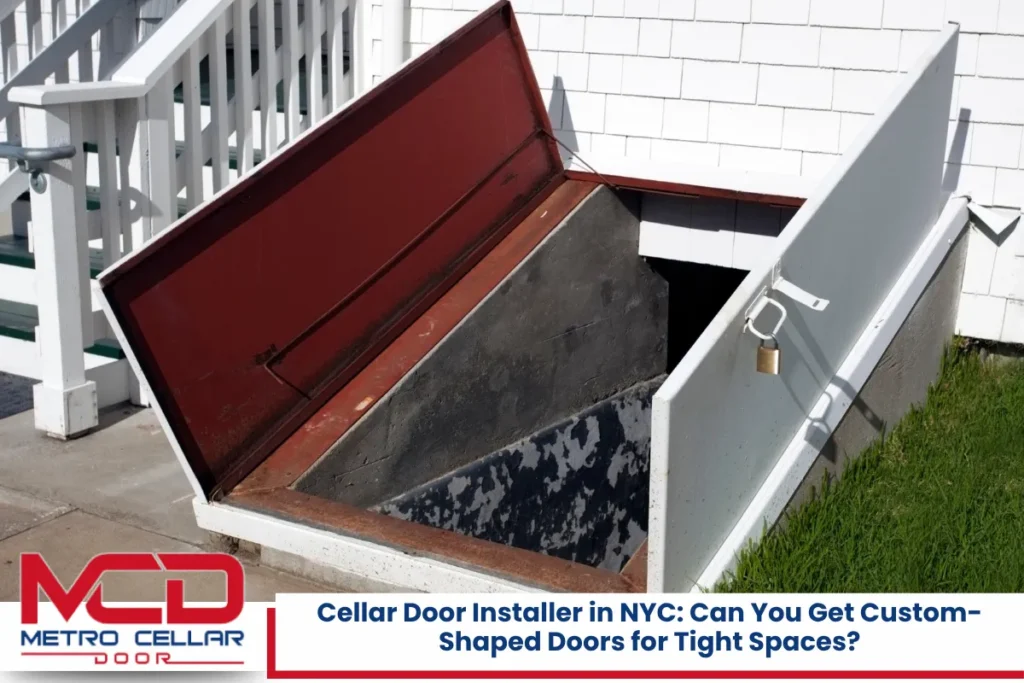
Why tight NYC openings turn into expensive mistakes fast
A cellar door Installer in NYC hears the same concern again and again: the opening is too narrow, the walls are out of square, and a standard door seems like a guaranteed failure. That problem gets worse in New York, where brownstones, older row houses, side-yard stairs, and below-grade areaways rarely stay perfectly square over time. Add water intrusion, rust, trip hazards, and permit questions, and a “simple” replacement can become an expensive headache. The good news is that custom-shaped cellar doors are absolutely possible in many tight spaces. The key is choosing the right kind of cellar door installation, measuring the actual masonry opening, and making sure the final design fits both the property and NYC requirements before fabrication starts.
Custom cellar doors are not unusual in New York City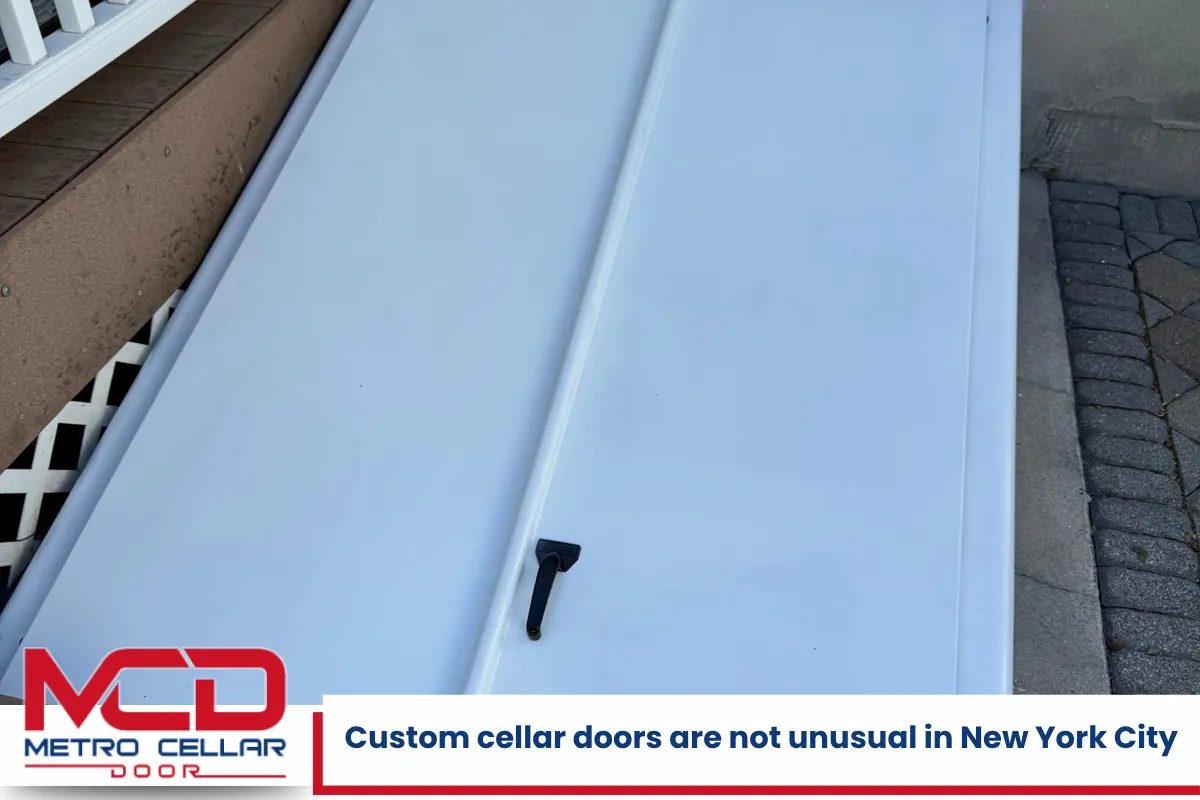
The short answer is yes: you can often get custom-shaped cellar doors for tight spaces in NYC. In fact, custom work is common because many city properties have angled walls, narrow stair runs, offset foundations, shallow landings, or openings that were altered decades ago. Search demand around cellar doors in New York regularly clusters around terms like bulkhead door, Bilco door, areaway hatch, steel cellar doors, sloped wall doors, angle-on-angle doors, replacement hatch, side-yard cellar entrance, and weather-tight basement access. That tells you something important: many openings do not accept an off-the-shelf door without compromises.
A well-planned cellar door installation is not just about covering a hole. It has to work with the stair geometry, the swing path, the foundation walls, the drainage pattern, and the day-to-day way the space is used. In NYC, that often means a cellar door installer has to solve for old masonry, limited clearance, snow and ice, and the possibility that the property sits in a landmarked district or opens onto a public sidewalk.
What “custom-shaped” really means on a cellar door job
Many homeowners hear “custom” and imagine an unusually decorative door. In practice, custom cellar doors are usually about shape, fit, and operation.
Common custom configurations for tight spaces
Angle-on-angle doors
These are used when the foundation or areaway does not form a clean 90-degree setup. Older masonry often shifts over time, and some custom systems are specifically designed for angled foundations rather than flat, symmetrical openings.
Sloped-wall doors
Some cellar openings have sloped masonry sidewalls rather than flat vertical sides. Manufacturers offer sloped-wall systems and related foundation plates or extension options to fit those conditions without forcing a major rebuild
Along-side or offset entry doors
A few cellar entrances run along the side of a building instead of projecting straight out. These need a different layout because the stair direction, leaf swing, and wall relationship all change.
Unequal leaf doors
On narrow openings, one active leaf and one smaller secondary leaf can make daily access easier while still allowing larger items to pass when needed. This approach is also familiar in preservation work, where unequal leaf doors may be approved in some contexts when equal leaves are impractical.
Low-clearance and limited-swing solutions
Some tight spaces need hardware or door geometry that prevents the leaves from colliding with a wall, fence, stoop, railing, or adjacent structure. Gas spring assistance and careful hinge placement can make heavy steel cellar doors safer and easier to use in those constrained conditions.
When a standard door still works — and when it becomes the wrong choice
A standard-size door can still work when the areaway is square, the wall dimensions match the manufacturer’s sizing tables, the stair path is centered, and the opening has enough landing and swing clearance. Standard systems are often the most cost-effective route when the masonry is still true and the opening falls within published dimensions.
But a standard replacement usually becomes the wrong choice when:
- The opening tapers from top to bottom.
- The sidewalls are sloped or out of parallel.
- The stair run sits off-center.
- The foundation height does not align cleanly with the house wall.
- The old door was shimmed, patched, or improvised to hide a poor fit.
- Water already ponds in the areaway.
- You need better security, smoother operation, or easier appliance access than the old setup allowed.
That is why experienced installers measure the masonry opening itself, not the old door. Manufacturers that deal in custom cellar doors specifically warn that existing foundations may have cracked or shifted and should be measured in multiple places.
The measurements that decide whether the project succeeds
A custom cellar door lives or dies by field measurements. Even the best steel door will perform poorly if the installer measures the wrong reference points.
The numbers that matter most
- Inside width and outside width of the areaway
- Inside length and outside length of the opening
- Height from the top of the foundation to the top of the wall opening
- Narrowest width, not just the apparent width at the top
- Wall angle and whether both sides mirror each other
- Landing length and stair relationship to the door swing
- Obstructions such as rails, fences, meters, stoops, or adjacent walls
- Drainage slope and whether water collects at the bottom of the stair
For tight NYC spaces, one of the biggest mistakes is measuring only the visible top edges. Many old cellar entrances look square from above but pinch inward lower down. That is exactly how a “close enough” order turns into binding doors, poor weather seal, or costly masonry correction after delivery.
The code questions that should shape the design before fabrication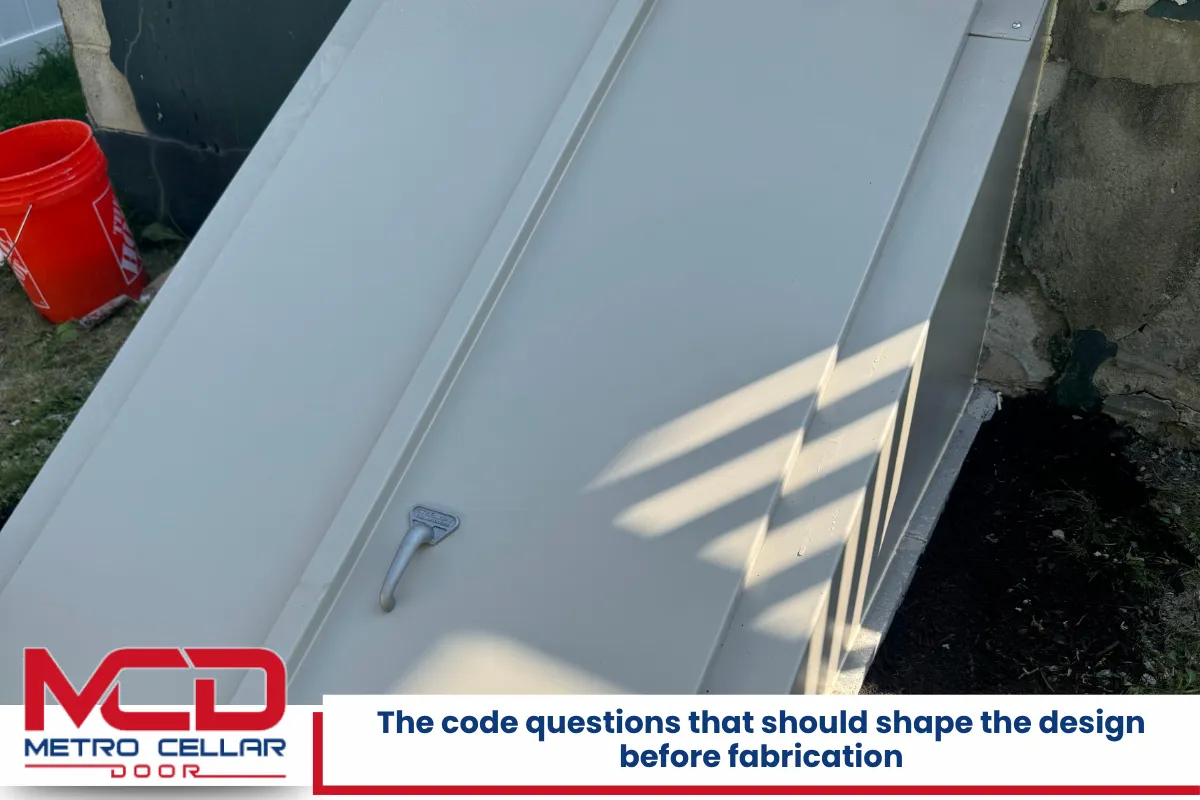
Custom does not mean code-free. In New York City, the right design starts with the legal and practical rules that apply to the site.
Permits are often part of the conversation
NYC states plainly that most construction requires approval and permits, though some minor alterations may be exempt. The City also notes that exempt work still has to comply with the code, and the permit exemption rules do not eliminate filings with other agencies when needed, including the Landmarks Preservation Commission, Department of Transportation, DEP, or FDNY. For jobs that alter the masonry opening, affect egress, change exterior conditions, or touch the public right-of-way, you should assume permit review may be part of the project until a qualified professional confirms otherwise.
Residential contractor licensing still matters
For residential work in NYC, a person or business doing home improvement work generally needs a Home Improvement Contractor license from DCWP. DOB also reminds owners that even work not requiring a permit can still require an appropriately licensed contractor.
Stairs, landings, and handrails are not optional details
Where the cellar entrance functions with stairs and a door assembly, the surrounding approach matters. NYC code requires landings at doors, and current code text states landings must have sufficient width and a minimum length in the direction of travel. Current NYC code also requires handrails on each side of stairways, with limited exceptions, and requires outdoor stairways and approaches to be designed so water does not accumulate on walking surfaces. In real-world cellar door installation, that means the door cannot be treated as a standalone product; it is tied to the safety of the stair and landing system around it.
Guards and open areaways may be required
For multiple dwellings, New York’s Multiple Dwelling Law requires open areas such as areaways, outside stairs, and stair landings to be protected by a parapet wall or guard railing at least 3 feet 6 inches high, subject to departmental approval. That matters when a custom cellar door sits inside an open, below-grade areaway or alongside exposed steps.
Landmark districts add another layer
If the property is landmarked or in a historic district, exterior door replacements, modified openings, and areaway work may require LPC review. NYC’s landmark guidance specifically addresses replacement doors, modified and new door openings, yard and areaway work, and basement/cellar access hatches. In other words, a custom solution may still be possible, but the shape, finish, visibility, and method of installation may need to respect preservation rules.
Sidewalk cellar doors are a different category altogether
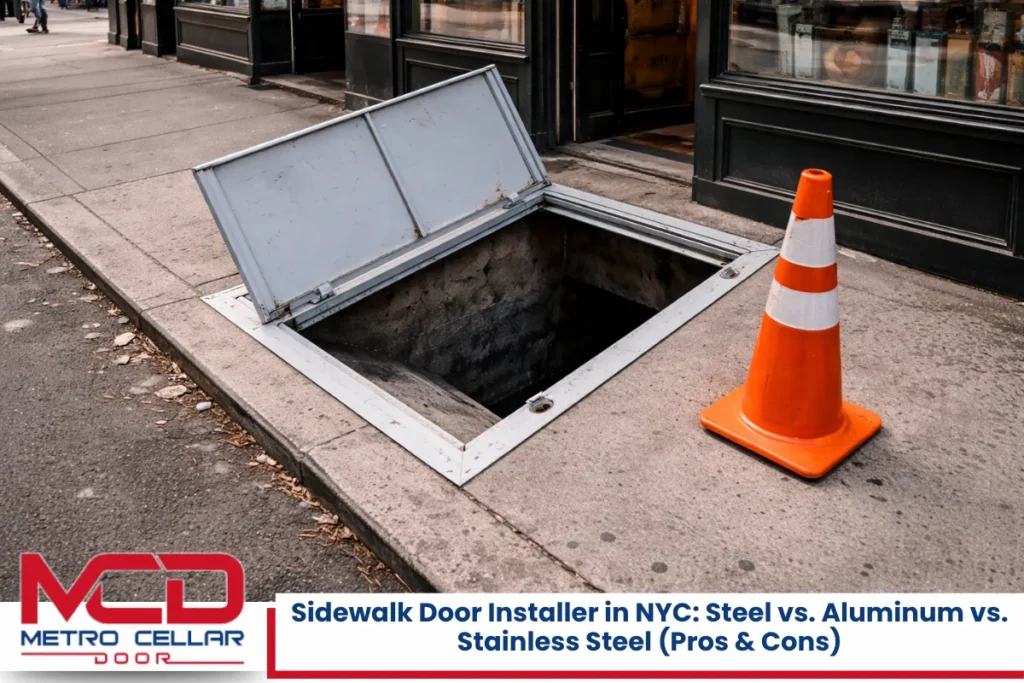
If the cellar doors are in the sidewalk rather than in a private rear or side areaway, the job becomes more sensitive. NYC311 notes that DOT investigates damaged, bent, broken, wobbly, or unsafe sidewalk cellar doors, including openings left open and unprotected. NYC’s sidewalk guidance also treats hardware that is not flush within one-half inch of the sidewalk surface, or cellar doors that deflect more than one inch when walked on, as sidewalk defects. That makes sidewalk cellar doors a public-safety issue, not just a private replacement project.
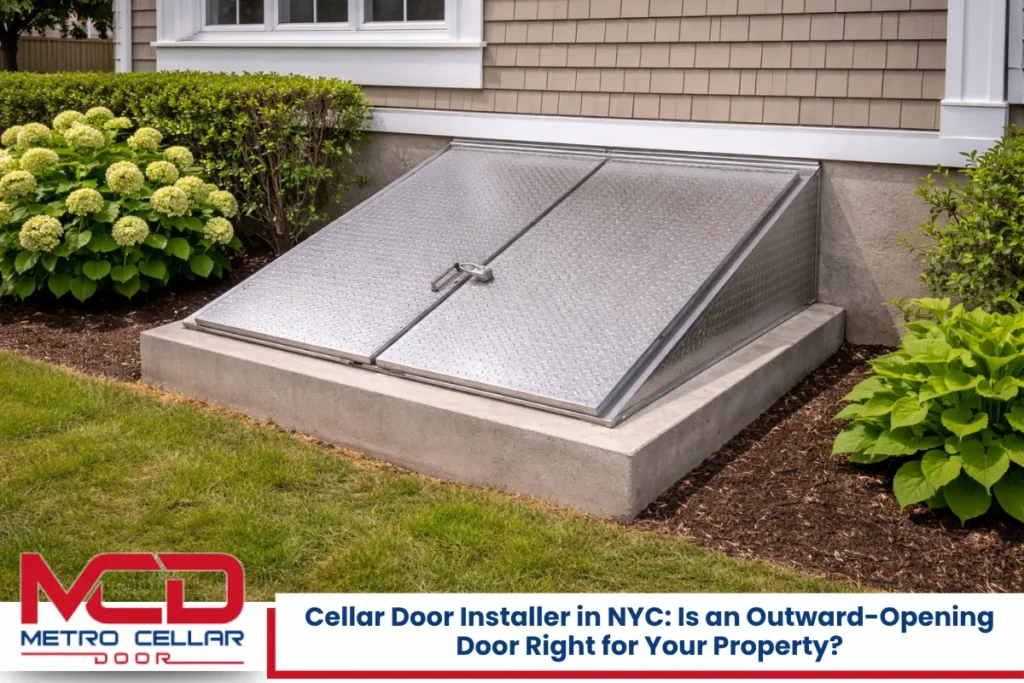
Read Cellar Door Installer in NYC: Is an Outward-Opening Door Right for Your Property?
How custom fabrication solves tight-space problems without cutting corners
A good custom design solves the geometry first and the finish second. That usually means one or more of the following:
- Matching the actual angle of the foundation instead of forcing a square frame
- Using sloped-wall components or extension panels where the opening does not fit a stock door
- Adjusting the curb or frame profile to improve weather seal
- Choosing unequal leaves so one panel works for daily traffic and both open for larger items
- Adding gas spring lift assistance for easier one-hand operation
- Using heavy-gauge steel, concealed hinges, and powder-coated finishes for durability
- Reworking drainage around the areaway so the door does not trap water against the foundation
That is the difference between real custom work and a bad workaround. A bad workaround hides the mismatch with filler, caulk, or improvised trim. A proper custom cellar door installation makes the frame, pitch, swing, and seal line belong to the opening. That matters in NYC, where freeze-thaw cycles and wind-driven rain punish sloppy exterior work quickly. DOB’s weatherizing guidance also reminds owners that freeze-thaw conditions deteriorate homes and outdoor structures and that licensed professionals should assess needed repairs.
Materials and features worth paying attention to
Not every homeowner needs every upgrade, but some features matter much more than people think.
Steel remains the default for a reason
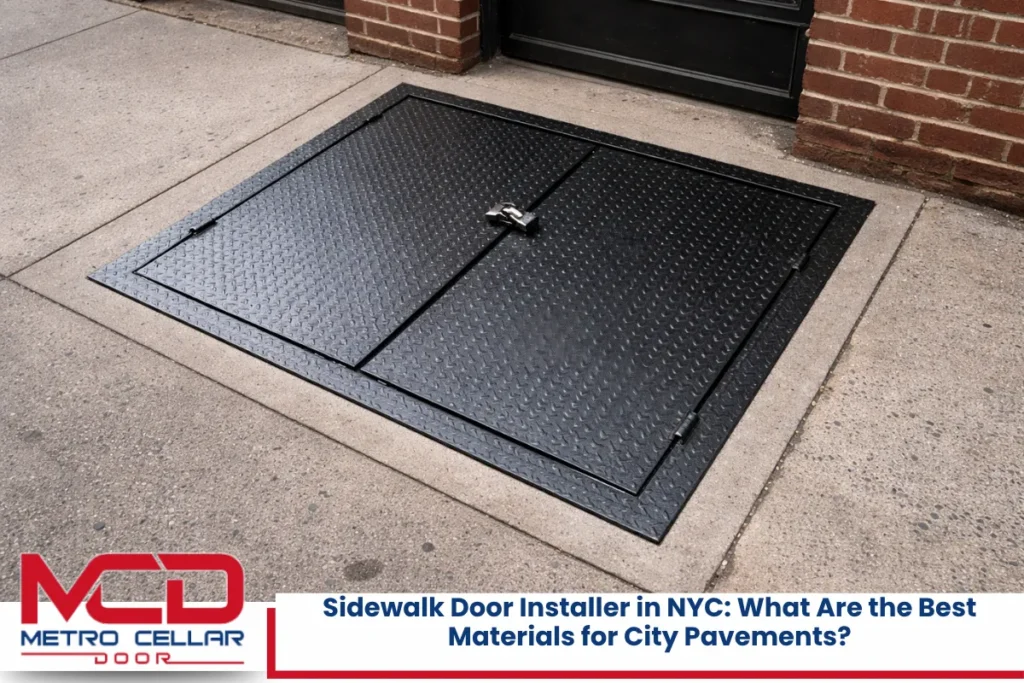
Steel cellar doors remain common because they handle impact, weather, and repeated use better than many improvised wood replacements. Public-facing product guidance from major manufacturers emphasizes heavy-gauge steel, weather-resistant construction, concealed hinges, and powder-coated finishes as core durability features.
Operation matters as much as strength
A door can be structurally sound and still be frustrating if it is too heavy or awkward for regular use. Gas spring assistance, balanced leaf weight, and proper hinge geometry can make a custom cellar door feel much safer in daily operation, especially for properties that bring in laundry, tools, supplies, or mechanical equipment through the cellar entrance.
Weather control is part of performance
The best cellar doors do more than close. They shed water, resist corrosion, reduce debris entry, and help limit binding from ice and snow. On conditioned spaces, the exterior envelope and door replacement may also touch NYC energy code considerations. NYC states that its Energy Conservation Code governs building envelope performance, and the current code for existing buildings specifically addresses replacement of exterior doors separating conditioned space from the exterior.
The NYC properties most likely to need custom cellar doors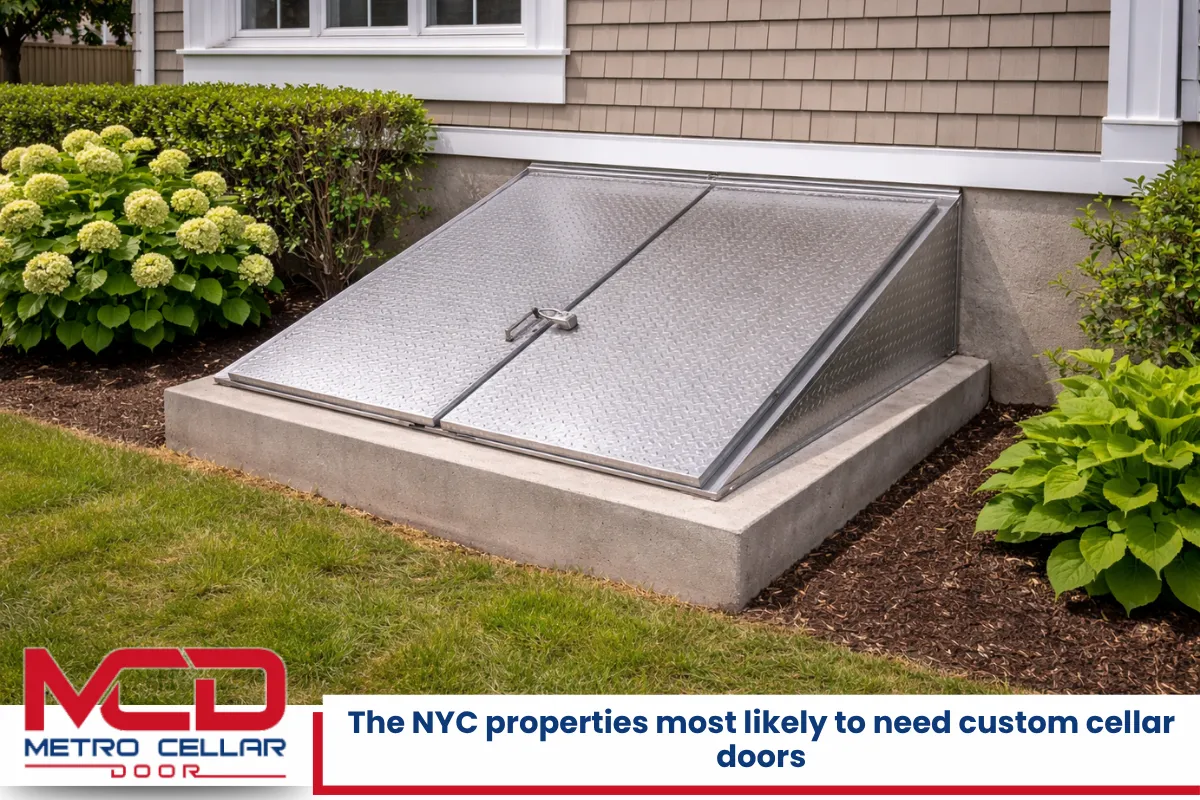
Custom-shaped cellar doors make particular sense on these kinds of buildings:
Older brownstones and row houses
These often have narrow lot widths, below-grade areaways, shifted masonry, and unusual stair alignments.
Homes with side-yard cellar access
A side entry may be too tight for a centered bulkhead and may need an along-side or offset configuration.
Houses with sloped foundation walls
These are classic candidates for sloped-wall doors or custom transition components.
Properties replacing long-failing wood bulkheads
Once rot, swelling, and repeated patching become a pattern, a steel replacement built to the actual opening is usually the smarter long-term move.
Buildings where the cellar is used often
Frequent access changes the design priorities. Ease of opening, hardware quality, weather seal, and landing safety matter more when the door is used weekly instead of seasonally.
It also helps to understand the local terminology. NYC distinguishes a basement from a cellar. HPD explains that a basement has at least one-half of its height above curb level, while a cellar has more than one-half of its height below curb level. That difference affects legal use and should keep owners from assuming that a new door, by itself, changes how the space may be occupied.
What to ask before hiring a cellar door installer
A good bid should answer more than price. Ask these questions before you commit:
- Are you measuring the actual foundation opening, not just the existing door?
- Do you see any drainage issue, stair problem, or clearance conflict that should be fixed before installation?
- Is this a stock door, a custom-measured door, or a custom-fabricated configuration?
- Will this scope likely require DOB filing, LPC review, or DOT coordination?
- Is the work on a residential property being handled by a properly licensed home improvement contractor?
- What finish, hardware, and weather protection are included?
- If the opening is out of square after demolition, how is that handled?
- Are you accounting for how the doors will actually be used day to day?
A strong cellar door installer will not rush past those questions. Tight-space doors fail when the contractor treats the job like a commodity replacement. They succeed when the installer reads the opening, the site, and the code issues together.
The smartest answer for a cramped opening
So, can you get custom-shaped cellar doors for tight spaces in NYC? Yes, very often you can. The better question is whether the opening has been evaluated correctly. In New York, narrow areaways, offset stairs, sloped walls, shifted masonry, sidewalk conditions, and landmark rules all affect what kind of cellar door installation will work. The right answer is usually not “make a standard door fit somehow.” It is to choose a cellar door installer who can measure the real opening, identify the right door style, and build a solution that opens cleanly, seals properly, and respects NYC requirements from day one.
Cellar Door Installer in NYC – Metro Cellar Door Bilco Pro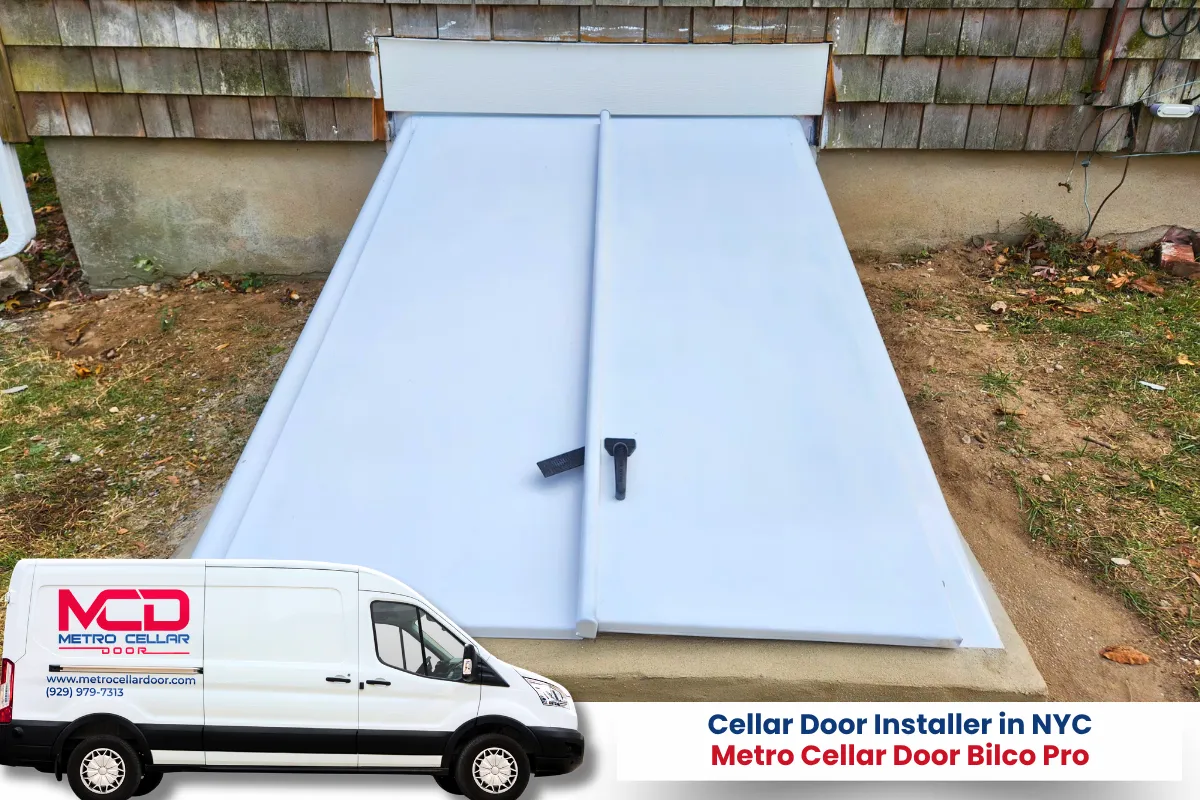
At Metro Cellar Door Bilco Pro, we help homeowners and property owners solve the exact tight-space problems discussed above. Whether your opening is narrow, angled, offset, or simply worn out, we provide cellar door installation built around the real conditions on site. As your cellar door installer, we focus on safe access, clean fit, durable steel cellar doors, and practical solutions that work for New York City properties and the surrounding areas. If your old doors leak, bind, rust, or never fit right to begin with, contact us today. Call us at (929) 979-7313 or fill out our contact form to schedule service. We’re Metro Cellar Door Bilco Pro, and we’re ready to help you get the right cellar doors installed the right way.
Frequently Asked Questions
1. Can replacing a cellar door make an illegal basement or cellar apartment legal?
No. A new cellar door can improve access, weather protection, and safety, but it does not legalize an unlawful dwelling unit by itself. In NYC, a basement and a cellar are not the same thing, and the legal use of each space depends on much more than the exterior entrance. The City distinguishes a cellar as a space with more than one-half of its height below curb or grade level, and cellar or basement apartment work can trigger larger requirements involving egress, building systems, fire protection, and occupancy rules. A door upgrade can be part of a broader compliance project, but it is never the whole answer.
2. If my cellar door opens onto the sidewalk, who handles unsafe conditions?
For sidewalk cellar doors, NYC treats safety seriously because the public uses that walking surface every day. NYC311 states that the Department of Transportation investigates sidewalk cellar doors that are damaged, bent, broken, wobbly, or left open and unprotected. The City’s sidewalk guidance also flags hardware defects when the hardware is not reasonably flush with the sidewalk or when a cellar door deflects too much under foot traffic. So if the problem is on the sidewalk, this is not just a private maintenance issue. It can involve DOT enforcement, public complaints, and repair responsibility tied to the property owner.
3. Will a rear areaway cellar hatch on a landmarked building still need review?
Possibly, yes. Many owners assume rear or below-grade work is automatically exempt, but landmark review can still apply depending on visibility, scope, and whether the work changes openings, doors, or areaway conditions. NYC landmark guidance explains that exterior door replacement, modified openings, new openings, yard and areaway work, and basement/cellar access hatches can all fall within LPC review standards. Some less visible work may be easier to approve, but that is different from saying no review is needed. The safest approach is to treat landmark status as a design factor at the beginning, not as a surprise after fabrication.
4. Does a residential cellar door installer need a special license in NYC?
For residential projects, the business performing home improvement work generally needs a Home Improvement Contractor license issued by the NYC Department of Consumer and Worker Protection. NYC also notes that even when certain work may not need a DOB permit, that does not eliminate the need for proper licensing. That matters because cellar door installation often involves exterior work, below-grade access, replacement of old components, and changes that homeowners naturally treat as home improvement. Before signing a contract, verify both the contractor’s licensing status and whether the scope also requires DOB filing, design professional involvement, or another city agency review.
5. Can a custom cellar door help with drafts and energy loss?
It can help, especially if the door separates conditioned interior space from the exterior, but the result depends on the whole assembly rather than the metal leaf alone. Better fit, tighter weather sealing, cleaner frame alignment, and reduced water and air intrusion can all improve performance. NYC’s Energy Conservation Code states that exterior envelope components, including doors, are part of building envelope compliance, and the current existing-building provisions specifically address replacement of exterior doors at conditioned spaces. In other words, a sloppy replacement can keep leaking air, while a properly planned custom door may improve comfort and reduce repeated moisture-related problems around the opening.
Disclaimer: This article provides general NYC guidance on cellar doors, access conditions, and permitting issues; final requirements vary by property, occupancy, landmark status, and project scope.
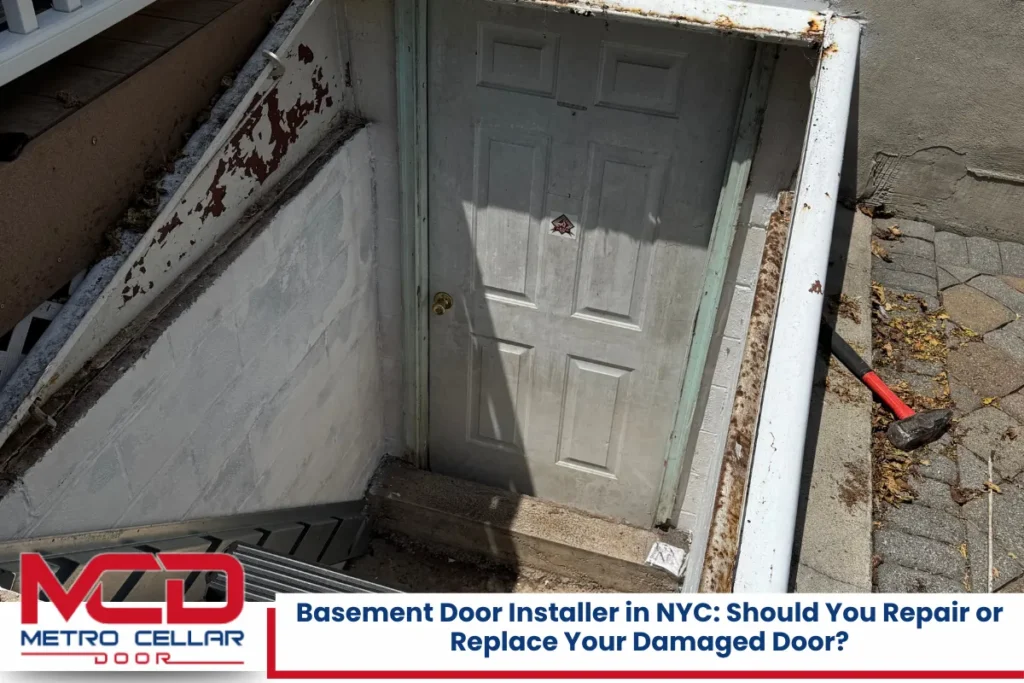
Read Basement Door Installer in NYC: Should You Repair or Replace Your Damaged Door?