
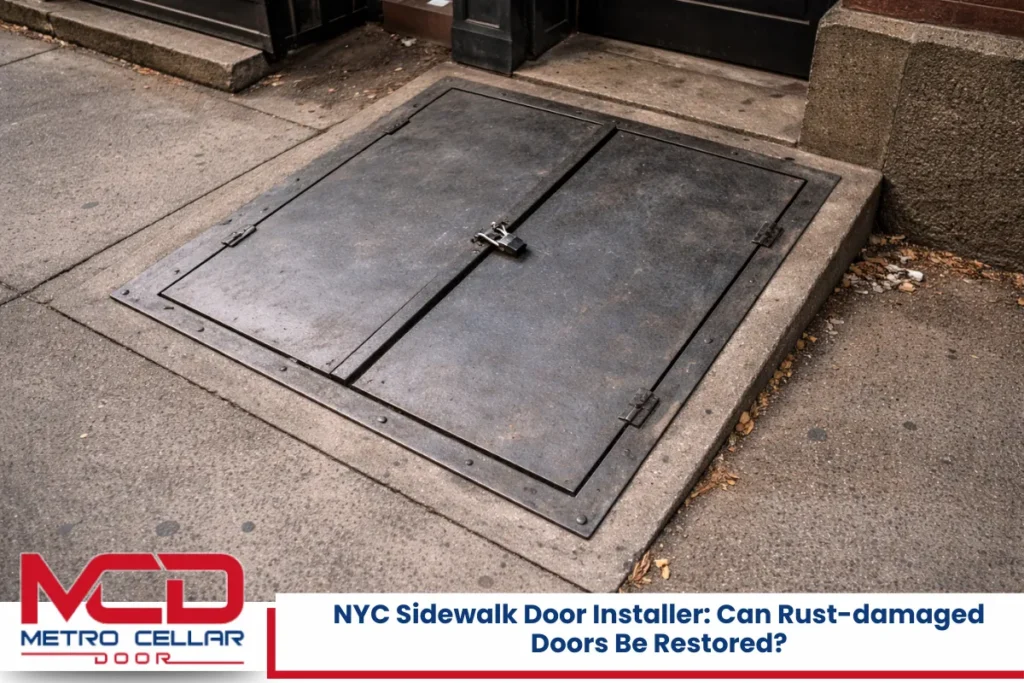
NYC Sidewalk Door Installer projects often begin with the same frustrating question: can a rusted sidewalk door be saved, or does it need to be replaced entirely? Property owners across New York City face this problem every year. Rust spreads quietly, weakens metal, and creates safety risks for pedestrians and building occupants. Left untreated, corrosion can lead to structural failure, sidewalk violations, and costly emergency repairs. The good news is that not every rust-damaged door requires full replacement. In many cases, restoration is possible when handled correctly. This guide explains when repair makes sense, when replacement is safer, and how professional sidewalk door installation ensures compliance with NYC regulations.
Why Rust Is a Serious Problem for Sidewalk Doors in NYC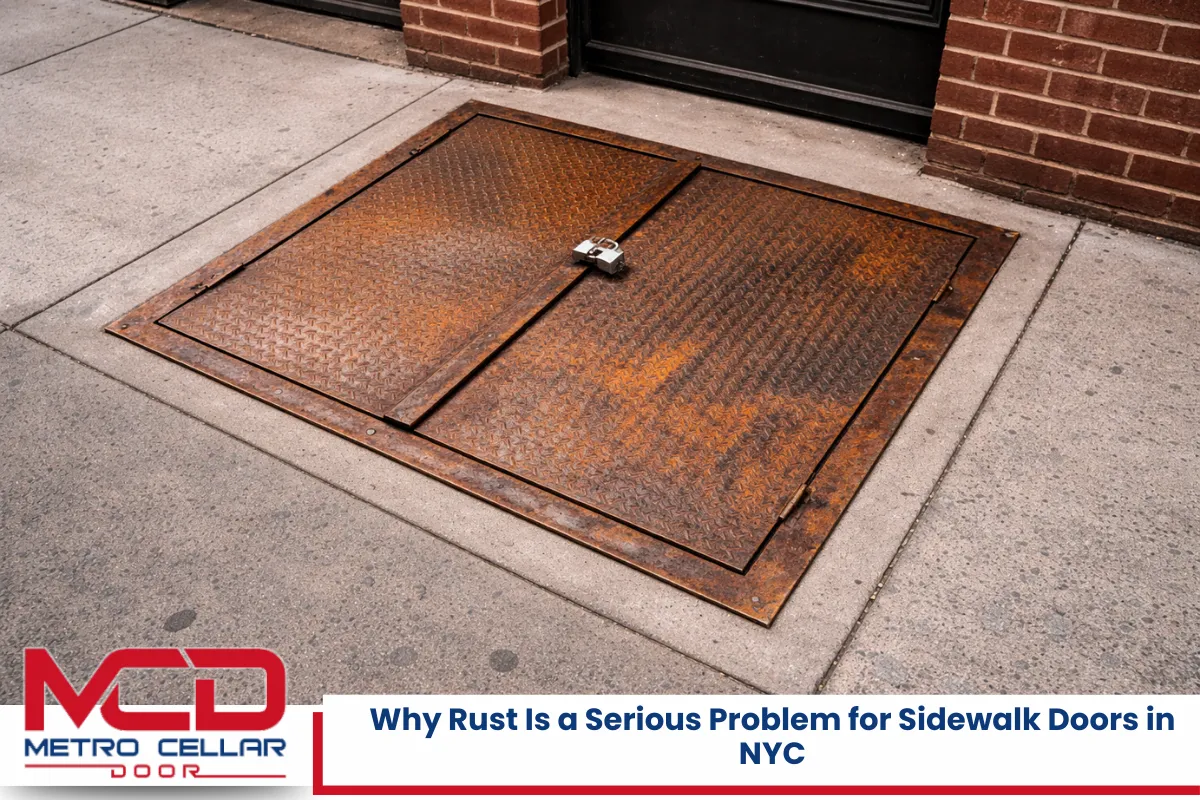
Sidewalk cellar doors are constantly exposed to harsh conditions. Rain, snow, de-icing salts, humidity, and street debris accelerate corrosion. In New York City, freeze-thaw cycles during winter cause water to seep into seams and hinges. As temperatures fluctuate, trapped moisture expands and worsens metal deterioration.
Rust is more than cosmetic. It can:
- Weaken load-bearing steel panels
- Compromise hinge integrity
- Damage locking mechanisms
- Create sharp edges that pose pedestrian hazards
- Lead to water infiltration into basements
According to widely recognized construction standards and building practices, corrosion reduces structural strength over time. For sidewalk doors that may need to support foot traffic or light loads, integrity is critical.
NYC Code Compliance and Legal Responsibilities
Property owners in New York City are legally responsible for maintaining sidewalk structures adjacent to their buildings. That includes cellar doors embedded in the sidewalk.
Sidewalk doors must comply with:
- NYC Building Code structural standards
- NYC Administrative Code provisions related to sidewalk safety
- ADA accessibility considerations when applicable
- Department of Buildings permit requirements for replacement
- Department of Transportation rules regarding sidewalk work
Sidewalk door installation that alters structural framing typically requires permits and inspections. Failing to maintain safe conditions may result in violations or penalties. Restoration work must not compromise safety or structural performance.
How Rust Forms on Metal Sidewalk Doors
Rust develops when iron or steel reacts with oxygen and moisture. In New York’s urban environment, salt from winter road treatments speeds up oxidation.
Common contributing factors include:
- Poor drainage around door frames
- Worn protective coatings
- Lack of routine maintenance
- Damaged weather seals
- Standing water in recessed areas
Even galvanized steel can corrode if its protective zinc layer is compromised. Over time, surface rust can evolve into deep pitting corrosion.
Surface Rust vs. Structural Corrosion
Not all rust damage is equal. Determining whether restoration is possible depends on severity.
Surface Rust
Surface rust affects only the outer layer of metal. It typically appears as:
- Flaking paint
- Light brown discoloration
- Minor scaling
This type of corrosion is often repairable. A professional sidewalk door installer can remove rust, apply protective coatings, and restore functionality.
Deep Pitting and Structural Damage
When rust penetrates deeply, it creates:
- Visible holes
- Warped panels
- Soft or brittle metal
- Loose hinges
- Misaligned doors
At this stage, structural integrity may be compromised. Restoration becomes risky, and replacement is often safer.
When Can Rust-damaged Sidewalk Doors Be Restored?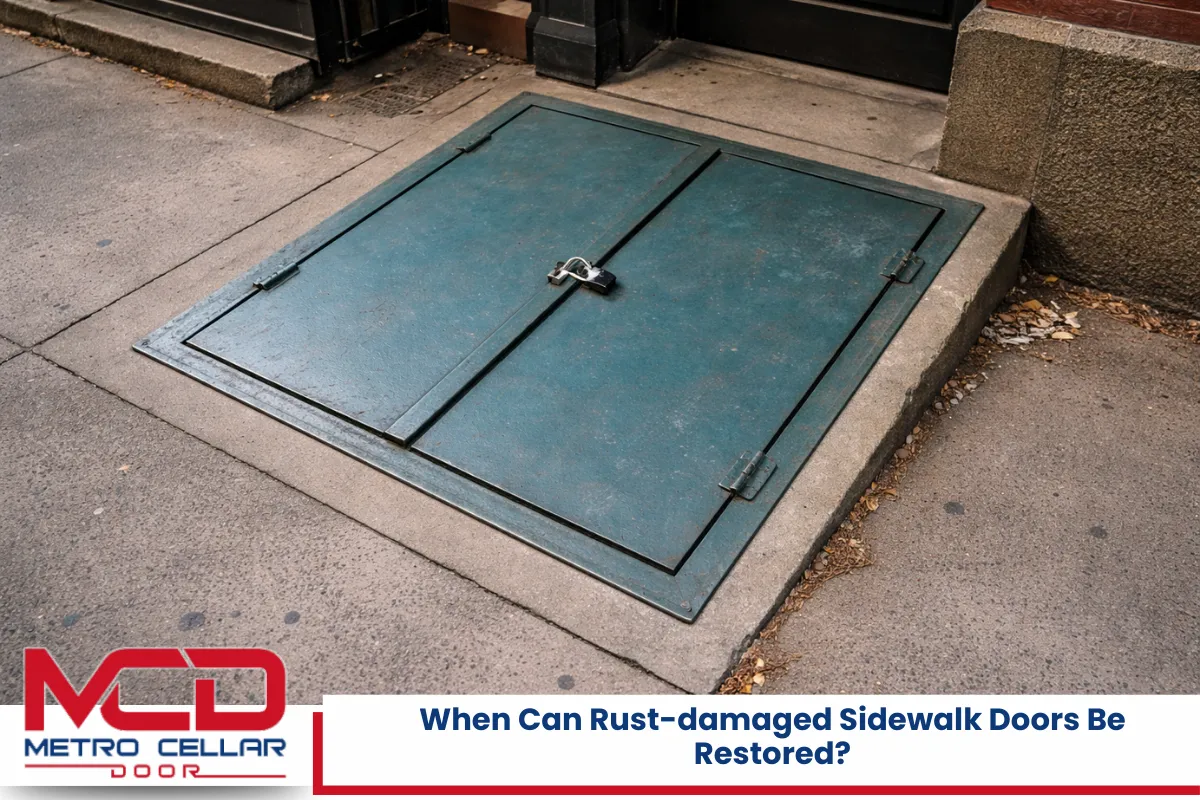
Restoration is possible under specific conditions:
- Corrosion is limited to surface areas.
- Door panels remain structurally sound.
- Hinges and hardware can be reinforced or replaced.
- Frame anchoring to the surrounding concrete is intact.
- Load-bearing capacity has not been reduced beyond acceptable limits.
A professional assessment is essential. Experienced contractors test metal thickness, check welds, and inspect the surrounding sidewalk slab.
If structural strength meets code requirements after treatment, restoration may be viable.
Professional Restoration Process Explained
A proper restoration involves more than sanding and repainting. It requires systematic treatment.
1. Detailed Inspection
A sidewalk door installer evaluates:
- Panel thickness
- Hinge condition
- Frame anchorage
- Locking mechanisms
- Water intrusion patterns
2. Rust Removal
Common methods include:
- Mechanical grinding
- Wire brushing
- Sandblasting
- Chemical rust converters
The goal is to remove corrosion without thinning the metal excessively.
3. Structural Reinforcement
If minor thinning has occurred, reinforcement plates or welded supports may be added. All reinforcement must comply with NYC structural safety standards.
4. Protective Coating Application
After cleaning:
- Zinc-rich primers are applied
- Industrial-grade rust inhibitors are used
- Weather-resistant paint systems protect surfaces
Proper coating is critical for longevity.
5. Seal and Drainage Improvement
Improved flashing, seals, and drainage prevent recurring water damage.
Situations Where Replacement Is the Safer Option
Restoration is not always the right answer. Replacement becomes necessary when:
- Metal thickness falls below safe structural standards
- Doors fail load tests
- Hinges are completely detached
- Frame has separated from concrete
- Repeated rust has compromised performance
Modern sidewalk doors are typically constructed with galvanized steel or heavy-duty powder-coated finishes designed to resist corrosion.
Sidewalk door installation today often includes factory-sealed systems that outperform older models.
Read NYC Sidewalk Door Installer: How Often Should Sidewalk Doors Be Inspected?
Benefits of Replacing an Old Rusted Sidewalk Door
Replacement offers several advantages:
- Enhanced safety compliance
- Improved water resistance
- Better insulation
- Reduced maintenance costs
- Increased property value
- Smoother operation
In high-traffic areas of Manhattan, Brooklyn, Queens, Bronx, and Staten Island, upgraded systems provide peace of mind.
Load Requirements and Pedestrian Safety
Sidewalk doors must withstand pedestrian loads. In commercial areas, occasional equipment loads may apply.
Building codes require:
- Proper anchoring to structural framing
- Secure locking systems
- Flush alignment with sidewalk surface
- Slip-resistant surfaces
Any restoration must maintain these standards.
Waterproofing Considerations
Water infiltration is a major concern in basement-level properties. Poorly sealed sidewalk doors allow rainwater into storage areas, causing mold, structural damage, and inventory loss.
Effective waterproofing includes:
- Continuous flashing
- Gasketed seals
- Raised frames in flood-prone zones
- Drainage channels
In some cases, replacement allows for improved flood resistance compared to older designs.
Materials Used in Modern Sidewalk Door Installation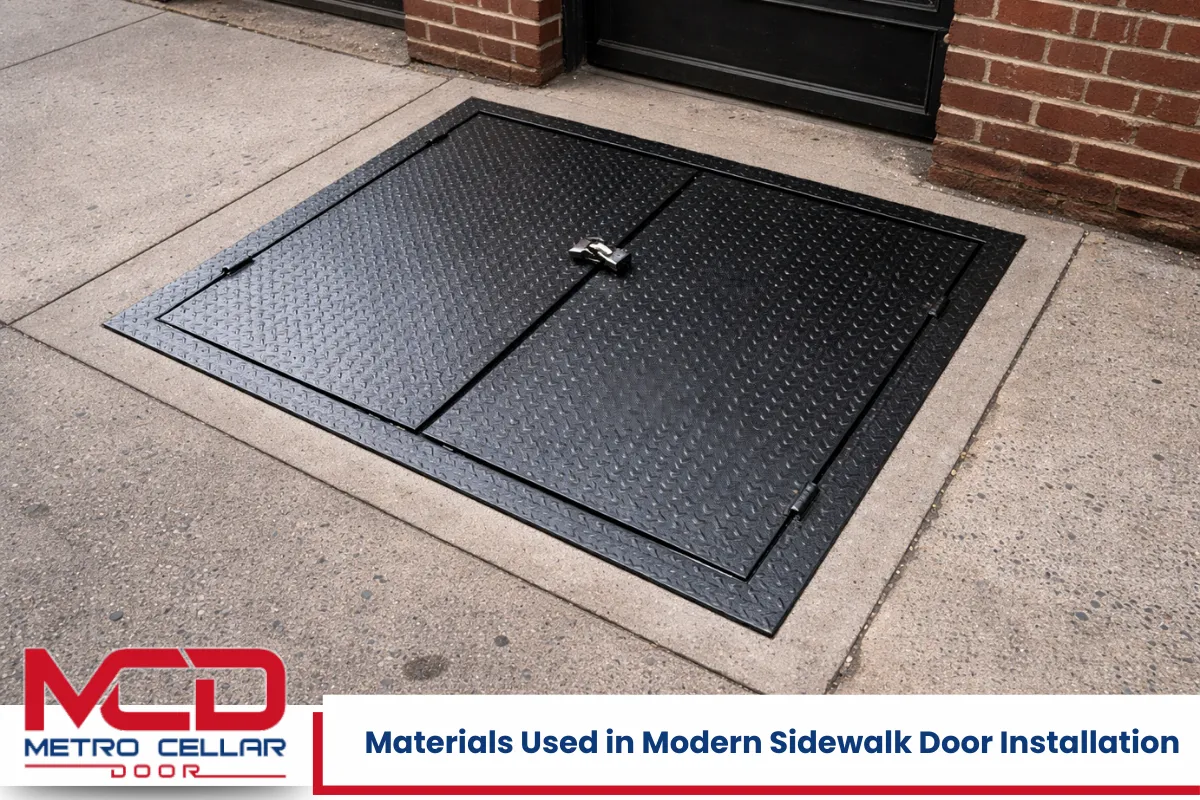
Today’s sidewalk doors are often made from:
- Galvanized steel
- Stainless steel components
- Aluminum framing systems
- Reinforced steel panels
Galvanization protects against rust by coating steel with zinc. Powder coating adds another protective layer.
Selecting corrosion-resistant materials reduces long-term maintenance.
Maintenance Tips to Prevent Future Rust
Property owners can extend the lifespan of sidewalk doors by:
- Inspecting twice per year
- Clearing debris from seams
- Repainting scratched surfaces
- Lubricating hinges
- Ensuring proper drainage
Routine maintenance is far less expensive than emergency replacement.
Cost Factors: Repair vs. Replacement
Several factors influence cost:
- Extent of rust damage
- Door size
- Structural modifications
- Permit requirements
- Labor rates in NYC
Restoration may cost less initially. However, repeated repairs can exceed the cost of a new installation over time.
Long-term durability should guide decision-making.
Permit Requirements in New York City
Sidewalk work often requires:
- Department of Buildings permit
- Licensed contractor
- Inspections
- Compliance documentation
Failure to obtain permits can result in violations. Professional sidewalk door installation ensures compliance with NYC regulations.
Signs You Need Immediate Professional Evaluation
Call a professional if you notice:
- Doors sagging or misaligned
- Visible holes in metal
- Water entering basement
- Difficulty opening or closing
- Loose or missing hinges
- Sidewalk cracking around frame
Prompt attention prevents safety hazards and legal issues.
Environmental Impact of Restoration vs. Replacement
Restoring existing steel reduces waste and lowers material consumption. However, severely compromised doors may require replacement to ensure safety.
Modern manufacturing techniques improve corrosion resistance and extend lifespan, which also reduces environmental impact over time.
Balancing sustainability and safety is important.
Choosing the Right Sidewalk Door Installer in NYC
Experience matters. A qualified contractor should:
- Understand NYC building codes
- Provide structural assessment
- Handle permits
- Offer corrosion-resistant materials
- Deliver warranty-backed installation
Professional evaluation determines whether restoration is viable or replacement is required.
Final Thoughts on Restoring Rust-damaged Sidewalk Doors
Rust does not automatically mean replacement. In many cases, a knowledgeable sidewalk door installer can restore functionality and extend the life of existing doors. However, when structural integrity is compromised, replacement is the safer, code-compliant solution. Property owners in New York City must prioritize safety, durability, and regulatory compliance. A professional inspection is the first step toward protecting both pedestrians and your property investment.
NYC Sidewalk Door Installer – Metro Cellar Door Bilco Pro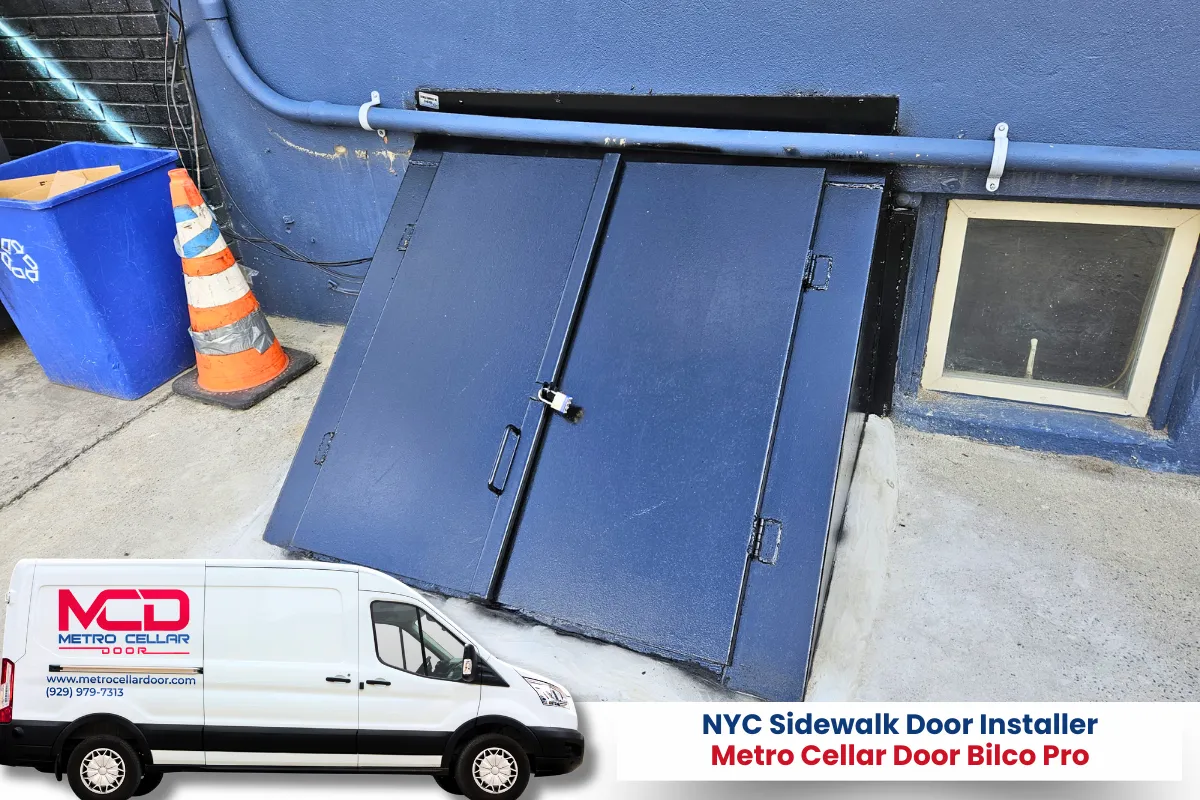
At Metro Cellar Door Bilco Pro, we specialize in professional sidewalk door installation throughout New York City and the surrounding areas. As an experienced sidewalk door installer, we understand the strict building codes and structural requirements that apply to sidewalk doors. Whether your doors show surface rust or severe corrosion, we provide honest evaluations and clear solutions. We handle permits, inspections, and full replacements when needed. Our team uses high-quality, corrosion-resistant materials designed for NYC weather conditions. If your cellar doors are unsafe, leaking, or deteriorating, call us at (929) 979-7313 or fill out our contact form today. We are ready to restore safety and performance to your property.
Frequently Asked Questions
1. How long do sidewalk doors typically last in NYC?
The lifespan of sidewalk doors depends on material quality, maintenance, and environmental exposure. In New York City, heavy moisture, road salt, and constant pedestrian traffic can shorten durability. Well-maintained galvanized steel doors can last 20 to 30 years or more. However, neglected doors may develop structural rust within 10 to 15 years. Regular inspections and timely repainting significantly extend lifespan. Professional installation also plays a major role, since improper anchoring or drainage issues accelerate corrosion. Choosing corrosion-resistant materials and scheduling routine evaluations helps maximize long-term performance.
2. Are sidewalk cellar doors required to be flush with the sidewalk surface?
Yes. NYC regulations generally require sidewalk doors to sit flush with the surrounding walking surface to prevent trip hazards. Uneven or protruding panels may result in safety violations. Proper alignment ensures pedestrian safety and ADA compliance where applicable. During sidewalk door installation, contractors must ensure accurate leveling and secure anchoring to surrounding concrete. If settlement or shifting causes unevenness, repairs may be required. Property owners are responsible for maintaining safe sidewalk conditions adjacent to their buildings.
3. Can rust spread to surrounding concrete or framing?
Rust itself does not spread to concrete, but corrosion can damage embedded steel anchors and framing components. When steel expands due to rust, it may crack surrounding concrete. Over time, this compromises structural stability. Water infiltration can also weaken the slab and subgrade below the door frame. Early detection prevents larger structural issues. Professional assessment ensures both the metal door and surrounding sidewalk structure remain safe and intact.
4. Is it possible to upgrade insulation when replacing sidewalk doors?
Yes. Modern sidewalk doors can include insulated panels, improved gaskets, and enhanced weather sealing. These upgrades reduce drafts and help maintain basement temperature stability. Insulation improvements are especially beneficial for buildings that use basement space for storage, utilities, or finished areas. During replacement, contractors can recommend insulated systems that improve energy efficiency without compromising structural strength or code compliance.
5. Do commercial properties have stricter requirements for sidewalk doors?
Commercial properties often face higher load expectations due to increased foot traffic. In some cases, deliveries or light equipment may cross sidewalk doors. As a result, structural performance must meet applicable building code load standards. Commercial buildings may also undergo more frequent inspections. Proper installation, corrosion resistance, and secure locking mechanisms are essential to ensure compliance and safety in commercial environments.
Disclaimer: This article is for informational purposes only and does not constitute legal or professional engineering advice. Always consult a licensed contractor or qualified professional for property-specific guidance and code compliance in New York City.
Read NYC Fire Door Installer: What Materials (Foam, Sealant) Should Be Used Around Fire Doors?