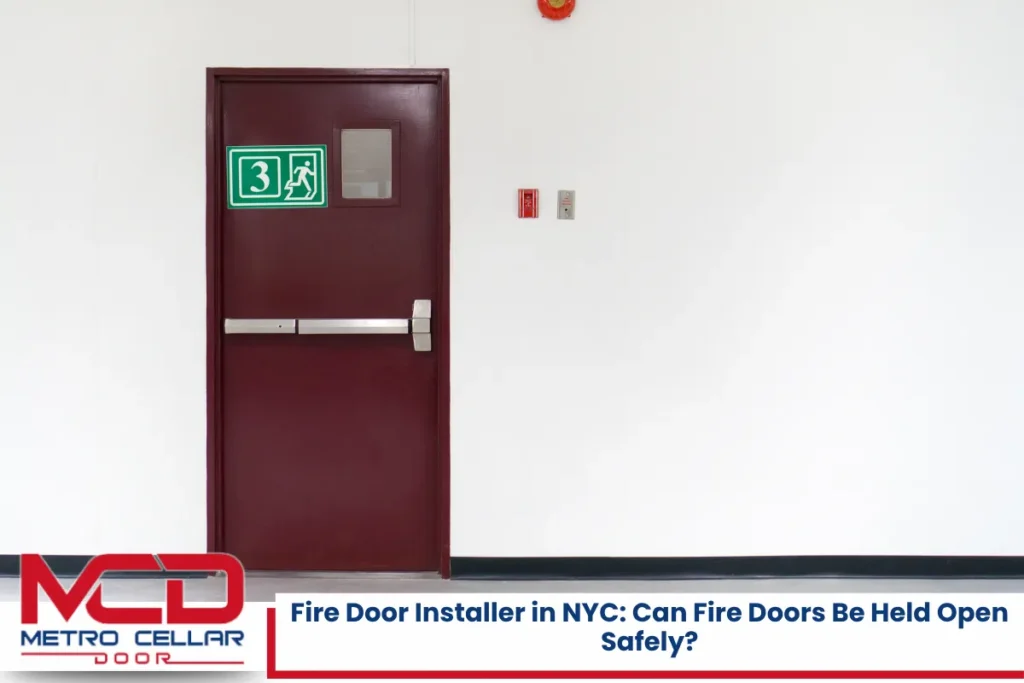

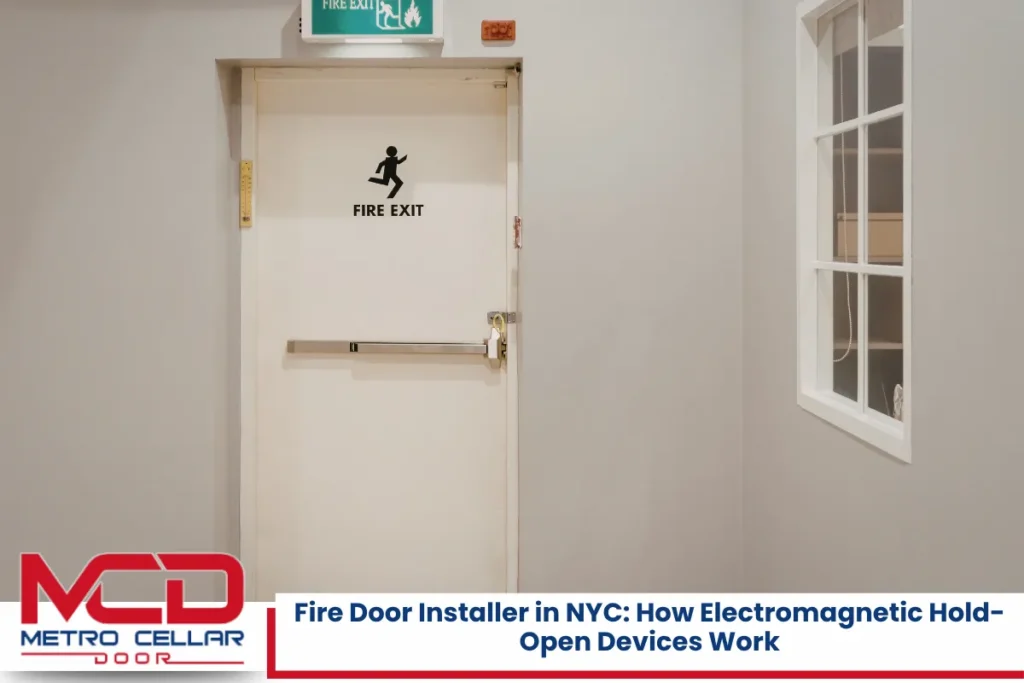
Fire door Installer in NYC is more than a search phrase when a busy stairwell, corridor, or lobby door keeps getting propped open to move people faster. That convenience can become a life-safety gap. When a rated door stays open without the right release device, smoke and heat can spread beyond the room of origin, turning an incident into a building-wide emergency. The fix is not a wedge, kick-down stop, or improvised latch. It is an installed electromagnetic hold-open device that keeps a fire door open during normal use and releases it automatically when smoke is detected, power fails, or the alarm system activates. This guide explains how the system works, where NYC rules allow it, and what to watch.
Why these devices matter in buildings that never really slow down
In New York City, fire doors are not decorative extras. They are part of the building’s compartmentation strategy, which is the basic idea of keeping fire, smoke, and heat contained long enough for occupants to move and for firefighters to work. That is why stair doors, corridor doors, smoke barrier doors, and other rated openings are expected to close and latch, not stand open because traffic is heavy. Approved hold-open systems exist for one reason: they give a building the daily convenience of an open door without sacrificing the emergency function of a closed one.
This becomes especially important in schools, healthcare spaces, senior living environments, offices, mixed-use properties, and larger multifamily buildings, where carts, wheelchairs, deliveries, and constant foot traffic make manually reopening a door all day unrealistic. An electromagnetic hold-open device solves that operational problem only if the entire opening still performs as a fire-rated assembly the second smoke is detected or power is interrupted. In other words, the magnet is convenient, but the closer, latch, frame, detector, wiring, and release logic are what make the opening safe.
The hardware behind a door that stays open until it should not
An electromagnetic hold-open device is a simple idea with several moving parts. In daily use, an energized magnet holds the door open at a set position. When the system receives the right signal, the magnet de-energizes, the door closer takes over, and the door swings shut so it can protect the opening as designed.
The main components inside a compliant setup
A typical setup includes:
- an electromagnetic holder or hold-open magnet
- a strike plate or armature attached to the door
- a self-closing or automatic-closing door closer
- smoke detection or a fire alarm system interface
- control logic that releases on alarm, manual command, or power loss
- a latching door and listed frame that remain part of the rated opening
For paired doors, the system can become more involved. Double-leaf assemblies may need closing sequence control so the inactive leaf closes before the active leaf. If that sequence is wrong, the meeting edges can bind, the latch may not engage, and the fire door installation can fail even if the magnet itself releases properly. That is one reason a fire door installer has to think like a systems coordinator, not just a hardware mechanic.
What happens when smoke, an alarm signal, or power loss hits the opening
The release sequence is where electromagnetic hold-open devices earn their keep. NYC Building Code section 716.5.9.3 requires many automatic-closing fire doors to close by smoke detection, loss of power to the smoke detector when applicable, or loss of power to the hold-open device. The same section states that smoke-activated doors cannot wait more than 10 seconds to start closing after the detector actuates.
In practice, the sequence should look like this:
- The detector senses smoke, or the fire alarm system sends the programmed release signal.
- The hold-open magnet loses power.
- The door closer drives the leaf toward the frame.
- The latch engages, restoring the protective function of the fire door.
- On certain stair-door arrangements, the system must also be capable of manual release from the fire command center or, where no fire command center is required, from a fire alarm control panel near the main entrance.
For the NYC stair-door exception, the code goes a step further. The wiring among the fire alarm system, smoke detection system, and hold-open devices must be electrically supervised. That requirement matters because a beautiful-looking device with broken or unsupervised wiring is still a failed life-safety feature. The city also requires annual inspection and testing of the release command, the automatic programming, the device circuitry, and the closer that actually shuts the door.
There is another detail owners often miss: if the hold-open device is out of service for repairs, the door is supposed to stay closed during that period. That rule reflects the basic life-safety principle behind every fire door installation in NYC. If the automatic release cannot be trusted today, the opening should revert to its safest condition now, not after the technician returns next week.
Read Fire Door Installer in NYC: Can Fire Doors Be Held Open Safely?
Where NYC code allows automatic-closing fire doors with hold-open devices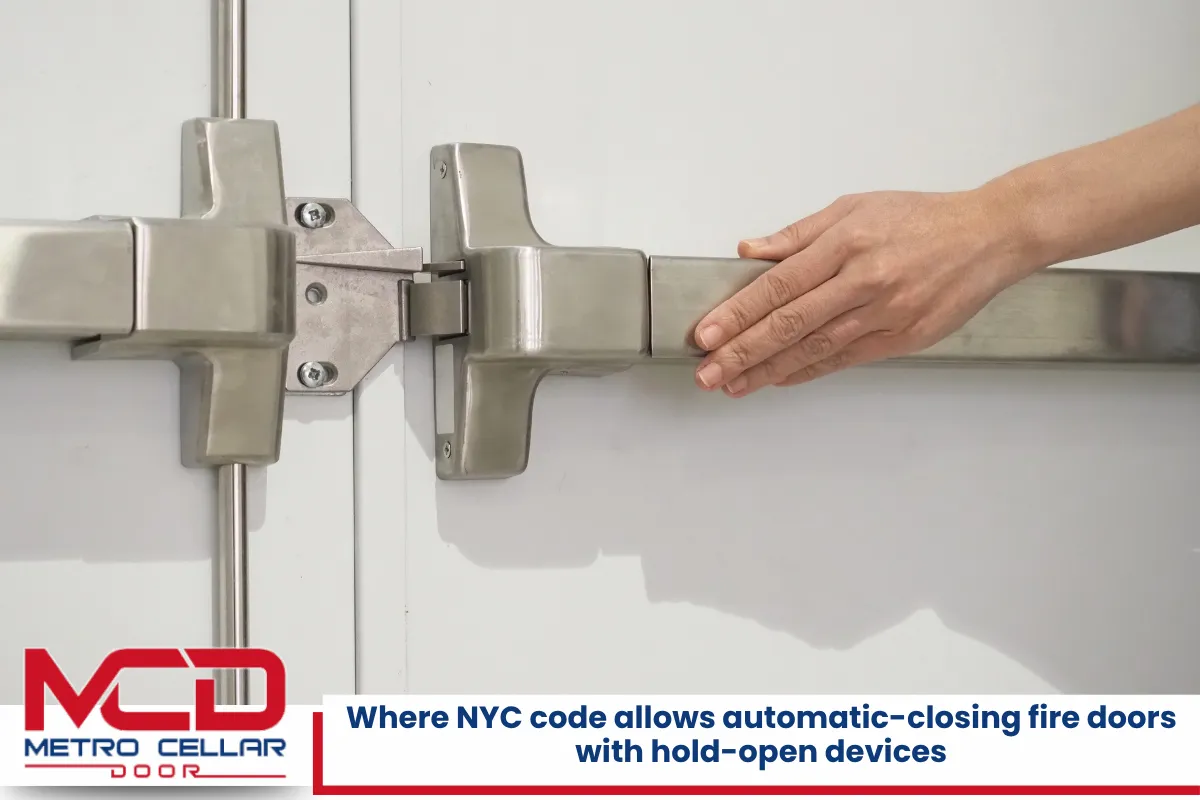
New York City does not treat every fire door the same way. Under the current Building Code, smoke-activated automatic-closing fire doors appear in a range of locations, including doors across corridors, doors in exit access stair and ramp enclosures, openings in exits or corridors that require rated construction, smoke barriers, fire partitions, fire walls, shaft enclosures, and certain other protected openings. That is why the first question is never, “Can we add a magnet?” It is, “What kind of rated opening is this, and what does this opening have to do in a fire?”
The narrow stair-enclosure exception building owners miss
NYC also permits a very specific stair-door arrangement under the exception to section 713.7. For no more than one interior exit stairway or ramp in a building, certain doors serving that enclosure may be automatic-closing by smoke detection if strict conditions are met. Those conditions include limits on occupancy and building type, service to no more than three consecutive levels, another exit serving those levels, connection to the fire alarm system, installation in accordance with NFPA 80 and the code, and manual release capability. This is not a broad permission slip. It is a narrow, rule-heavy exception.
That nuance matters because many owners hear that “stair doors can be held open” and miss the part about one stair only, three consecutive levels only, and the need for another exit. A seasoned fire door installer in NYC should catch that before hardware is ordered, not after an inspection fails.
Why apartment and hallway doors are a different conversation
Residential buildings bring a separate set of concerns. NYC Housing Preservation and Development states that apartment doors and hallway doors are required by law to swing closed and latch by themselves after being opened. The city also warns tenants and owners not to tamper with self-closing hardware or prop these doors open, because open doors let fire and smoke spread to corridors and other apartments. For many multifamily properties, that message is reinforced by the city’s “Close the Door” notices and annual fire preparedness materials.
The legal side is serious. Administrative Code section 28-315.10 requires self-closing and self-latching devices for certain residential corridor and stair access doors, and section 27-2041.1 makes owners responsible for keeping those doors in good repair. HPD says defective self-closing conditions can trigger a class C immediately hazardous violation, with a 14-day correction period. So when people talk casually about holding apartment or common-area doors open, they are often talking about a habit that conflicts with the city’s core fire-safety approach.
Why fire door installation fails when the assembly is treated like ordinary hardware
One of the biggest mistakes in the field is acting as if a fire door is just a heavier version of a standard door. It is not. NYC Building Code section 716.5 requires approved fire door assemblies to meet tested rating requirements and to be installed in accordance with the code and NFPA 80. Fire door assemblies in corridor walls and smoke barriers are tied to recognized test standards such as NFPA 252 or UL 10C. That means the performance of the opening depends on the whole assembly, not a single hinge, closer, or magnetic holder viewed in isolation.
Labels, listings, and compatibility matter more than appearance
The code also expects labels. Fire door assemblies must be labeled by an approved agency, and the labels must be permanently affixed to the door or frame. Fire door frames must show the name of the manufacturer and the third-party inspection agency. If those labels are missing, painted over, or disconnected from what is actually installed at the opening, the problem is bigger than cosmetics. It can undermine the proof that the opening is the rated assembly the building is relying on.
This is why a proper fire door installation starts with the opening schedule, wall rating, occupancy, door label, frame label, hardware preparation, closer type, latch function, and detector or alarm interface. The magnet is only one line item. If the installer adds a hold-open device to a misaligned frame, a door that no longer latches, or a leaf that has already been over-modified in the field, the opening may look updated while becoming less compliant.
Mistakes that create violations fast
Common failure points include:
- propping the door open with wedges or kick-down stops
- installing hardware that does not match the rated assembly
- ignoring labels on the door or frame
- programming release logic without testing the actual close-and-latch result
- leaving wiring issues unresolved
- assuming a magnet fixes a door that already has alignment, latch, or closer problems
What a fire door installer should test before leaving the site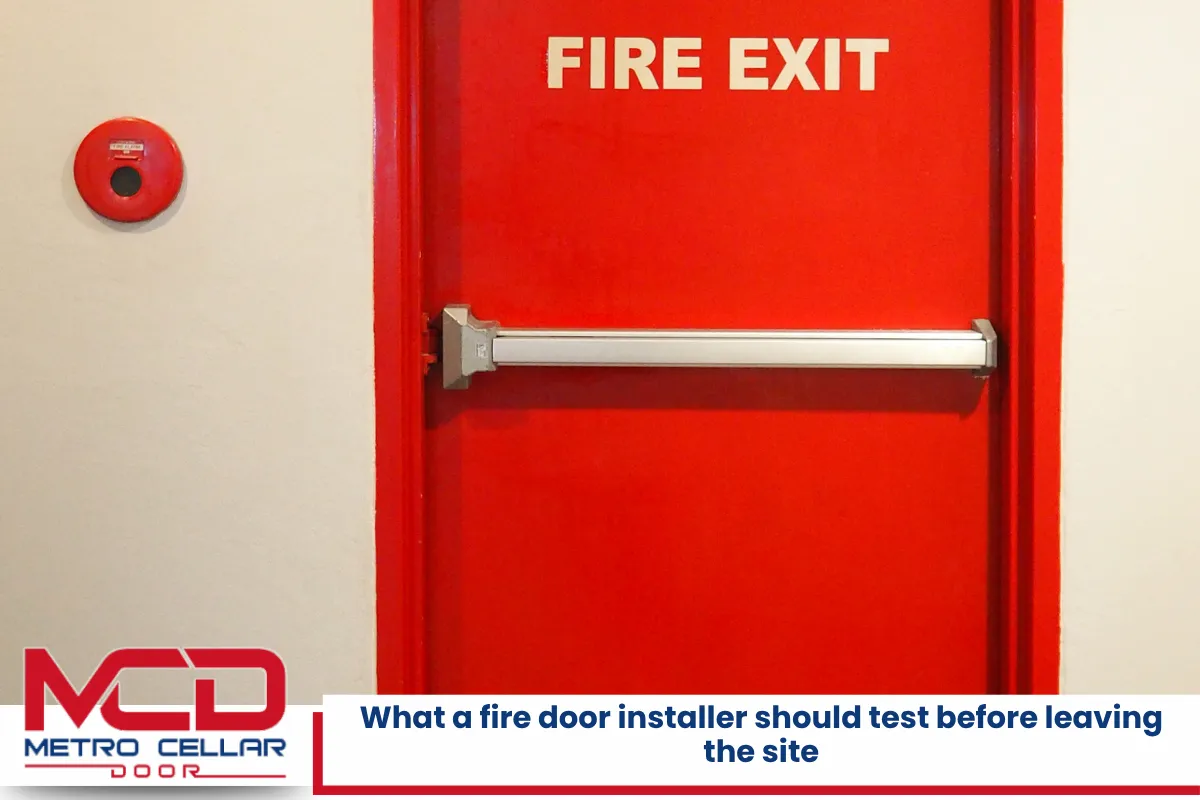
NFPA says fire doors must be inspected and tested immediately after initial installation and then at least annually after that. In NYC, the fire alarm side of the system is also subject to inspection, testing, and maintenance requirements, including annual testing for certain hold-open arrangements and five-year retesting of fire alarm and detection systems. That means the job is not finished when the screws are tight. It is finished when the opening performs correctly and the supporting system documentation is in order.
The release sequence
A qualified team should verify that the detector or fire alarm command actually releases the holder, that the circuitry works the way the programming says it should, and that any required manual release station or fire alarm control function performs on command. For stair-door exception setups, NYC specifically calls out testing the manual control, the output programming, the circuitry, and the closer.
The close-and-latch sequence
Release alone is not enough. The closer must move the leaf all the way to the frame, and the latch must engage. A fire door that drifts, bounces, sticks on flooring, or stops short of positive latching is not doing its job. NFPA materials also note that floor conditions can interfere with self-closing doors, which is one reason even a seemingly unrelated flooring change can become a fire door problem.
The recordkeeping sequence
FDNY study materials state that records of required inspections, tests, servicing, and maintenance must be kept on the premises for at least three years and made available to FDNY representatives. For owners and facility managers, that makes documentation part of compliance, not paperwork for paperwork’s sake. A smart fire door installer will leave a clean trail: product data, device locations, test results, deficiency notes, and proof of correction where needed.
When repair is enough and when replacement protects you better
Not every problem calls for a full replacement. If the fire door, frame, and labels are intact, the rating is correct, and the deficiency is limited to a closer adjustment, damaged latch, faulty detector, worn holder, loose coordinator, or programming issue, repair may be the efficient answer. But when the opening has missing labels, severe damage, incompatible modifications, chronic latching failure, or a door and frame combination that no longer reflects a tested assembly, replacement often becomes the cleaner and safer path. That judgment should be made against the opening’s listing and code function, not just the cost of the next service call.
Choosing a fire door installer in NYC for this type of work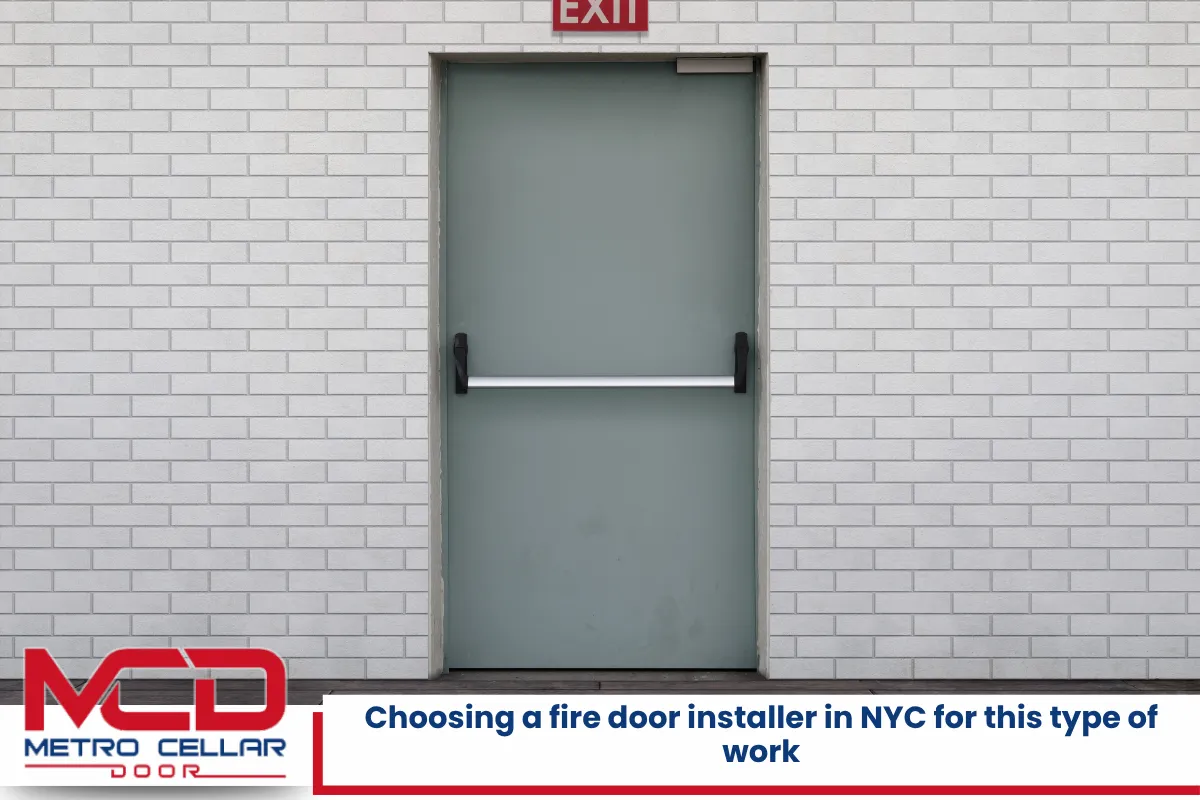
The best installer for this work understands more than door hardware. They should be comfortable reading the opening’s rating, checking labels, matching the hold-open arrangement to the code purpose of the wall, and coordinating the fire alarm side of the installation where required. NYC also regulates fire alarm design, document approval, and certain installation and service roles through Fire Department review and certificate-of-fitness frameworks, so door work that touches alarm functions should never be handled like a generic handyman project.
For owners, property managers, supers, and facility teams, the takeaway is simple. A properly installed electromagnetic hold-open device can make a building easier to use. A poorly planned one can create violations, failed inspections, and a dangerous opening that will not protect the stair, corridor, or smoke barrier when it matters. Good fire door installation is not about keeping a door open. It is about making sure the door closes exactly when it must.
The safer path for openings that work hard every day
Electromagnetic hold-open devices are one of the clearest examples of how convenience and code can work together when the installation is done correctly. They let a building breathe during normal operations, then restore compartmentation the instant smoke, alarm activation, or power loss tells the opening to do its real job. In NYC, the details matter: the opening location, the assembly rating, the labels, the release logic, the stair-door limitations, the inspection schedule, and the records behind the work. If those details are handled well, fire doors stay practical, compliant, and ready for the moment nobody wants to face.
Fire Door Installer in NYC – Metro fire Door Bilco Pro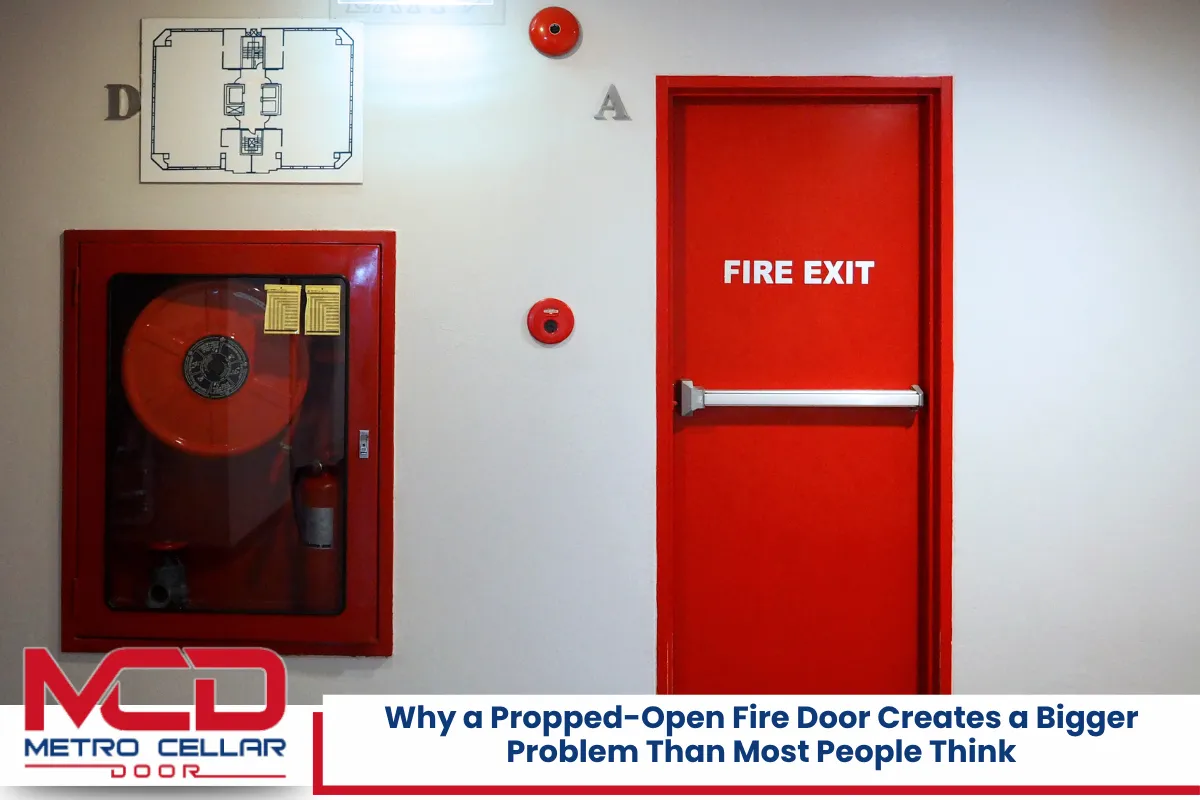
At Metro fire Door Bilco Pro, we know that one failed closer, missing label, or unsafe hold-open device can put a building at risk and create avoidable violations. As your fire door installer in New York City, we provide practical fire door installation, repair, replacement, and code-focused service for commercial and residential properties. We inspect the full opening, coordinate the right hardware, and make sure your fire doors close, latch, and perform the way they should. Whether you need a new opening, troubleshooting, or annual compliance support, our team is ready to help. Call us at (929) 979-7313 or fill out our contact form today. We serve New York City and the surrounding areas with fast scheduling and clear recommendations.
Frequently Asked Questions
Can a fire door with a hold-open device also be tied into access control?
Sometimes yes, but only when the entire opening still satisfies fire protection, egress, and release requirements. The hold-open magnet, electrified lock, card reader, request-to-exit hardware, and fire alarm interface must be coordinated so the opening releases appropriately during alarm conditions and does not block safe egress. In NYC, alarm-related design and installation documents may require review and approval, and work that touches fire alarm functions falls under regulated professional and certificate-of-fitness frameworks. The safest approach is to map the full sequence of operations before installation: normal access, alarm release, power loss, emergency egress, and post-alarm reset.
What paperwork should a building owner keep after a fire door installation?
Keep more than the invoice. Owners should maintain the door and frame identification, product data, approved or as-built drawings where applicable, detector and fire alarm interface details, inspection and test reports, deficiency lists, and proof of corrections. For the fire alarm side, FDNY materials state that required inspection, testing, servicing, and maintenance records must be kept on the premises for at least three years and be available for inspection. Well-organized records make future annual inspections easier, help answer code questions quickly, and reduce confusion when a different technician services the opening later. Good documentation is part of compliance, not an afterthought.
Can paint, new flooring, or a small renovation make a compliant fire door fail?
Yes. Renovations around the opening can quietly break performance. New flooring can change the bottom clearance or create drag that interferes with closing. Fresh paint can cover important labels. Added signs, protection plates, electrified hardware, or field modifications can move the assembly away from its tested configuration. NFPA materials specifically note that floor conditions can impair self-closing doors, and NYC code relies on permanently affixed labels and listed assemblies to verify what was approved. After finish work or renovation near a rated opening, the safest move is to retest the door for full closure, latching, and release performance instead of assuming the opening still works as before.
Are electromagnetic hold-open devices a good fit for schools, healthcare spaces, and senior facilities?
They often are, because those buildings depend on easy circulation, accessibility, and rapid movement of people and equipment. A constantly self-closing door can be impractical in a high-traffic corridor, while an approved hold-open device can keep the opening usable during normal operations and still restore protection during alarm conditions. The key is that suitability depends on the exact opening, occupancy, smoke barrier function, and code path involved. A device that makes sense in one corridor may be wrong for another door just a few feet away. That is why site-specific review matters more than generic advice. Fit is determined by function, listing, and code, not convenience alone.
How do I know when repair is no longer enough and replacement is the better decision?
A practical rule is to ask whether the original listed assembly still exists in a usable form. Repair is often reasonable when the rating is correct, labels are intact, and the main issues are wear-related: a closer, latch, detector, coordinator, or holder that can be restored without compromising the opening. Replacement becomes more attractive when labels are gone, the frame or leaf is badly altered, the opening no longer latches reliably, or the hardware stack has drifted away from the tested assembly over time. At that stage, repeated patchwork can cost more than it saves. The goal is not the cheapest short-term fix. It is a fire door that will actually perform when needed.
Disclaimer: This article is general information, not a substitute for a site-specific NYC code review, approved plans, or inspection by qualified fire door and fire alarm professionals.
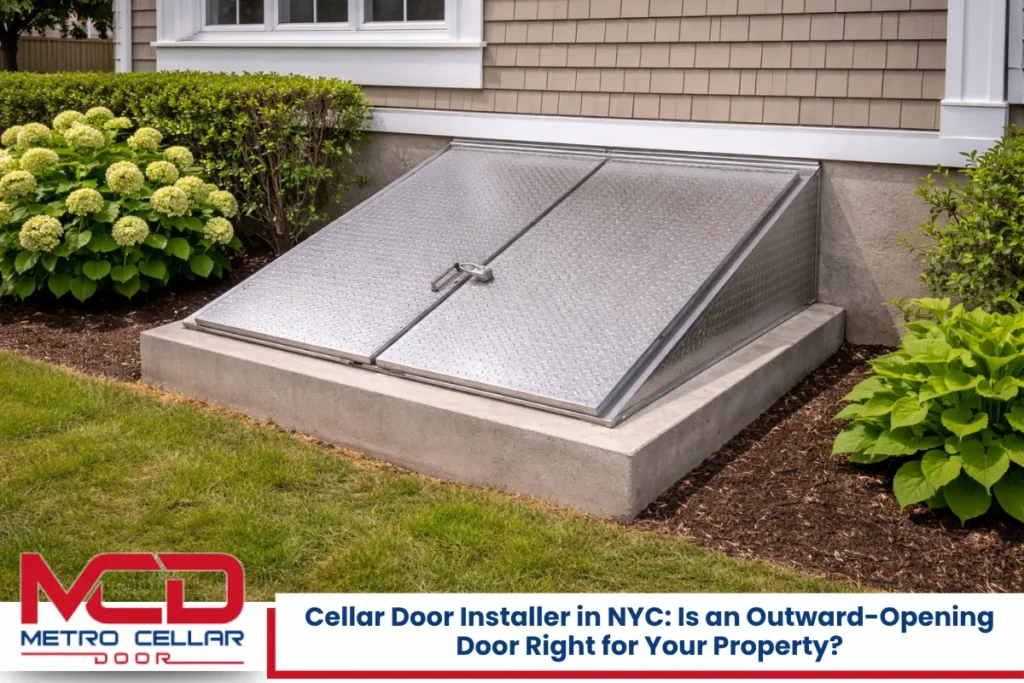
Read Cellar Door Installer in NYC: Is an Outward-Opening Door Right for Your Property?