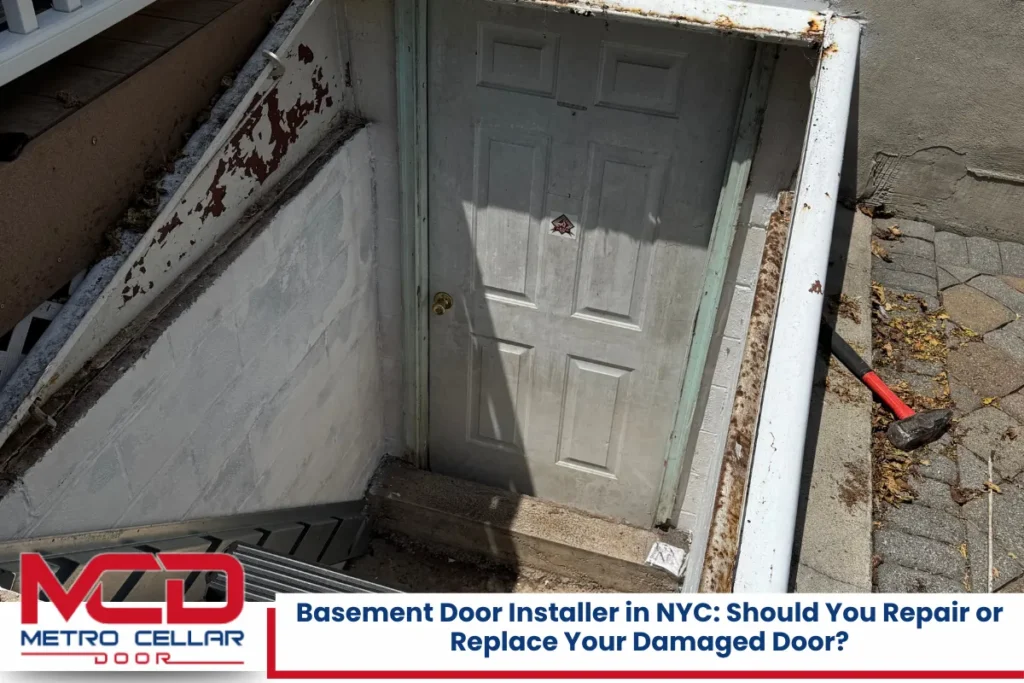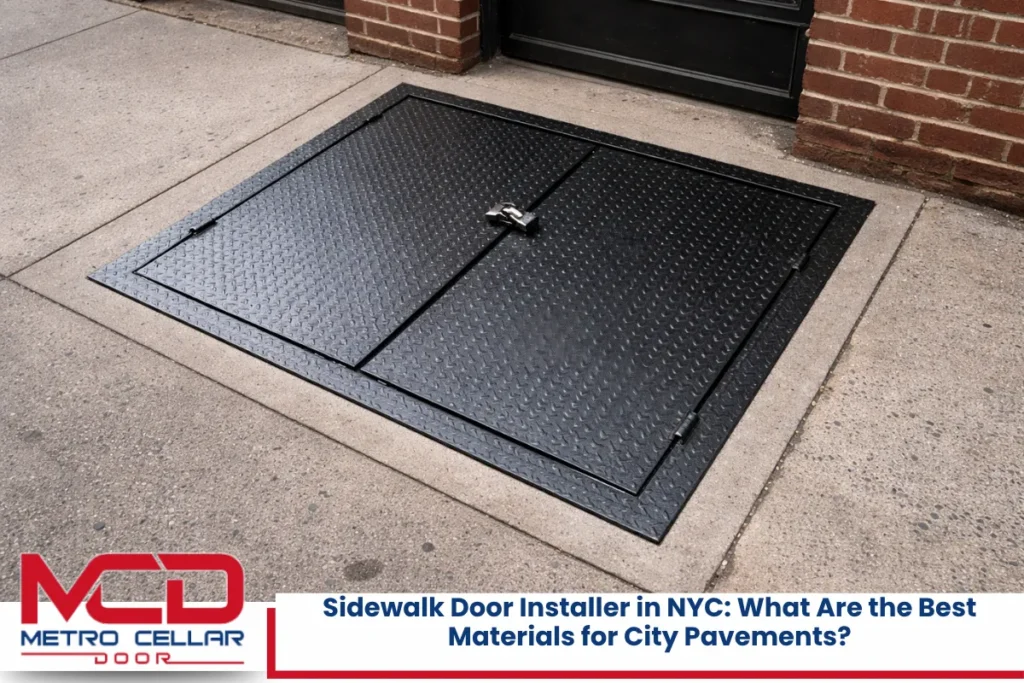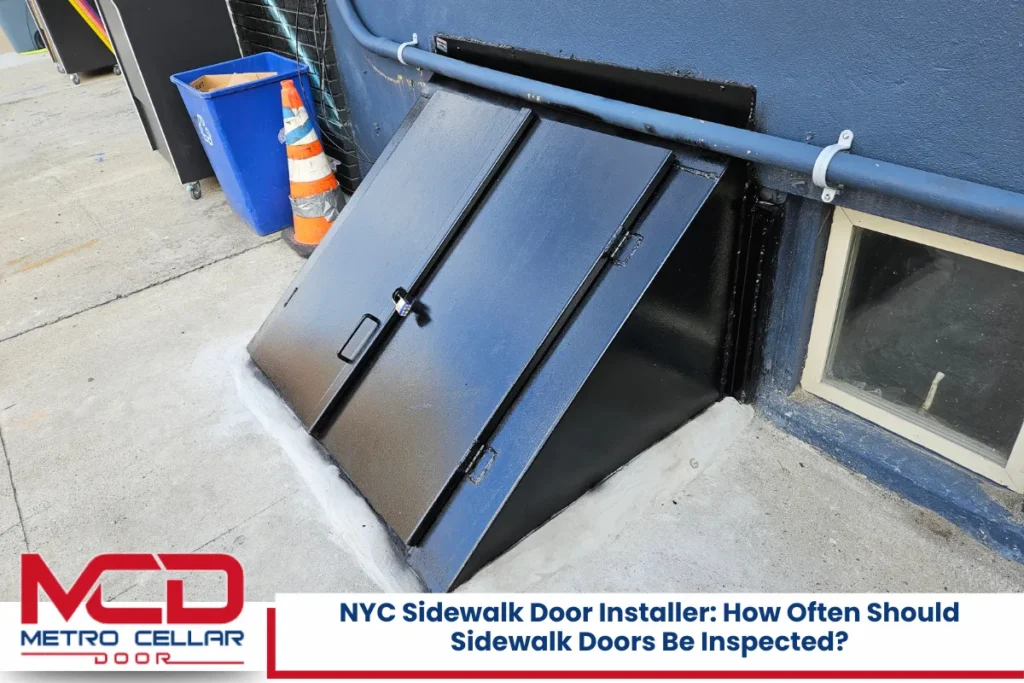

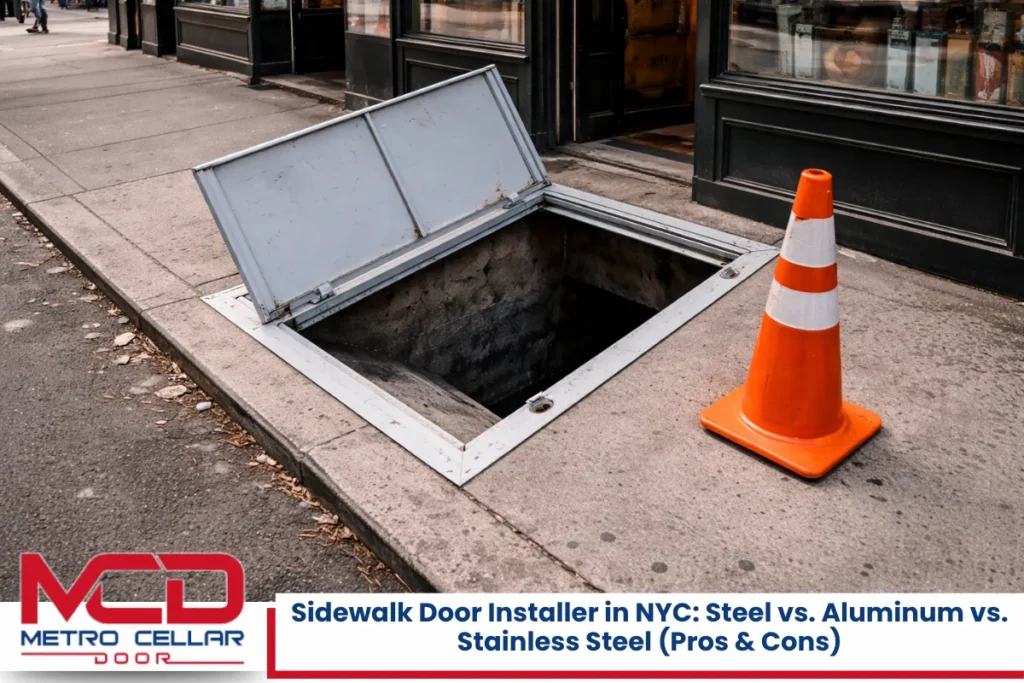
Sidewalk Door Installer in NYC questions usually start after something goes wrong: rust stains, a wobbling hatch, water leaking into the cellar, or a sidewalk cover that feels unsafe under foot traffic. In New York, those problems get bigger fast because the wrong material can corrode from salt, become slippery in wet weather, fail under use, or trigger code issues during replacement. The good news is that choosing between steel, aluminum, and stainless steel does not have to be guesswork. Each material has strengths, weak points, and best-use cases. This guide breaks down how sidewalk doors perform in NYC conditions, what rules affect sidewalk door installation, and which option makes the most sense for durability, maintenance, safety, and long-term value.
Why material choice gets harder on a New York sidewalk
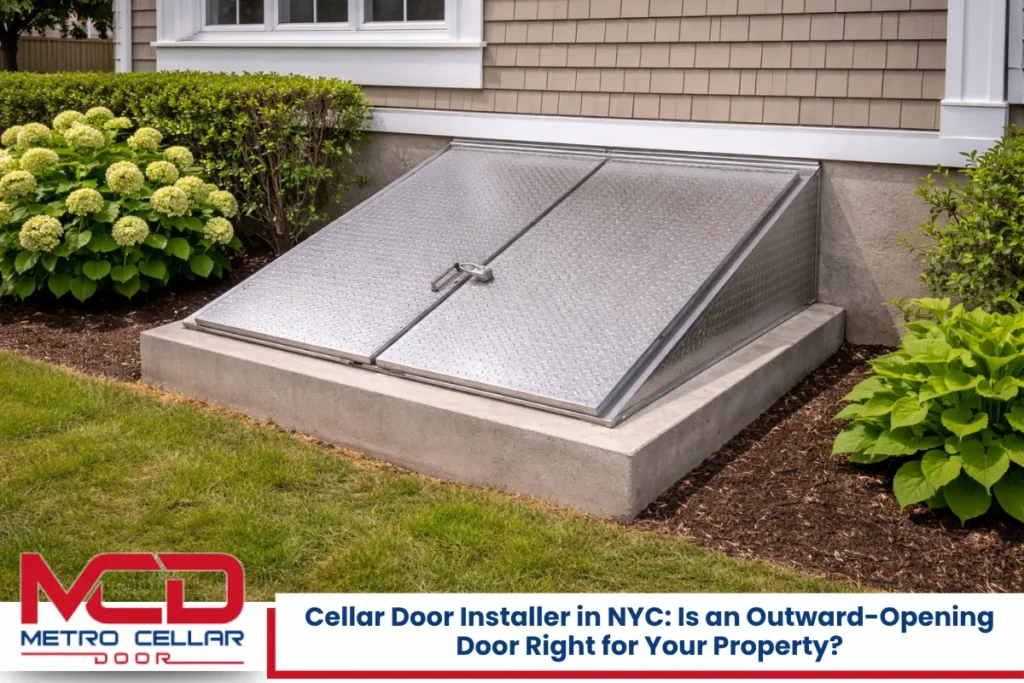
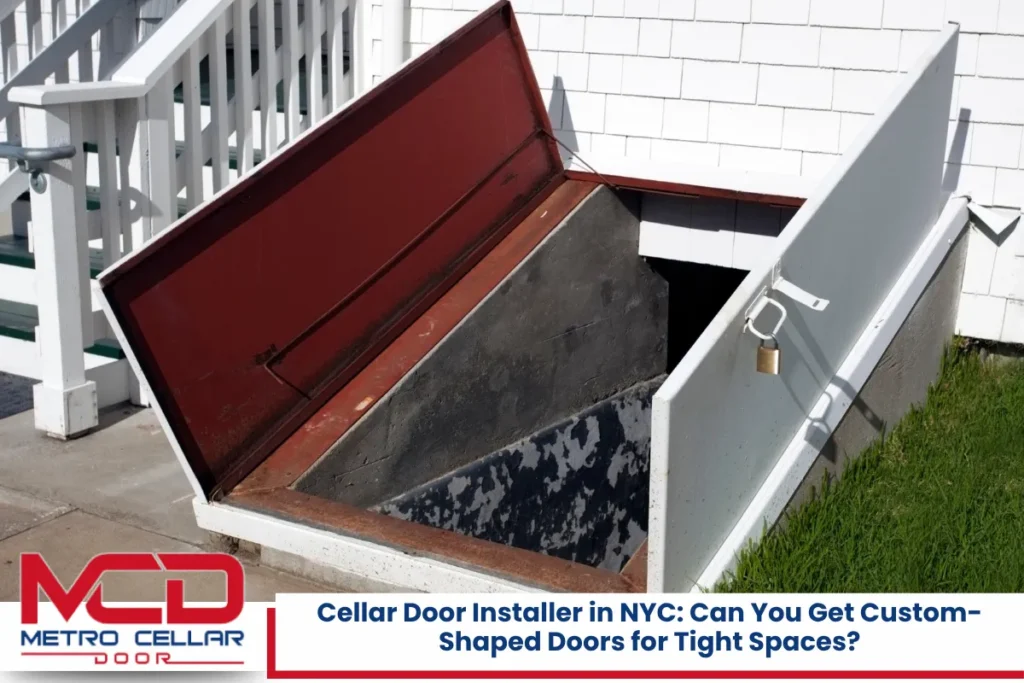
In theory, a sidewalk hatch is simple: it covers an opening and gives access to a cellar, basement, vault, or service area. In practice, sidewalk doors in New York deal with rain, freeze-thaw cycles, deicing salts, grime, delivery traffic, hand trucks, daily foot traffic, and constant exposure to moisture. That is why the same opening can perform very differently depending on the metal, the finish, the hardware, and the frame design. Search results and product literature around this topic also use overlapping terms such as cellar doors, sidewalk cellar doors, basement access doors, floor access doors, vault doors, access hatches, and double-leaf sidewalk doors.
For many owners, the biggest mistake is comparing metals in isolation. Steel, aluminum, and stainless steel are not just “strong,” “light,” or “rust-resistant.” They behave differently once you add a channel frame, drainage edge, slip-resistant cover, lift assistance, hinges, lock hardware, and the actual use pattern of the building. A restaurant cellar opened several times a day has different needs from a rarely accessed mechanical space. A hatch near heavy salt spray or frequent washdowns has different needs from a dry service entrance under a canopy.
The NYC rules that should shape your decision before you pick a metal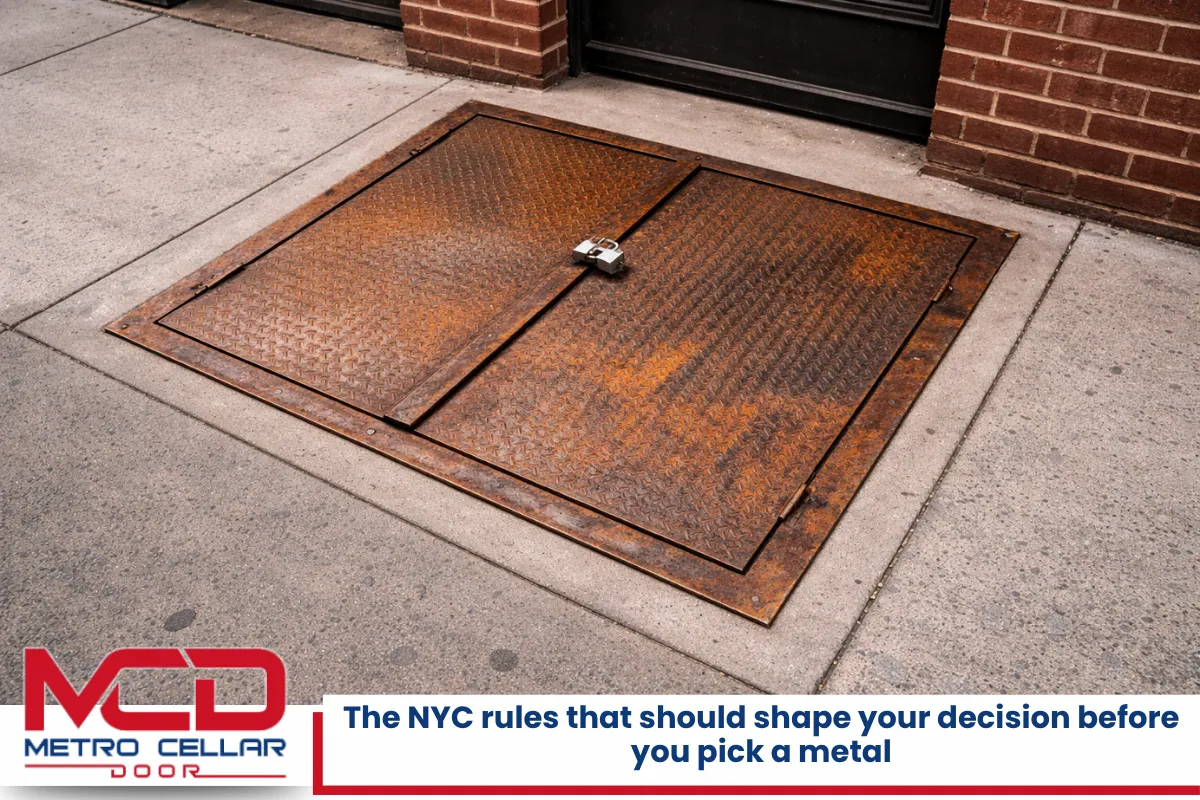
New York City does not treat sidewalk doors as simple cosmetic upgrades. Under current DOT design guidance, cellar doors are to be flush mounted, slip-resistant, placed against the building line outside the pedestrian access route, and limited to a maximum size of 3 feet by 7 feet for that category. Separate rules also govern larger vault-related doors and gratings.
For doors and gratings over vault openings in the sidewalk, the City’s Highway Rules require them to sustain a minimum live load of 600 pounds per square foot, remain flush with the sidewalk, stay out of front-of-entrance locations, and use material and design approved by the Department of Buildings. Sidewalk hardware such as cellar doors and gratings also cannot be placed in the sidewalk unless they are of a type approved by DOB.
For a new sidewalk cellar door on a City sidewalk, a revocable consent is required through NYC DOT. The process involves review by city agencies, elected officials, the local Community Board, and the Public Design Commission, and it comes with insurance and annual fee requirements. In broader terms, DOT rules require a revocable consent before installing improvements such as cellar doors on, under, or over the sidewalk, and DOT also states that sidewalk work itself requires a permit. DOB notes that most construction in NYC requires approval and permits.
Maintenance matters just as much as installation. NYC Administrative Code places the duty on most abutting property owners to keep sidewalks in a reasonably safe condition, and the Code specifically flags cellar doors that deflect more than one inch when walked on, are not skid resistant, or are otherwise unsafe. In short, the wrong material choice does not just age badly. It can become a liability issue.
Historic properties add another layer. In historic districts, certain sidewalk structures, including iron doors and similar elements, cannot be removed without Landmarks authority, and work on vaults in historic districts requires Landmarks Preservation Commission approval before work begins.
Steel sidewalk doors: the heavy-duty workhorse
Where steel usually wins
Steel remains the default choice for many sidewalk door installation projects because it is strong, familiar to fabricators, and well suited to heavy-duty applications. Commercial floor and sidewalk door systems commonly use steel construction with channel frames for exterior openings, and H-20 traffic-rated steel models are widely available for projects that need much higher load performance than a typical pedestrian hatch.
The main advantages of steel
- Strong fit for high-use locations. Steel is a natural choice where the opening sees frequent deliveries, carts, concentrated loads, or rougher treatment over time. Product data for sidewalk and floor access systems regularly places steel in heavy-load and H-20 applications.
- Easier to customize. A sidewalk door installer can usually fabricate steel into custom leaf sizes, reinforcement patterns, frames, and welded assemblies without reinventing the system. That matters in NYC, where many openings are old, irregular, and far from standard.
- Lower upfront barrier than stainless. Carbon steel is generally less expensive than stainless steel, which is one reason it remains common in access-door work.
The tradeoffs that come with steel
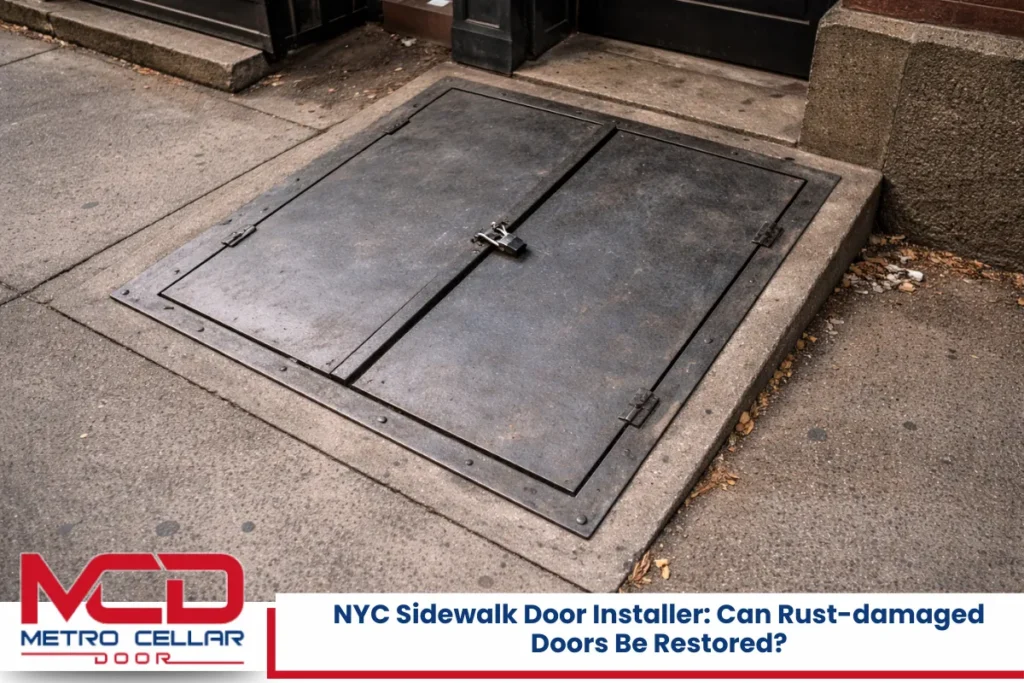
Steel’s weakness is corrosion. Bare carbon steel will rust, and even coated steel can deteriorate when scratches, chipped paint, failed seams, standing water, and deicing salts start working on the surface. Zinc coatings help because zinc protects iron and steel from corrosion, and thicker zinc systems generally mean longer service life, but coating quality and maintenance still matter. In NYC, that is a big deal because chlorides from winter deicing accelerate corrosion.
Steel is also heavy. That is not automatically bad, but it changes the user experience. A heavier leaf puts more demand on hinges, lift assistance, and hardware, especially when the hatch is opened often. If the opening is used daily by staff, the conversation should include operating force, not just strength.
Best fit for steel
Steel sidewalk doors are usually the smartest choice when you need a robust, cost-conscious hatch for hard use and you are willing to stay on top of coatings, repainting, and periodic maintenance. For many mixed-use buildings, restaurants, retail basements, and service-heavy commercial properties, galvanized or properly coated steel remains the practical baseline.
Aluminum sidewalk doors: lighter, cleaner, and easier to operate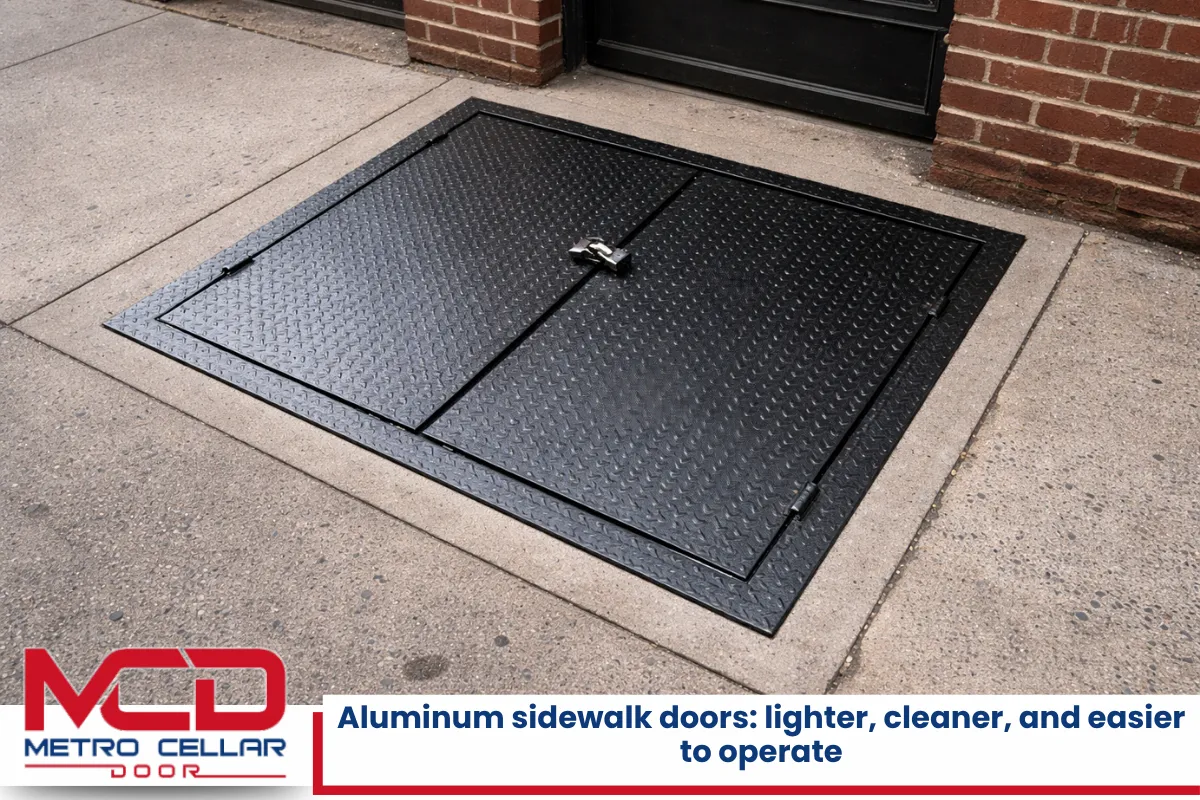
Why aluminum gets attention in modern sidewalk doors
Aluminum has become a serious option because it is much lighter than steel and naturally corrosion resistant. Hydro notes that aluminum weighs about one-third as much as steel, and aluminum forms a protective oxide coating in air that helps resist corrosion. That low weight can make a real difference on cellar hatches that are opened often by staff, tenants, or maintenance crews.
Manufacturers now offer aluminum channel-frame sidewalk and floor doors, including some reinforced H-20 traffic-rated models. That is important because it corrects a common misconception: aluminum is not automatically “light-duty.” A well-designed aluminum door can still be engineered for demanding loads.
The main advantages of aluminum
- Lower leaf weight. This usually improves day-to-day usability and can reduce strain on operators and hardware.
- Better natural corrosion resistance than plain carbon steel. Aluminum does not rust like steel, which is appealing on wet sidewalks.
- Good fit for frequent-opening access hatches. Many aluminum systems pair the lighter metal with lift assistance and 316 stainless hardware for smoother, easier operation.
Where aluminum falls short
Aluminum resists corrosion well in many environments, but it is not invincible. ASM notes that aluminum alloys can still experience pitting, crevice, and galvanic corrosion, and deicing salt literature warns that chlorides can damage aluminum’s normally protective oxide layer. In New York winters, that means aluminum still needs good detailing, compatible fasteners, drainage, and cleaning.
The other issue is stiffness and abuse tolerance. Even though aluminum can be engineered for serious loads, it generally needs the right reinforcement and frame design to do it. That is why smart buyers should verify actual load ratings, not assume performance based on metal alone.
Best fit for aluminum
Aluminum sidewalk doors work especially well where frequent opening, reduced operating weight, and lower maintenance matter more than maximum abuse resistance. They are a strong match for light-to-moderate commercial use, select residential applications, and buildings where corrosion is a concern but full stainless steel feels excessive.
Read Sidewalk Door Installer in NYC: What Are the Best Materials for City Pavements?
Stainless steel sidewalk doors: the premium option for corrosion control
Why stainless steel stands apart
If the biggest enemy at your location is corrosion, stainless steel deserves serious attention. Stainless contains chromium, which creates a protective surface film, and grades with molybdenum, such as Type 316, perform better in chloride-heavy environments. Industry guidance specifically notes that molybdenum improves resistance where exposure to coastal or deicing salts exists.
That is why stainless is often the premium answer for sidewalk doors near aggressive winter salt exposure, repeated washdowns, food-service environments, or blocks that stay damp and dirty for long stretches. Product literature for sidewalk access doors also treats stainless construction or 316 stainless hardware as the option for highly corrosive environments.
The main advantages of stainless steel
- Strong corrosion resistance. Type 316 has significantly lower corrosion rates than many other common architectural metals in salt and pollution exposure, according to deicing-salt guidance.
- Lower maintenance burden over time. Stainless usually needs less coating upkeep than painted or galvanized steel, especially when the finish and grade are correctly chosen.
- Cleaner, more durable appearance. For storefronts or high-visibility properties, stainless tends to keep a premium look longer
The catches owners should know
Stainless is not magic. Chlorides can still cause pitting and crevice corrosion, especially at tight joints, under fasteners, in dirty recesses, and where oxygen cannot circulate well. SSINA also notes that localized corrosion is strongly influenced by chloride exposure, and finish quality matters. In other words, calling something “stainless” does not excuse poor design.
Stainless also carries the highest upfront cost in many projects and can be harder to fabricate than carbon steel. So while it may win on lifecycle performance in corrosive settings, it is not automatically the most economical answer for every hatch in the city
Best fit for stainless steel
Stainless steel sidewalk doors make the most sense when corrosion risk is the main driver, maintenance access is limited, appearance matters, or the opening sits in a particularly punishing environment. In many NYC jobs, the sweet spot is not necessarily a full stainless assembly. It is a mixed strategy: a steel or aluminum door paired with Type 316 stainless hardware in the most vulnerable components.
The real-world decision: steel vs. aluminum vs. stainless steel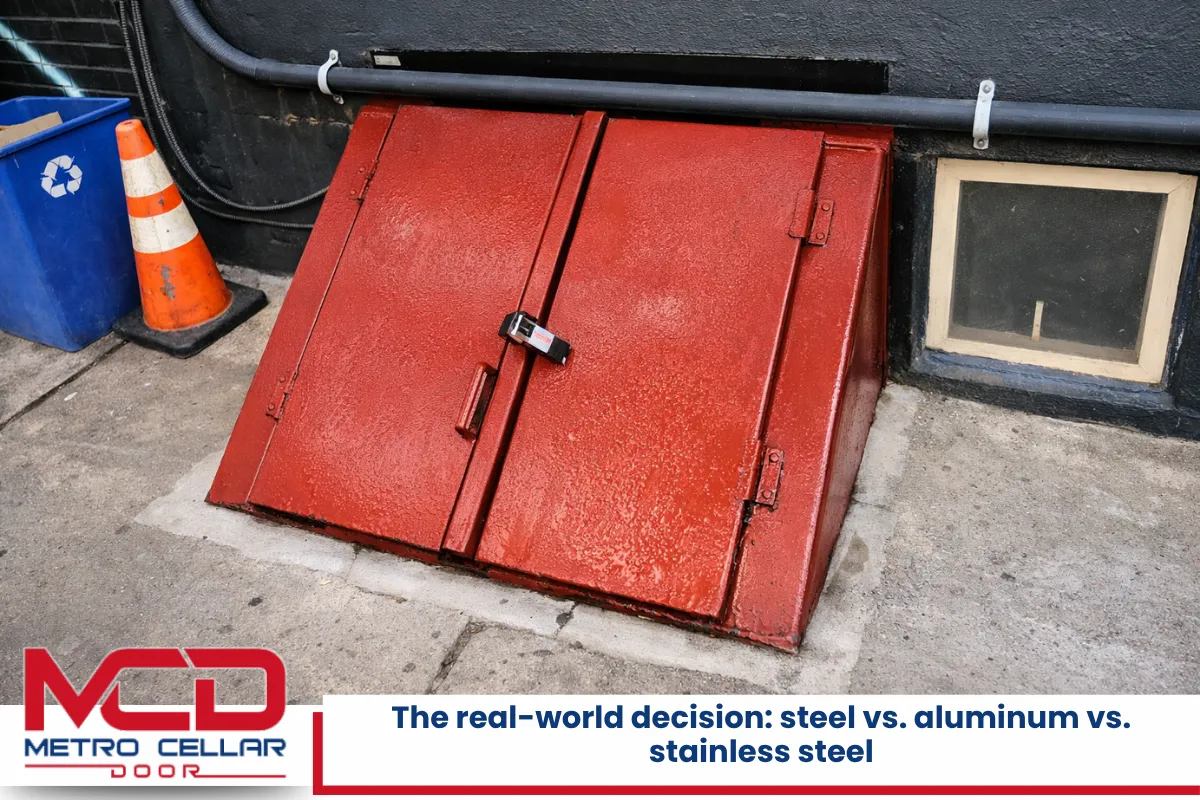
Here is the simplest way to think about the comparison.
- Choose steel when toughness, customization, and heavy-use durability matter most.
- Choose aluminum when lower weight, smoother operation, and lower day-to-day maintenance are higher priorities.
- Choose stainless steel when corrosion exposure is severe enough that lifecycle performance outweighs higher upfront cost.
- Choose based on verified load rating, not on assumptions. Both steel and aluminum can be engineered into H-20-rated systems, while NYC vault-related doors still have to meet code and approval requirements such as flush mounting and minimum live loads where applicable.
A good sidewalk door installer will also look beyond the cover itself. On many projects, the frame, anchorage, drainage edge, welds, hardware, and surface traction decide whether the installation performs well for ten years or becomes a maintenance headache in two. Features such as channel frames for drainage, slip-resistant finishes, lift assistance, handrails, panic hardware, and even snow-and-ice accessories can change performance more than owners expect.
Small details that make a bigger difference than the metal name
A lot of sidewalk doors fail for boring reasons. Water sits at the frame edge. The hatch is not flush. The surface loses traction. Fasteners are the wrong metal. Debris packs into joints. Operators are undersized. The opening was measured badly, so the new frame never seats correctly. None of those problems are solved by saying “steel” or “aluminum” or “stainless.” They are solved by good fabrication and disciplined sidewalk door installation.
The most important details to review before fabrication are:
- actual opening size and squareness
- placement against the building line where required
- slip resistance
- live-load needs
- drainage path and waterproofing approach
- hardware metal compatibility
- frequency of opening
- whether the opening is tied to a vault, areaway, or historic-district condition
- whether DOT, DOB, Landmarks, or other agency review will be needed
Mistakes owners make before calling a sidewalk door installer
The most common mistake is assuming replacement is just a metal swap. In NYC, scope matters. If the project involves a new sidewalk cellar door on City sidewalk, revocable consent comes into play. If it affects a vault, DOB-approved plans and DOT permit review may be involved. If it is in a historic district, Landmarks review may apply. And if the opening is unsafe, the owner may already be exposed under sidewalk maintenance rules.
The second mistake is focusing only on purchase price. Cheap steel with weak coating in a salt-heavy location can become expensive fast. On the other hand, paying for full stainless on a lightly used, sheltered opening may be overkill. The better question is not “Which metal is best?” It is “Which metal is best for this sidewalk, this use pattern, and this maintenance reality?”
The third mistake is ignoring user safety. NYC specifically flags cellar doors that are not skid resistant or that deflect too much underfoot. If a hatch rocks, rattles, dips, or gets slick in rain, the problem is no longer cosmetic. It is operational and potentially legal.
The best hatch is the one built for your block, your traffic, and your maintenance plan
For most NYC properties, there is no universal winner. Steel is the practical heavy-duty standard. Aluminum is the smarter choice when weight and easier handling matter. Stainless steel is the premium answer when corrosion is the main enemy. The right answer depends on traffic, exposure, budget, cleaning habits, and how often the opening is used. A well-chosen system should satisfy City placement and safety rules, match the building’s real workload, and stay reliable through New York weather instead of merely looking good on install day. When that happens, sidewalk doors stop being a recurring problem and become what they should be: safe, durable access points that quietly do their job.
Sidewalk Door Installer in NYC – Metro Cellar Door Bilco Pro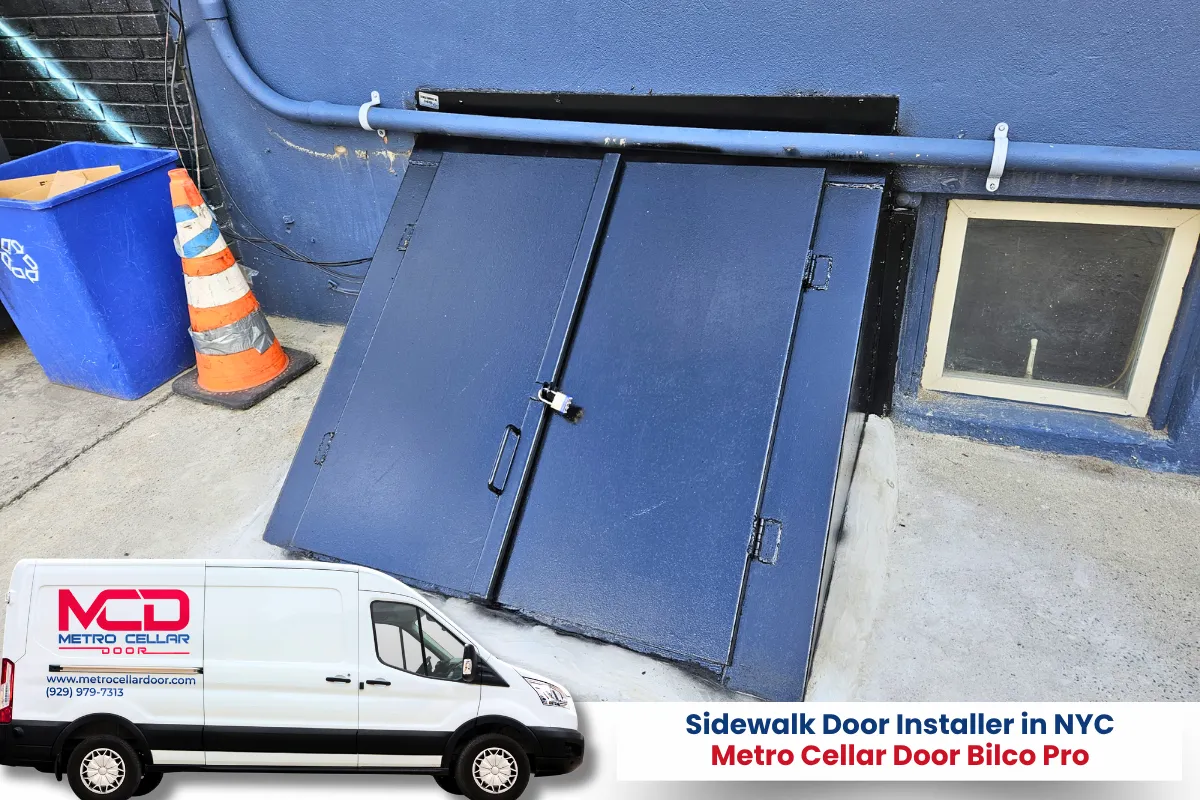
If you need a sidewalk door installer in New York City, we are ready to help. At Metro Cellar Door Bilco Pro, we install, replace, and repair sidewalk doors for commercial and residential properties across NYC and the surrounding areas. We help owners choose the right material, size, load rating, and finish for long-term safety and performance, whether you need heavy-duty steel, lightweight aluminum, or corrosion-resistant stainless steel. We also understand the details that matter in sidewalk door installation, from flush mounting and slip resistance to secure operation and durable hardware. Call us at (929) 979-7313 or fill out our contact form today. We will inspect the opening, explain your options clearly, and provide a solution that fits your property.
Frequently Asked Questions
Can an older sidewalk door be upgraded with lift assistance instead of replaced?
Sometimes, yes, but it depends on the condition of the frame, hinges, leaf weight, and how true the opening still is. Lift-assist hardware works best when the cover is structurally sound and the hatch geometry is consistent. If the door already deflects too much, rocks underfoot, or has severe corrosion around hinge points, adding operators may only mask a bigger failure. Many commercial access-door systems are designed around engineered lift assistance from the start, so retrofits need careful evaluation. A professional should confirm that the retrofit will not overload existing hardware or create unsafe opening forces for daily use.
How often should a sidewalk door be inspected in NYC?
There is no one-size-fits-all calendar in the Code for every private hatch, but practical inspection intervals should match risk. A door used every day at a restaurant or retail cellar should be checked more often than a rarely opened utility access panel. In New York, owners are responsible for maintaining adjacent sidewalk conditions in a reasonably safe state, and unsafe cellar doors are specifically called out when they are slippery, unstable, or excessively deflect underfoot. A smart routine is to inspect before winter, after major storms, after salt season, and any time users notice rattling, sticking, surface wear, or water intrusion.
Can a sidewalk door be made quieter so it does not slam or rattle?
Yes, in many cases noise can be reduced without changing the entire opening. Rattling often comes from worn hinges, loose hardware, uneven bearing surfaces, or poor frame contact. Slamming can sometimes be improved with properly adjusted lift assistance, hold-open hardware, or replacement components matched to the cover weight. The goal is not just comfort. Excess movement can be an early sign of wear that eventually affects safety, traction, and door stability. If the hatch is noisy because the leaf is warped, the frame is distorted, or the assembly is no longer sitting flush, repair alone may not be enough and replacement may be the safer route.
What documents should a property owner keep after sidewalk door installation?
Keep more than the invoice. Owners should retain shop drawings, approved plans, permit records, revocable consent paperwork if applicable, material specifications, hardware details, maintenance instructions, and any inspection or sign-off documents. This matters because sidewalk work in NYC can involve DOT, DOB, and sometimes Landmarks or other agencies depending on the scope and location. Good records make future repairs easier, help when property management changes, and provide proof of what was actually installed. They also help a future contractor match leaf thickness, hardware type, finish system, and load assumptions instead of guessing from an old opening in the field.
Is it possible to improve water resistance without rebuilding the whole opening?
Often, yes, but only to a point. Water problems are usually tied to frame design, surface pitch, clogged edges, failed sealant, or poor drainage around the opening. Some systems use channel frames intended for exterior conditions where water infiltration is a concern, and certain accessories can improve performance. But if the surrounding sidewalk pitch is wrong, the opening is not flush, or water is being directed toward the hatch from the building or sidewalk surface, small fixes may not last. The best solution starts with identifying whether the leak comes through the cover, around the frame, or from the surrounding slab and joint conditions.
Disclaimer: General information only, not legal, engineering, or permit advice. Final sidewalk door design, approvals, and code compliance in NYC depend on site conditions, scope of work, and agency review.
Read NYC Sidewalk Door Installer: Can Rust-damaged Doors Be Restored?