
Sidewalk Door Installer in NYC is more than a search phrase. It is usually the moment a property owner realizes a basement entrance must survive heavy foot traffic, winter salt, rain, shifting concrete, and city rules at the same time. That is the problem. The bigger issue is that the wrong material can turn a useful basement opening into a slippery surface, a rusting liability, or a sidewalk defect that draws complaints. The good news is that there are materials and build details that perform far better in New York than others. In most cases, the best answer is not the cheapest metal. It is the combination of the right door skin, frame, finish, drainage, and installation method for the block, the building, and the way that sidewalk is used every day.
Why city pavement punishes weak sidewalk doors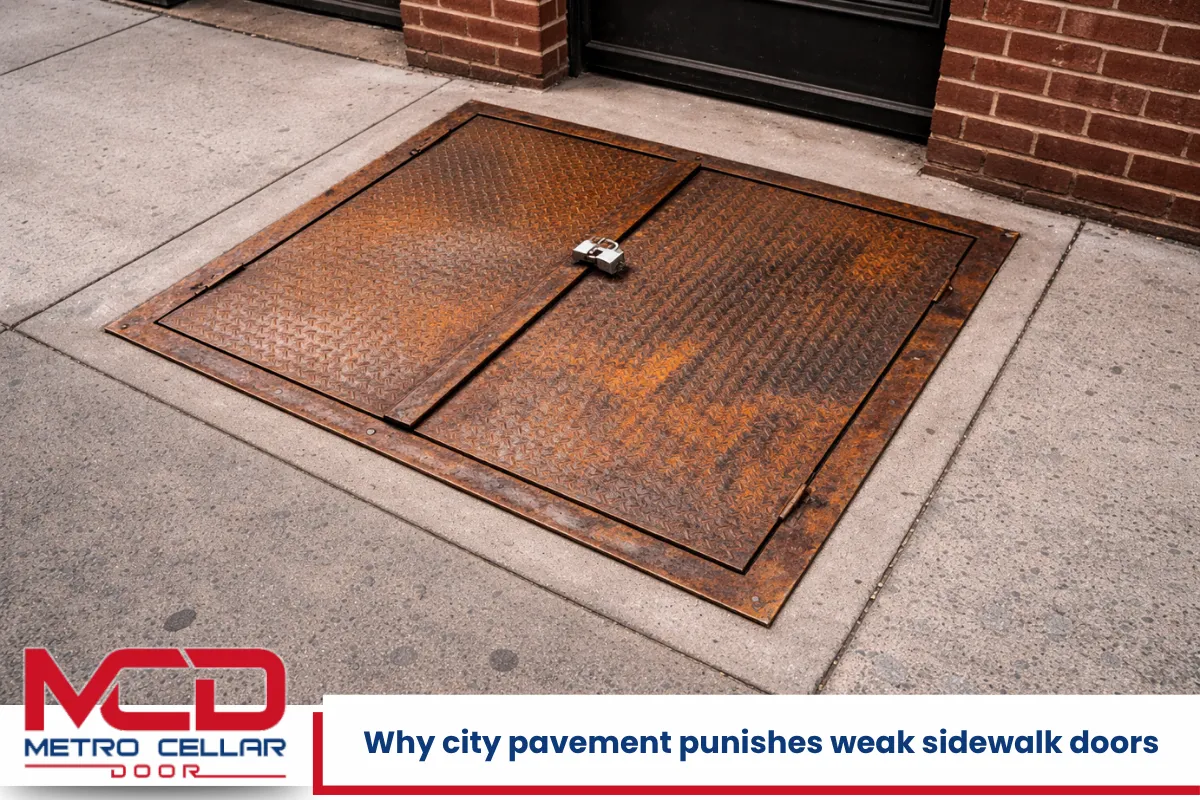
New York sidewalks are hard on every exterior opening. A sidewalk cellar door is expected to sit flush with the walking surface, resist slips, handle repeated loading, and stay safe even when water, de-icing salt, dirt, and freeze-thaw cycles work against it. Current NYC DOT filing guidance states that cellar doors must be flush-mounted and slip-resistant, while NYC sidewalk defect guidance treats hardware that is not flush within one-half inch, or cellar doors that deflect more than one inch when walked on, as defective or dangerous conditions.
That is why material choice matters so much in sidewalk door installation. The issue is not only whether the door opens and closes. It is whether the cover stays level, the frame stays anchored, the surface keeps traction, and the metal resists corrosion long enough to justify the cost of installation. In a dense pedestrian environment, a door that flexes, rattles, ponds water, or becomes slick is not just annoying. It can become a maintenance problem and a liability problem.
The permit and code issues owners cannot ignore
When revocable consent is part of the job
In New York City, a new sidewalk cellar door on City sidewalk space is not just a private construction decision. NYC311 states that installation of a new sidewalk cellar door on a City sidewalk requires revocable consent. The City’s business guidance also explains that revocable consent is required for structures placed on, over, or under public sidewalks beyond commercial property lines, and cellar doors are specifically listed among the approved items that may qualify. The process is handled by DOT and can take about four to six months; if approved, it generally carries an annual fee, insurance requirements, and a term of about 10 years.
That review is not automatic. The NYC311 application page says revocable consents for new sidewalk cellar doors are granted only after extensive review involving City agencies, elected officials, the local Community Board, and the Public Design Commission. For owners planning a new exterior basement access point, that means the best sidewalk door installer is not only a fabricator or mechanic. The right contractor also understands the filing path and coordinates the door design with the rules that apply to the public right-of-way.
Sidewalk permits, accessibility, and landmark review
Separate from revocable consent, related sidewalk work often needs DOT permits. NYC311 and MyCity Business both note that sidewalk installation, repair, or replacement requires a sidewalk construction permit, and the City advises owners to use licensed contractors for this work. For private sidewalk repairs costing more than $200, NYC311 says the contractor must hold a Home Improvement Contractor license from DCWP.
Accessibility matters too. NYC’s accessibility materials explain that where an entrance provides direct access to the sidewalk, an accessible route to the sidewalk is required. The DOT filing guide also states that new and existing buildings must be accessible in accordance with ADA-related requirements and that sidewalk grading changes must be handled carefully. In landmarked or historic districts, additional Landmarks Preservation Commission review may also be necessary.
Which materials actually perform on New York sidewalks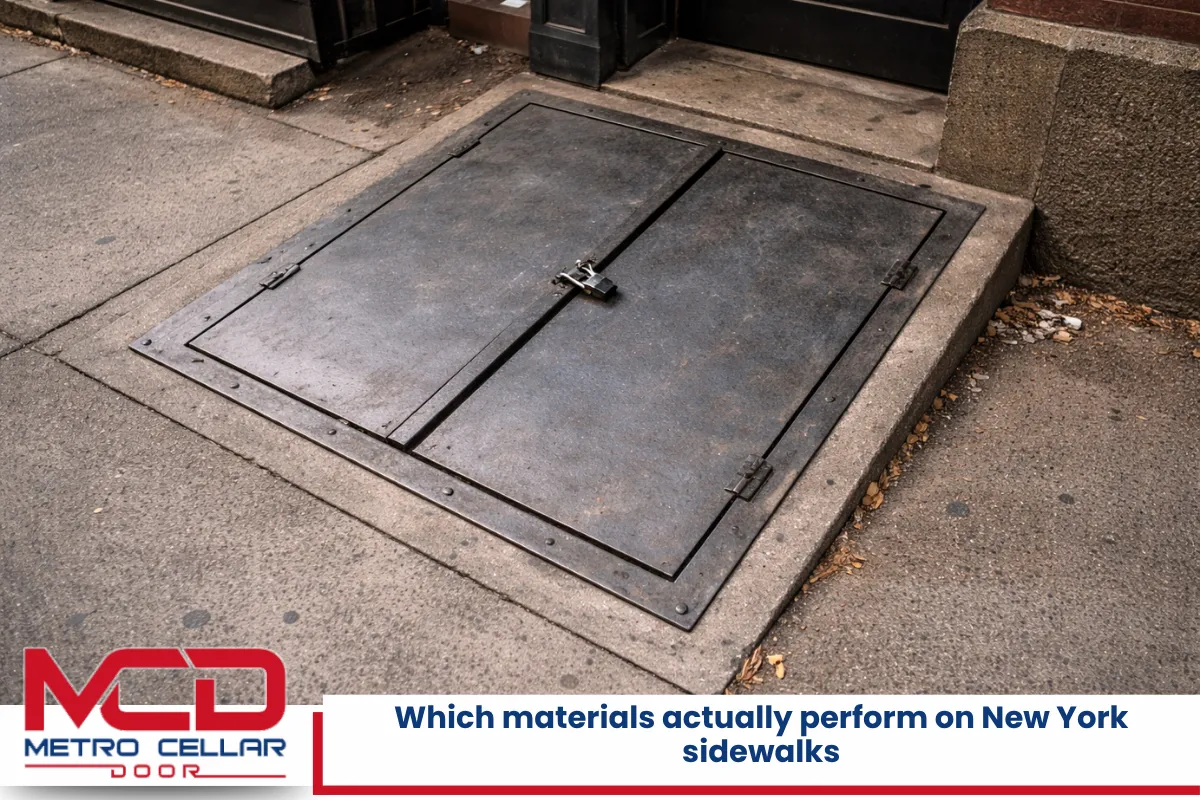
Hot-dip galvanized steel is the best overall choice for most NYC jobs
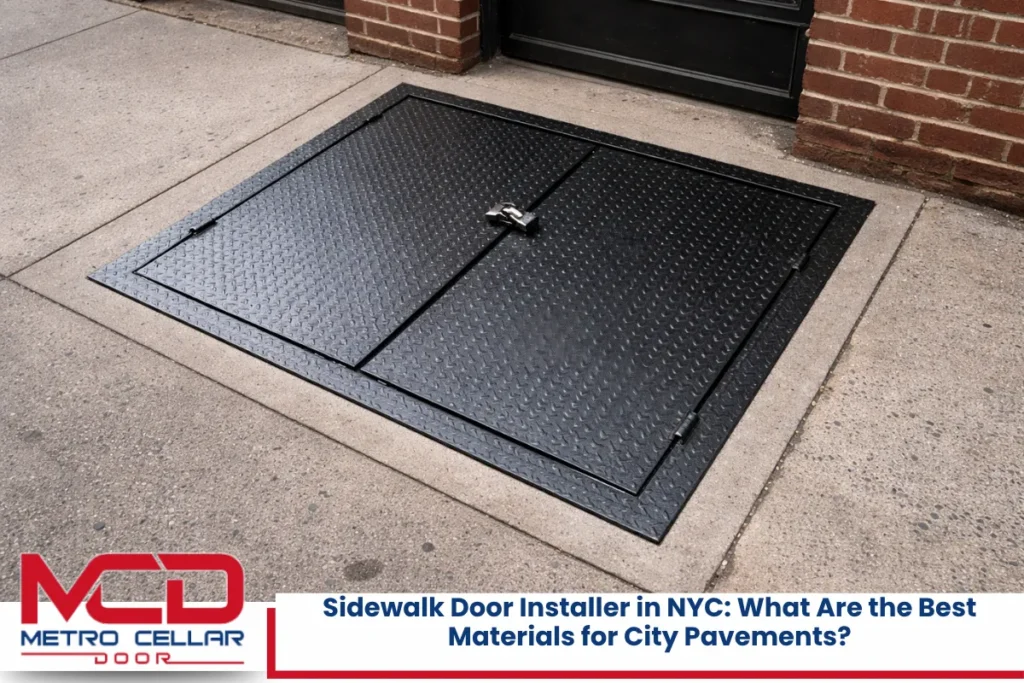
For most commercial properties and many mixed-use buildings, hot-dip galvanized steel is the best overall material for sidewalk doors. Steel gives you the rigidity needed for a flush, stable walking surface, and galvanizing adds a protective zinc coating intended for fabricated steel exposed to corrosive outdoor conditions. That matters in New York, where street moisture and salt accelerate rust on ordinary painted steel.
Steel also remains the dominant material in sidewalk access-door specifications because it handles reinforcement well. Manufacturer specs for sidewalk and floor access doors commonly pair steel covers with pedestrian load ratings around 300 pounds per square foot, while heavier reinforced models are available for H-20 wheel loading in off-street locations that may see vehicular traffic. In practice, that makes galvanized steel a strong fit for storefronts, restaurants, warehouses, apartment buildings, and service-heavy properties where reliability matters more than shaving a little weight off the leaf.
Another reason galvanized steel works so well for sidewalk door installation is maintenance tolerance. Scratches and edge wear happen in the city. Compared with plain painted carbon steel, a galvanized finish usually gives owners a better chance of slowing corrosion before it spreads into hinge points, seams, or the frame itself. That longer service life often outweighs the modest upfront premium.
Stainless steel is the premium answer for the toughest corrosion conditions
Stainless steel is usually the premium option rather than the default option. It costs more, but it is highly attractive where corrosion is the first concern. Think coastal exposure, aggressive wash-down environments, or buildings that see persistent moisture and salt spray. Several commercial access-door product lines offer stainless steel construction or stainless hardware specifically for highly corrosive environments.
For some NYC properties, stainless makes sense as a full-door upgrade. For many others, the smarter move is a hybrid approach: galvanized steel leaf and frame with stainless hinges, hardware, and hold-open components. That gives owners a strong balance between cost, strength, and corrosion resistance. A professional sidewalk door installer will usually look first at exposure, maintenance habits, and the expected service life before recommending full stainless.
Aluminum works best when weight and corrosion resistance matter more than maximum rigidity
Aluminum sidewalk doors can be an excellent choice, but they are not automatically the best choice for every NYC location. Their biggest advantages are lighter weight, strong corrosion resistance, and smoother operation when properly reinforced. Official product specifications show aluminum doors available in pedestrian-rated versions and in reinforced H-20 models, often with stainless hardware and drainable frames for exterior use.
That makes aluminum appealing for residential properties, lighter-use commercial entrances, and sites where frequent opening is part of daily operations. A well-built aluminum door can be durable and code-compliant. Still, in the roughest sidewalk environments, steel usually wins on stiffness and abuse resistance. On a busy block with hand trucks, deliveries, and hard everyday use, owners often prefer the extra solidity of steel. On a quieter property where rust resistance and ease of operation are top priorities, aluminum becomes more attractive.
Plain painted carbon steel is usually the budget option, not the best long-term option
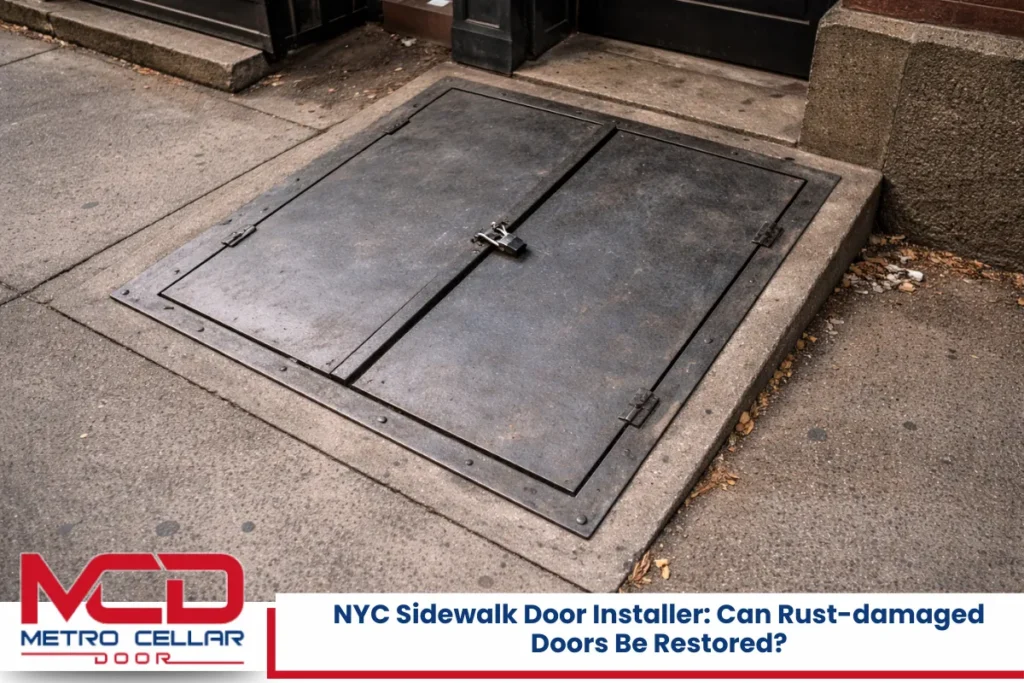
Plain carbon steel with only primer or paint can still be used, and many access doors are sold that way. The problem is not strength. The problem is long-term corrosion protection after the finish gets chipped, worn, or opened up at welds and edges. Standard painted steel can make sense for interior or low-exposure applications, but on a New York sidewalk it is rarely the material owners choose when durability is the main goal.
For a sidewalk door installer working in NYC, this is often where owners make the wrong comparison. They compare material price, not lifecycle cost. If a cheaper painted door begins rusting early, sticks seasonally, or needs repeated repairs to remain safe and flush, it can cost more over time than a properly specified galvanized unit.
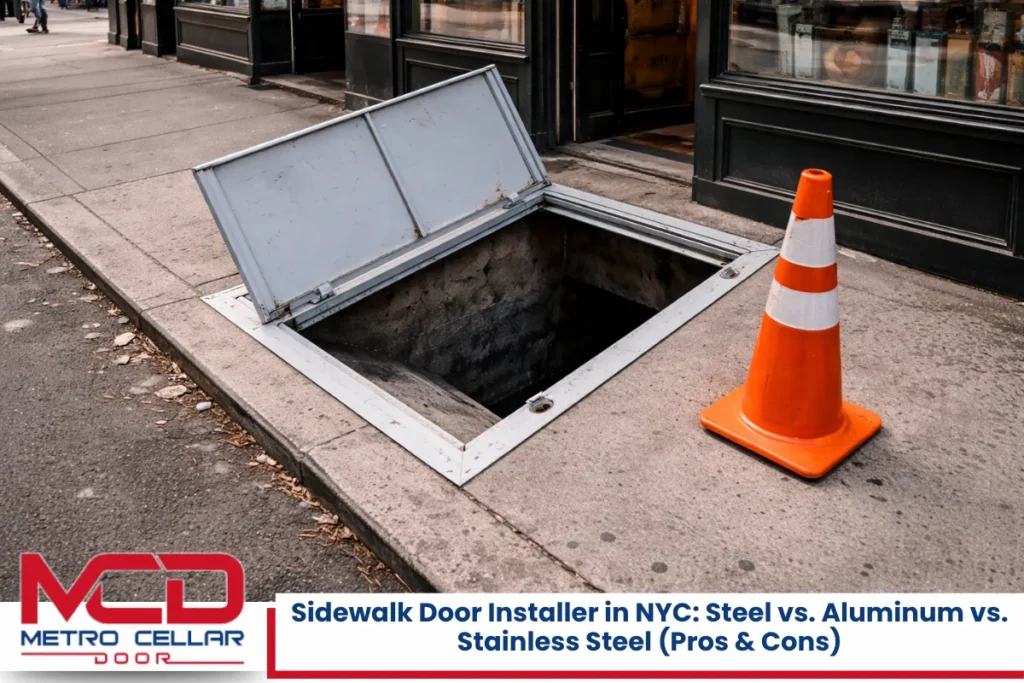
Read Sidewalk Door Installer in NYC: Steel vs. Aluminum vs. Stainless Steel (Pros & Cons)
The design details that separate durable sidewalk doors from future violations
The metal itself is only part of the answer. A durable sidewalk door also needs the right build details. In New York, these details often decide whether a door feels solid for years or becomes a nuisance after the first rough winter.
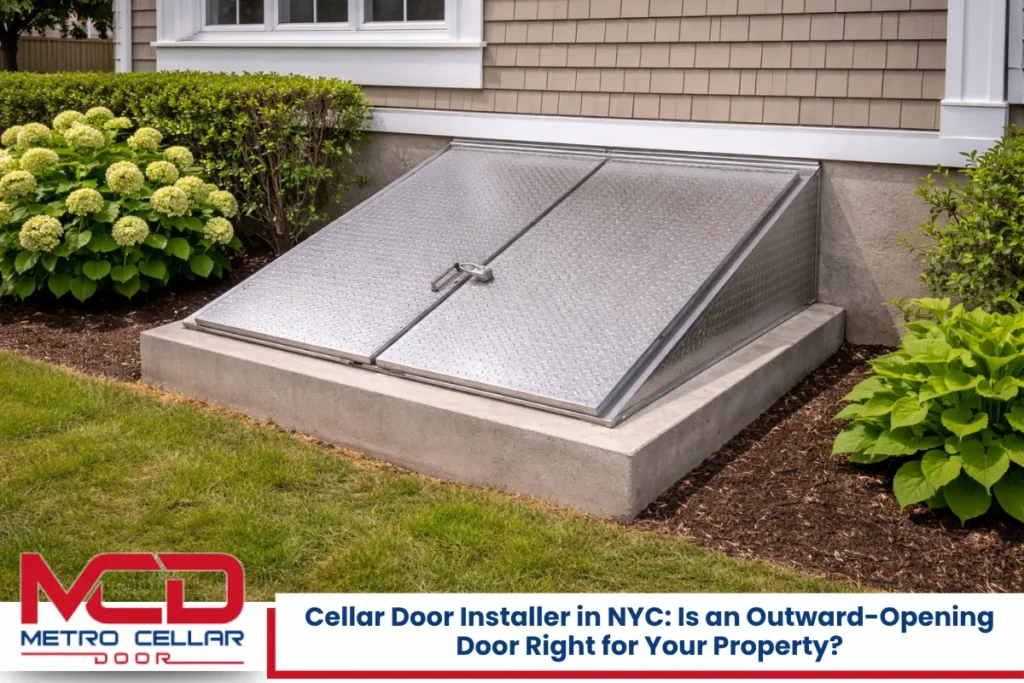
- Slip-resistant tread matters. NYC DOT’s filing guide requires slip-resistant cellar doors, and City defect guidance specifically flags doors that are not skid resistant. Diamond-pattern tread plate is widely used because it improves traction compared with smooth plate.
- Flush installation matters. DOT’s current guide is stricter than many owners realize: flush structures on sidewalks are allowed 0 inches above paved surface grade and only 1/8 inch below, while sidewalk defect rules begin treating non-flush hardware as a problem at 1/2 inch. That means good sidewalk door installation is as much about frame setting and concrete work as it is about fabrication.
- Deflection matters. A strong-looking cover is not enough if it bends under foot traffic. NYC treats cellar doors that deflect more than 1 inch when walked on as unsafe.
- Drainage matters. For exterior applications where water intrusion is a concern, drainable channel frames, perimeter gaskets, and drain connections are common best-in-class features. Product literature for commercial sidewalk doors repeatedly distinguishes drainage channel frames for wet exterior conditions from angle frames better suited to drier conditions.
- Load rating matters. Pedestrian-rated doors may be enough for many sidewalks, but off-street loading areas, service courts, and zones that may see vehicle wheels or heavy rolling loads often need higher reinforcement such as H-20-rated assemblies.
- Hardware matters. Recessed handles, positive latching, automatic hold-open arms, and stainless hinges all improve safety and usability. They also reduce trip hazards and make frequent access more practical.
How the door should meet the surrounding pavement
The best material for the door is only half the story. Owners also need to think about the surrounding sidewalk material. In most NYC settings, standard concrete remains the simplest and most practical pairing because it is familiar to DOT, easy to finish correctly around a flush frame, and straightforward to repair if the area is opened during installation. The City’s sidewalk rules place a heavy emphasis on standard construction, proper slope, and safe transitions.
If the property sits in a landmark district or on a block with special paving, the decision gets more nuanced. NYC guidance notes that special sidewalk materials often require extra approvals, and the 2026 DOT filing guide for distinctive sidewalks says nonstandard materials need DOT filings, Public Design Commission approval, and slip-resistant finishes. In those cases, the right sidewalk door installer should match the frame and pavement interface carefully so the opening does not look patched into the block or create uneven edges that age poorly.
That is also why many NYC projects still favor a steel or aluminum diamond-plate cover set into a concrete or stone surround rather than trying to make the entire opening decorative. The city rewards safe, flush, maintainable solutions more than flashy ones.
Repairing an old hatch versus replacing it outright
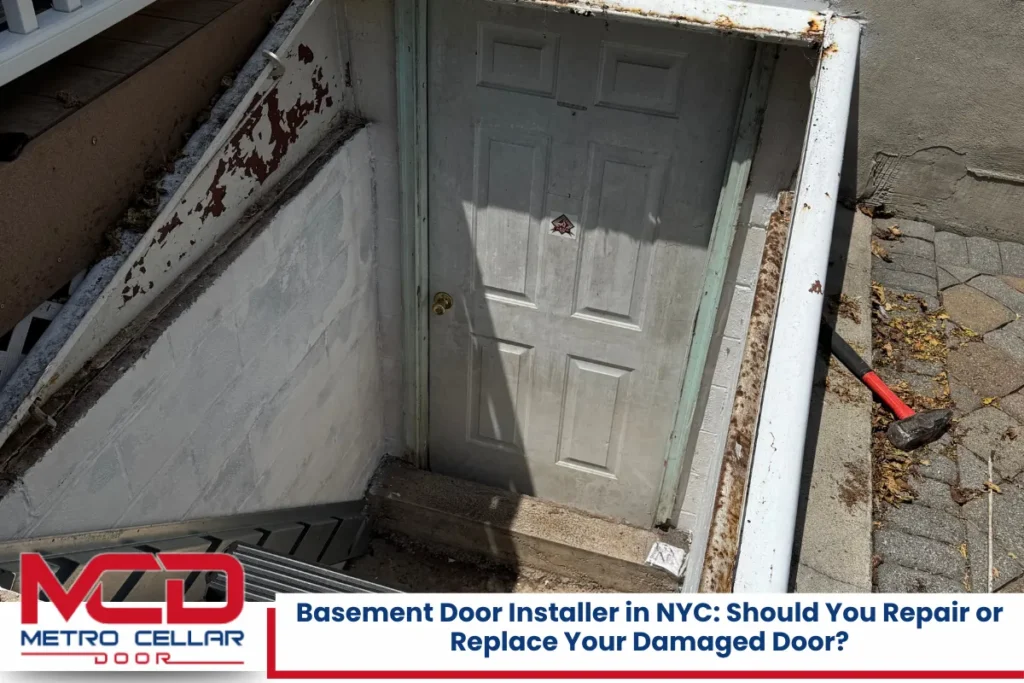
Not every bad cellar hatch needs a full replacement, but owners should be realistic. If the door is still structurally sound, sits flush, remains skid resistant, and the issue is limited to hardware, seals, or lift assistance, a repair may buy useful time. Once the cover starts deflecting excessively, the surface turns slippery, the frame shifts, or corrosion has spread into structural parts, replacement usually becomes the smarter long-term move. Those conditions line up closely with the kinds of sidewalk defects the City already flags.
When comparing options, owners should ask a sidewalk door installer about four things:
- whether the new or repaired assembly will stay flush with the surrounding pavement,
- whether the frame is drainable and properly anchored,
- whether the material is galvanized, stainless, or simply painted, and
- whether the load rating matches actual use at the property.
Those questions often tell you more than a sales pitch. The right answer is usually the assembly that stays safe, quiet, watertight, and stable under real sidewalk conditions.
The material that usually wins on New York sidewalks
For most properties, the best answer is hot-dip galvanized steel with a slip-resistant diamond-plate surface, a properly anchored flush frame, good drainage, and stainless hardware where it counts. Stainless steel is the premium choice for severe corrosion exposure. Reinforced aluminum is a smart option where lower weight and corrosion resistance matter, especially on lighter-duty residential or commercial projects. What rarely works best is choosing a door by upfront price alone. In New York City, the most successful sidewalk doors are the ones designed around safety, code compliance, weather, and maintenance from day one. That is what separates a quick install from a durable sidewalk door installation.
Sidewalk Door Installer in NYC – Metro Cellar Door Bilco Pro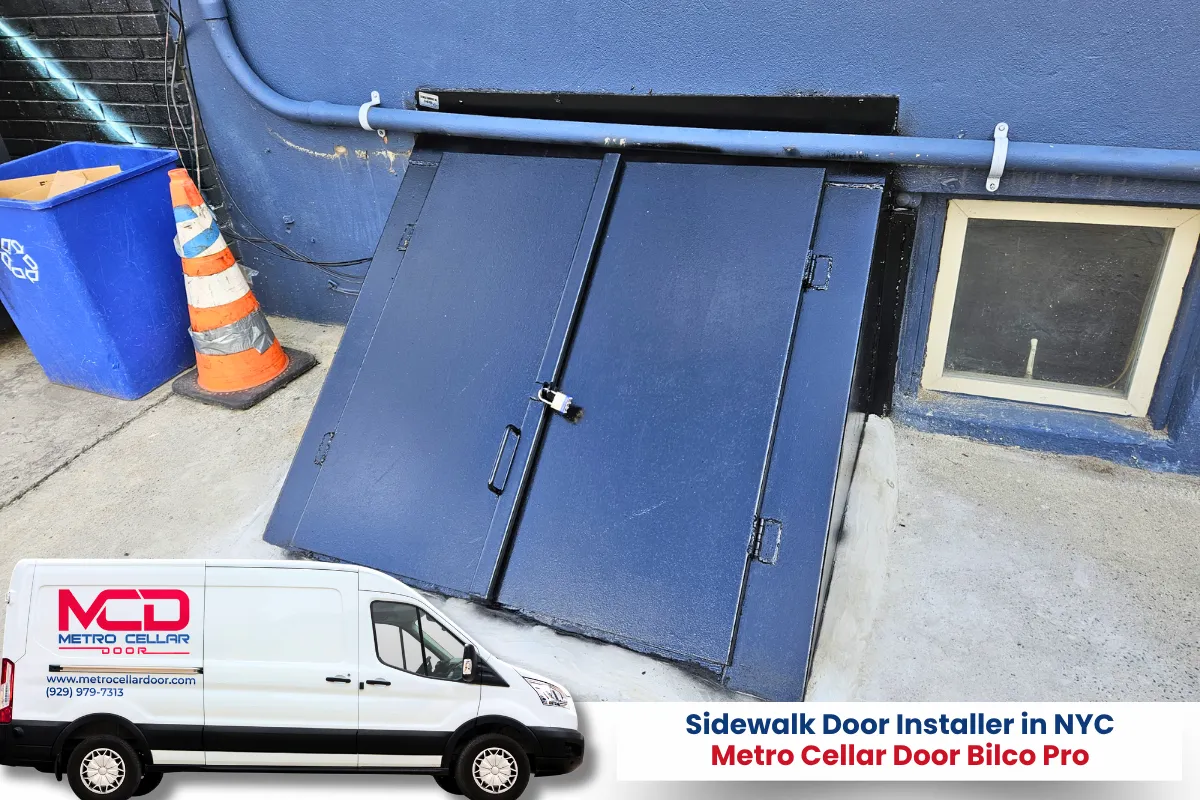
When you need a trusted sidewalk door installer in New York City, we are ready to help. At Metro Cellar Door Bilco Pro, we install and replace sidewalk doors built for real city conditions, including heavy foot traffic, weather exposure, and tough daily use. We handle sidewalk door installation with a focus on safe, durable materials, proper fit, and clean workmanship that lasts. Whether you need a new basement access door, a replacement hatch, or help choosing the right galvanized steel or aluminum option, our team is here for you. Call us at (929) 979-7313 or fill out our contact form to schedule service in New York City and the surrounding areas. We make the process straightforward and professional.
Frequently Asked Questions
How often should a private sidewalk door be inspected in NYC?
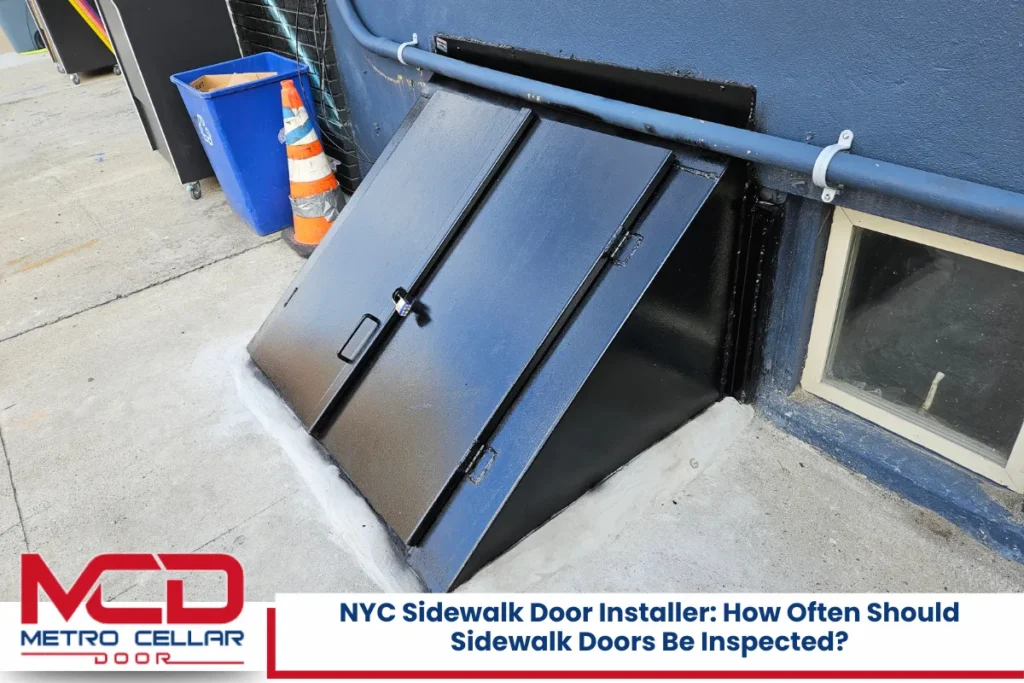
New York City’s public-facing guidance places the responsibility for sidewalk safety on the property owner, and defective cellar doors can trigger complaints or violations when they become unsafe, slippery, wobbly, or non-flush. I did not find a citywide rule in the sources reviewed that sets one universal inspection interval for every private sidewalk door. As a practical maintenance standard, most owners should plan on at least one professional inspection each year, plus extra checks after winter, flooding, major deliveries, or any concrete movement around the frame. That schedule is best practice, not a quoted city deadline, but it aligns with the City’s maintenance expectations and complaint triggers.
Can a business stay open during sidewalk door installation?
Sometimes yes, but it depends on the scope of work, the sidewalk width, and whether the frame, surrounding concrete, or access stairs need to be rebuilt. A simple replacement may be staged to limit disruption, while a full sidewalk door installation tied to new concrete, permit conditions, or revocable consent review can affect operations more significantly. The key issue is pedestrian safety and lawful sidewalk use during construction. NYC guidance makes clear that related sidewalk work requires permits and that structures in the public way cannot block pedestrian passage. A good installer will build the schedule around deliveries, tenant access, and protection barriers rather than treating the job like a standard backyard hatch swap.
What documents should owners gather before requesting quotes or starting filings?
Owners can save time by collecting the property address, clear photos of the existing opening, approximate opening dimensions, sidewalk width, any known landmark status, and notes about how the basement is used. If the work extends into City sidewalk space, revocable consent may be required, and City guidance notes that non-owners may need landlord consent plus deed and lease documents. If surrounding sidewalk work is involved, permit planning also becomes part of the quote. The more site information an installer receives early, the more accurate the material recommendation will be, especially when deciding between galvanized steel, aluminum, custom reinforcement, or drainage-frame options.
Can an existing sidewalk opening be resized for new equipment or larger deliveries?
It can be possible, but resizing is very different from swapping one cover for another. Once the opening changes, the project may affect the frame, sidewalk slab, stairs below, accessibility conditions, drainage, and permit path. On public sidewalk frontage, the work can also trigger revocable consent review or additional DOT filings because the City treats these installations as structures within the right-of-way. In other words, resizing is usually a design-and-permit question first and a fabrication question second. Owners planning to move commercial equipment, larger inventory, or mechanical units through the opening should raise that need at the start so the door is engineered around actual use rather than guessed dimensions.
What routine maintenance helps sidewalk doors last longer between service calls?
Routine care is simple but important. Keep the surface clean so grit and salt do not stay trapped around hinges, seams, and latches. Make sure drains or channel-frame outlets are not clogged. Watch for early rust, standing water, loose anchors, or changes in how the leaf sits against the surrounding pavement. If the door starts to rock, scrape, or lose traction, address it early rather than waiting for the condition to become obvious from the street. Modern sidewalk doors often include lift assistance, gaskets, and hold-open hardware, and those parts benefit from periodic adjustment and lubrication. Small preventive maintenance usually costs far less than emergency repair after a failure.
Disclaimer: This article is general information, not legal or engineering advice. Sidewalk door projects in NYC should be reviewed case by case for permits, code compliance, landmark status, and site conditions.
Read NYC Sidewalk Door Installer: How Often Should Sidewalk Doors Be Inspected?