
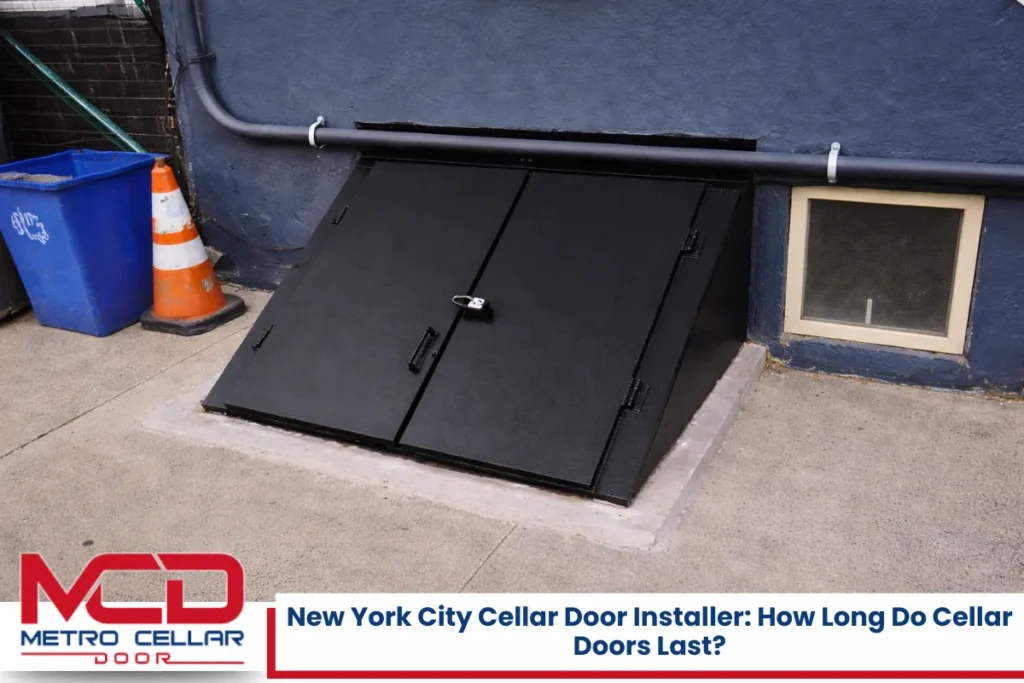
New York City Cellar Door Installer professionals hear the same concern again and again: cellar doors take a beating, but how long should they really last? Property owners often ignore aging doors until rust, leaks, or safety hazards become unavoidable. That delay can lead to water intrusion, code violations, and costly emergency repairs—especially in a city where weather, foot traffic, and strict regulations all collide. The good news is that cellar doors are not disposable components. With the right materials, proper installation, and routine care, they can deliver decades of dependable service. This guide explains realistic lifespan expectations, what shortens or extends durability, and how informed decisions protect both your building and your investment.
Why Cellar Door Lifespan Matters in New York City Buildings
In dense urban environments, cellar doors are more than access points. They are structural elements that protect basements from water, pests, and unauthorized entry while supporting sidewalk loads and meeting safety standards enforced by city agencies in New York City. A failing door does not just inconvenience occupants; it can trigger violations, insurance issues, and liability exposure.
Cellar doors in this market endure harsher conditions than suburban equivalents. Freeze–thaw cycles, de-icing salts, pedestrian traffic, delivery carts, and vehicle vibration all accelerate wear. Understanding expected longevity helps owners budget wisely, schedule proactive replacements, and avoid noncompliance with local rules governing egress, drainage, and structural integrity.
Average Lifespan of Common Cellar Door Materials
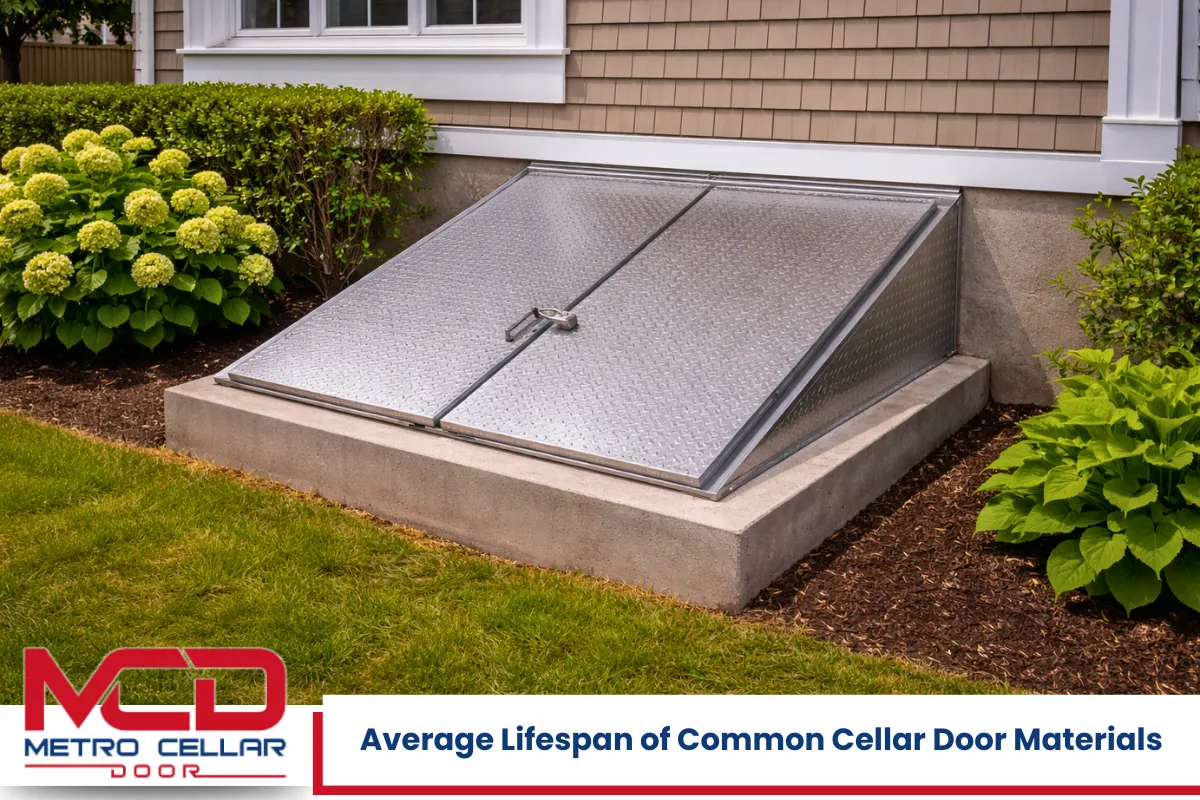
The material used has the strongest influence on how long cellar doors last. Below are realistic lifespan ranges when doors are properly installed by a qualified cellar door installer and maintained in line with manufacturer recommendations.
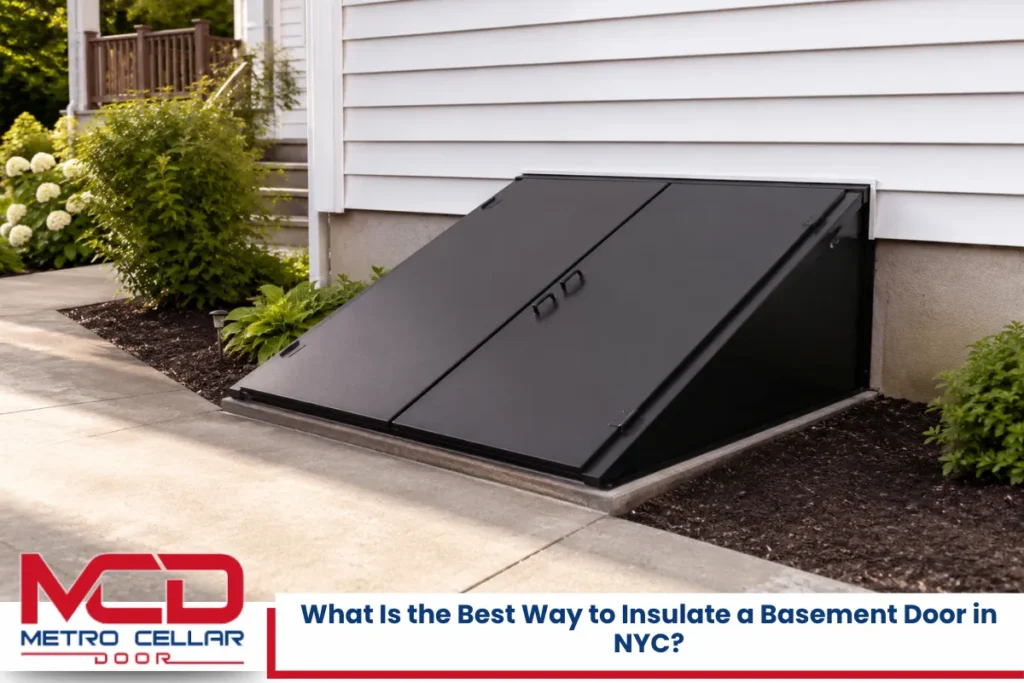
Steel Cellar Doors
Steel remains the most common choice across commercial and residential properties.
- Typical lifespan: 20–30 years
- Strengths: High load-bearing capacity, strong security, compatibility with sidewalk grates
- Limitations: Susceptible to corrosion without protective coatings
Galvanized or powder-coated steel significantly outperforms untreated steel. In coastal or high-salt areas, coatings and proper drainage details are essential to prevent rust from shortening service life.
Aluminum Cellar Doors
Aluminum is lighter and naturally corrosion-resistant.
- Typical lifespan: 25–35 years
- Strengths: Rust resistance, lower maintenance
- Limitations: Lower structural strength than steel
Aluminum performs well for light-duty applications and properties where corrosion risk is high, provided the design meets required load ratings.
Fiberglass and Composite Doors
These materials are less common in NYC but appear in certain low-traffic settings.
- Typical lifespan: 20–25 years
- Strengths: Moisture resistance, minimal corrosion
- Limitations: Limited load capacity, fewer code-approved configurations
Because sidewalk-rated requirements are strict, composites are typically restricted to non-sidewalk locations.
How Installation Quality Affects Longevity
Even the best materials fail early if installation is rushed or incorrect. A professional cellar door installer accounts for site-specific conditions that directly affect lifespan.
Proper Framing and Anchorage
Doors must be anchored to stable masonry or reinforced concrete. Inadequate framing allows movement that leads to misalignment, seal failure, and premature metal fatigue.
Drainage and Pitch
Standing water is the leading cause of early deterioration. Correct pitch away from the opening, functional trench drains, and unobstructed weep paths prevent constant moisture exposure.
Weather Seals and Hardware Alignment
High-quality gaskets and precise hinge alignment reduce stress during opening and closing. When seals compress evenly, doors resist leaks and air infiltration longer.
Environmental Factors That Shorten Cellar Door Life
Freeze–Thaw Cycles
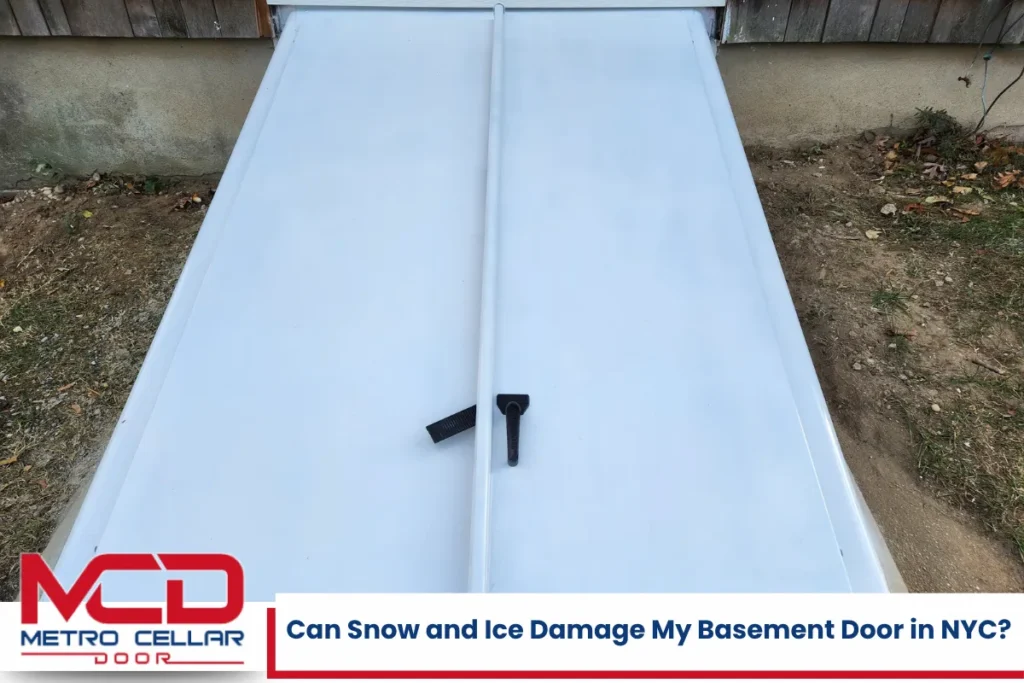
Water that penetrates seams expands as it freezes, widening gaps over time. This cycle accelerates cracking, rust, and frame distortion.
De-Icing Chemicals
Salt and chemical deicers used on sidewalks are corrosive. Without protective finishes, metal doors deteriorate rapidly at contact points.
Foot Traffic and Loads
Cellar doors located on sidewalks must support pedestrian loads and occasional equipment carts. Doors not rated for these conditions deform faster and may violate safety standards.
Maintenance Practices That Extend Service Life
Regular maintenance can add years, sometimes decades, to cellar doors.
- Inspect hinges and fasteners annually
- Clean debris from drains and channels
- Touch up chipped coatings promptly
- Lubricate moving parts with weather-appropriate products
- Check seals for compression or cracking
Documenting inspections also helps demonstrate due diligence if violations or insurance claims arise.
Read New York City Cellar Door Installer: Do All Homes Need Cellar Doors?
Signs a Cellar Door Is Nearing the End of Its Useful Life

Certain warning signs indicate replacement may be more cost-effective than repair:
- Persistent leaks despite seal replacement
- Visible rust-through or metal delamination
- Sagging doors that no longer sit flush
- Difficulty opening or closing due to frame distortion
- Failed load tests or safety inspections
Ignoring these signs often leads to sudden failure, which is more expensive and disruptive than planned replacement.
Repair vs. Replacement: Making the Right Call
Not every aging door requires immediate replacement. The decision depends on structural condition, code compliance, and long-term cost.
When Repairs Make Sense
- Surface rust without penetration
- Worn gaskets or hinges
- Minor alignment issues
When Replacement Is Wiser
- Structural corrosion
- Repeated water intrusion
- Noncompliance with current safety standards
- Inadequate load rating for location
A qualified cellar door installer can assess remaining service life and recommend the most economical path forward.
NYC Regulations That Influence Cellar Door Durability
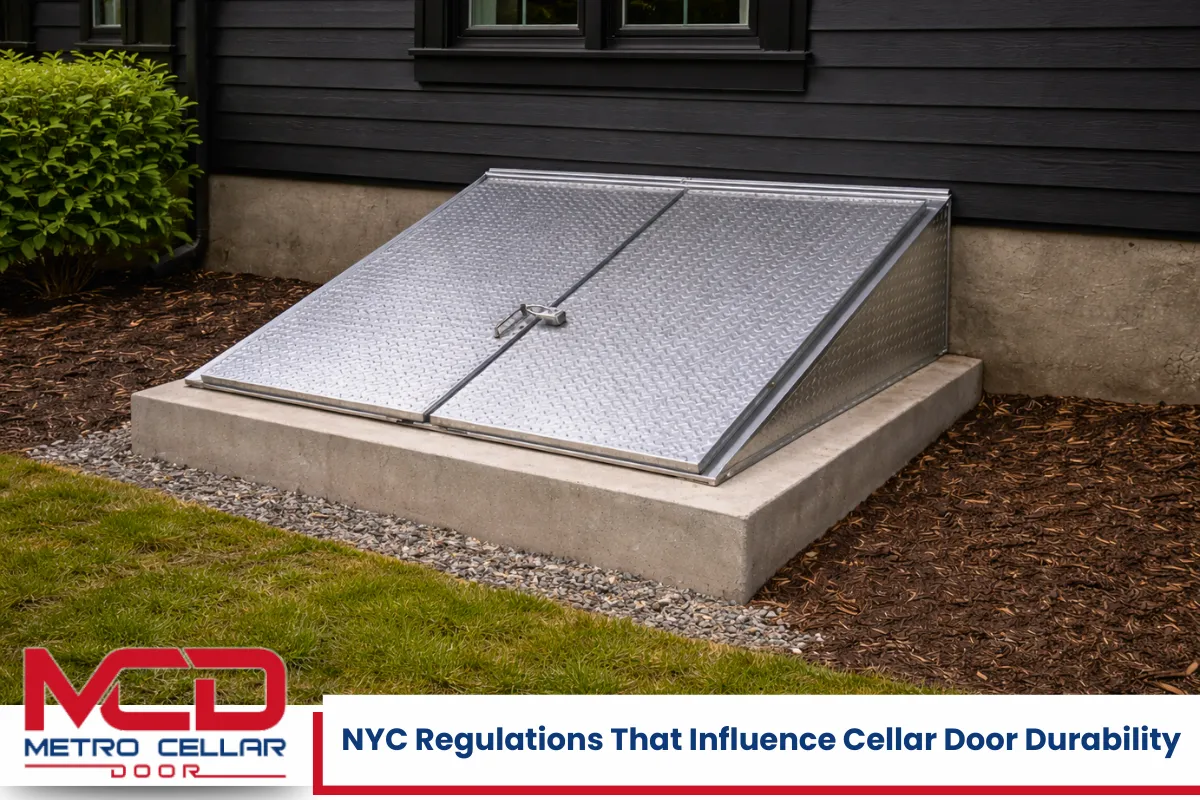
Local rules indirectly affect how long cellar doors last by setting minimum performance standards. Doors exposed to sidewalks must meet load requirements, resist slip hazards, and maintain safe egress. Improper installations can lead to enforcement actions that force early replacement even if the door is physically intact.
Staying compliant protects not only public safety but also the lifespan of the installation by ensuring materials and designs are appropriate for the environment.
Long-Term Cost Considerations for Property Owners
While premium materials and professional installation carry higher upfront costs, they reduce lifecycle expenses. A door that lasts 30 years with minimal repairs is often cheaper than replacing a low-quality option twice within the same period.
Factoring lifespan into purchasing decisions aligns maintenance planning with capital budgeting, an approach favored by experienced building managers across the city.
Choosing Materials Based on Property Type
Residential Townhomes
Steel doors with corrosion-resistant coatings are common, balancing durability and cost.
Mixed-Use Buildings
Higher load ratings and reinforced frames extend lifespan under heavier use.
Commercial Properties
Frequent access demands robust hinges, thicker gauge metal, and enhanced drainage solutions.
Matching material selection to usage patterns is critical to meeting realistic lifespan expectations.
New York City Cellar Door Installer – Metro Cellar Door Bilco Pro

We know that cellar doors in New York City face conditions unlike anywhere else. As a trusted Cellar Door Installer, we design and install solutions built for longevity, safety, and full code compliance. Our team evaluates drainage, traffic exposure, and structural support to help maximize how long your cellar doors last. We use proven materials, precise installation methods, and durable hardware that stands up to NYC weather and daily use. If your doors are leaking, rusting, or nearing the end of their service life, we can help you plan a smart upgrade. Call us at (929) 979-7313 or fill out our contact form to schedule a professional assessment and protect your property with confidence.
Frequently Asked Questions
How long should a sidewalk-rated cellar door last in NYC conditions?
Sidewalk-rated cellar doors designed for New York City typically last between 20 and 30 years when properly installed and maintained. Their lifespan depends on steel gauge, protective coatings, drainage design, and exposure to salt and foot traffic. Doors that meet load requirements and include corrosion-resistant finishes tend to reach the upper end of that range. Poor drainage or skipped maintenance can reduce lifespan significantly, even if the door was code-compliant at installation.
Does replacing seals and hardware really extend a door’s life?
Yes. Replacing worn seals, hinges, and fasteners can add several years to a cellar door’s service life. These components absorb daily stress and protect the door from moisture intrusion. When they fail, water reaches the frame and panels, accelerating corrosion and structural damage. Timely hardware upgrades are often the most cost-effective way to delay full replacement.
Are newer cellar doors more durable than older ones?
Modern cellar doors generally last longer due to improved coatings, better hinge designs, and refined manufacturing standards. Advances in galvanization and powder coating offer superior corrosion resistance compared to older paint-only finishes. Updated designs also improve drainage and load distribution, which reduces long-term stress on frames and panels.
How does improper drainage affect lifespan?
Improper drainage is one of the fastest ways to shorten cellar door life. Standing water increases corrosion risk, weakens seals, and causes freeze–thaw damage in winter. Over time, even high-quality materials fail prematurely if water consistently pools around the opening. Correct drainage design is just as important as material choice.
Can a failing cellar door create legal issues for property owners?
Yes. A deteriorated cellar door can trigger violations related to safety, accessibility, and water intrusion. If a door no longer supports required loads or allows hazardous conditions, property owners may face fines or be required to replace it immediately. Maintaining doors in good condition helps avoid enforcement actions and liability concerns.
Disclaimer: This article is provided for general informational purposes only. Conditions vary by property, and local requirements may change. For accurate guidance tailored to your building, consult a qualified professional familiar with current New York City regulations.
Read New York City Cellar Door Installer: Are Cellar Doors Safe?