
Why Sidewalk Door Security Matters So Much in New York City
Any experienced sidewalk door installer will tell you the same thing: a weak or neglected cellar door is an open invitation for trouble. Across New York City, unsecured sidewalk cellar doors lead to stolen inventory, flooded basements, pedestrian injuries, DOT violations, and lawsuits that can cost property owners tens of thousands of dollars.
The problem gets worse the longer you ignore it. A rusted hinge or a worn-out lock on a busy Manhattan New York block means that at any given moment, someone could trip, fall through, or force their way into your cellar. With constant foot traffic, around-the-clock deliveries, aging masonry in Brooklyn brownstones, and mixed-use buildings stretching across every NYC boroughs, the stakes are high for both residential buildings and commercial storefronts.
The solution is straightforward: invest in the right security features from the start, and maintain them over time. But security means more than just a padlock. It covers structural integrity, slip resistance, fire access, fall prevention, weatherproofing, and protection from unauthorized entry.
This article walks you through every must-have security feature that property owners should demand during sidewalk door installation or cellar door replacement. Whether you manage row houses in Brooklyn New York or retail storefronts in midtown, these recommendations apply.
Key Takeaways
- Sidewalk door installer experts in NYC prioritize security that protects both pedestrians above and your cellar space below.
- Core safety features include traffic-rated steel, anti-slip diamond plate, proper load capacity, and code-compliant framing.
- High-security locksets, tamper-resistant hardware, and controlled access protect basements from break-ins.
- NYC rules require owners to keep sidewalk doors safe, flush, well-lit, and structurally sound to avoid violations and lawsuits.
- Professional sidewalk door installation and maintenance dramatically reduce water leaks, injuries, and premature cellar door replacement costs
NYC Codes, Liability, and Sidewalk Cellar Door Compliance
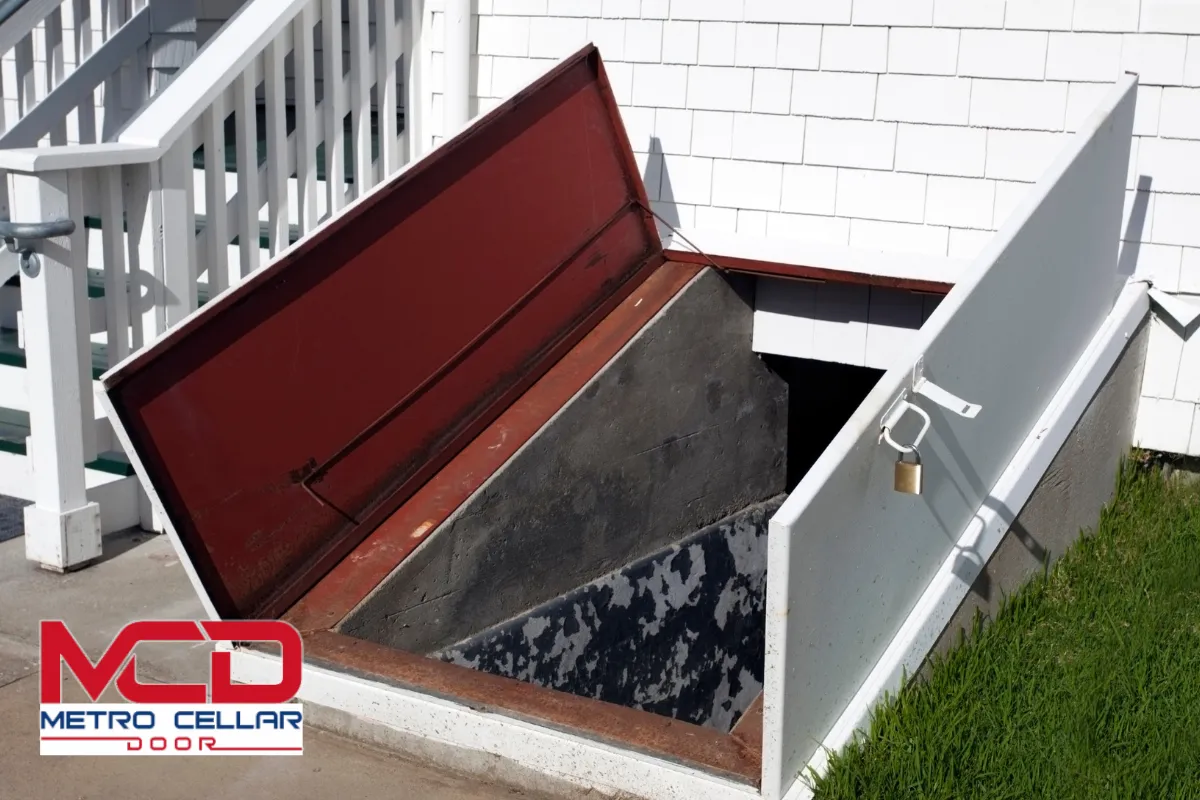
In New York City, a sidewalk door is part of the public right-of-way, but the adjoining property owner carries full responsibility for its safety and upkeep. NYC Administrative Code Section 7-210 places a duty on NYC property owners to maintain sidewalks in a reasonably safe condition, and that obligation extends to cellar doors, frames, and all associated hardware.
Doors must comply with the NYC Department of Transportation regulations for safety. The NYC Department of Transportation inspects sidewalk doors for safety and compliance, looking for sound structure, intact frames, flush surfaces, functional hardware, and no trip hazards or open gaps. Installation of new sidewalk doors requires a revocable consent from the DOT.
Under Section 19-152, the city defines a “hardware defect” as any cellar door that deflects more than one inch under load, has hardware protruding more than half an inch above the surface, or lacks a skid-resistant finish. Broken, rusted, or sagging cellar doors with loose diamond plate or missing bolts can trigger violations, orders to repair, and personal injury claims against property owners.
NYC regulations also require adequate load ratings, non-slip surfaces, proper drainage, and the ability for doors to be secured closed while still allowing safe access for emergency services. Sidewalk doors must comply with local building codes, so always check current NYC DOT and DOB rules before any cellar door installation. Keep job records, drawings, permits, and inspection documentation on file to avoid violations down the road. City regulations evolve, and what passed inspection a decade ago may not meet today’s code requirements.
Structural Security: Steel, Load Ratings, and Frame Design
Real security starts below the surface with a sidewalk door’s structure. Steel is the most common material for sidewalk doors in New York, and for good reason. Heavy-gauge steel panels, typically 14 gauge (about 1.70 mm) or 16 gauge (about 1.34 mm) for commercial applications, resist forced entry, withstand pedestrian loads, and hold up against years of NYC weather.
For most commercial buildings and busy sidewalks, standard doors are rated at 300 pounds per square foot of live load. Traffic-rated hatches support vehicle loads, not just foot traffic, which matters near loading docks, driveways, or delivery zones. Custom fabricated doors fit non-standard openings in NYC, which is common in older pre-war construction where standard doors simply do not work. Custom sidewalk doors are fabricated to fit non standard openings, ensuring a tight, secure fit regardless of the building’s age or layout.
Frames are just as critical as panels. Welded angle-iron frames anchored with epoxied bolts into sound concrete prevent movement, rattling, and prying. In older buildings, concrete repair should come before any door installation to provide a solid foundation. Custom fabrication of the frame eliminates the flex and wobble that compromise locks and hinges over time.
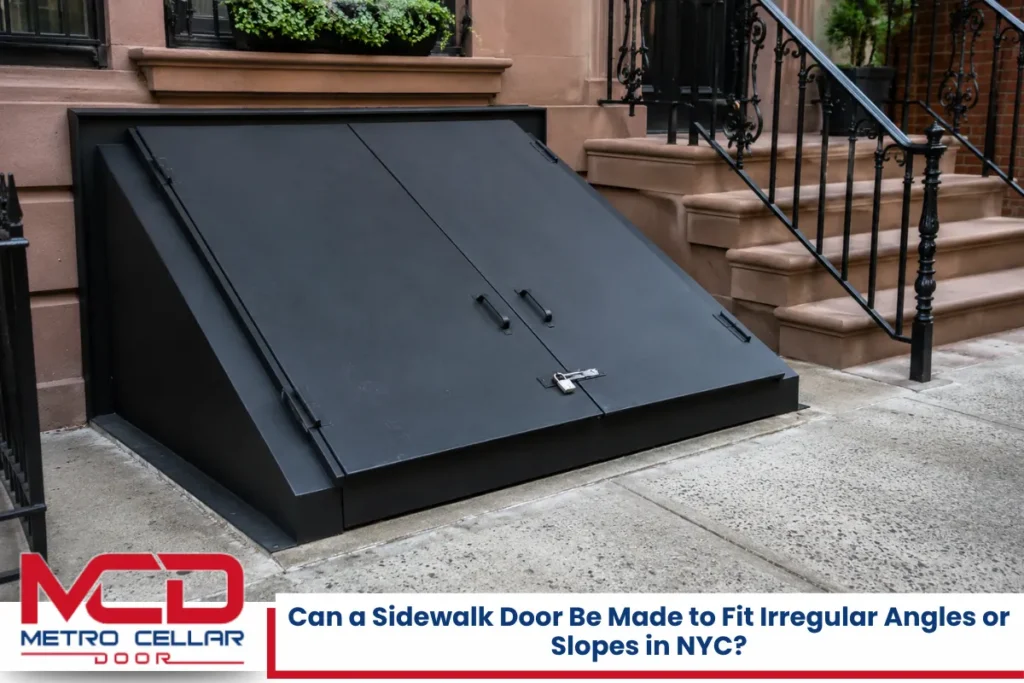
Both flat sidewalk cellar doors and bulkhead cellar door configurations need this level of structural attention. A bilco door or comparable product built to commercial specs will outperform a lightweight single door panel every time. Properly designed frames resist prying attempts, prevent panel flexing, and keep all hardware operating correctly for decades. Custom options exist for virtually every building type, from residential buildings with narrow openings to wide commercial vault covers.
Surface Safety: Anti-Slip Treads, Flush Fit, and Trip Prevention
Slip and trip protection is a critical part of security because pedestrian injuries lead to claims, lawsuits, and DOT violations. Slip-resistant surfaces are crucial for pedestrian safety on sidewalk doors, especially during New York’s wet and icy months.
Diamond plate steel is the industry standard anti-slip surface for flat cellar doors and flat sidewalk cellar doors throughout New York City. Its raised pattern provides traction even when wet, snowy, or covered in grime. Smooth plate is unsafe in winter and can draw a violation on inspection. Flat sidewalk doors are flush with the walking surface, and that flush fit matters. Tight tolerances and beveled edges prevent shoes, stroller wheels, and wheelchair casters from catching on lips or gaps.
Sidewalk doors must support pedestrian traffic safely at ground level. Recessed handles and low-profile hardware reduce tripping risk and make it harder for vandals to snag or pry open cellar doors. Any hardware protruding more than half an inch is considered a defect under NYC rules.
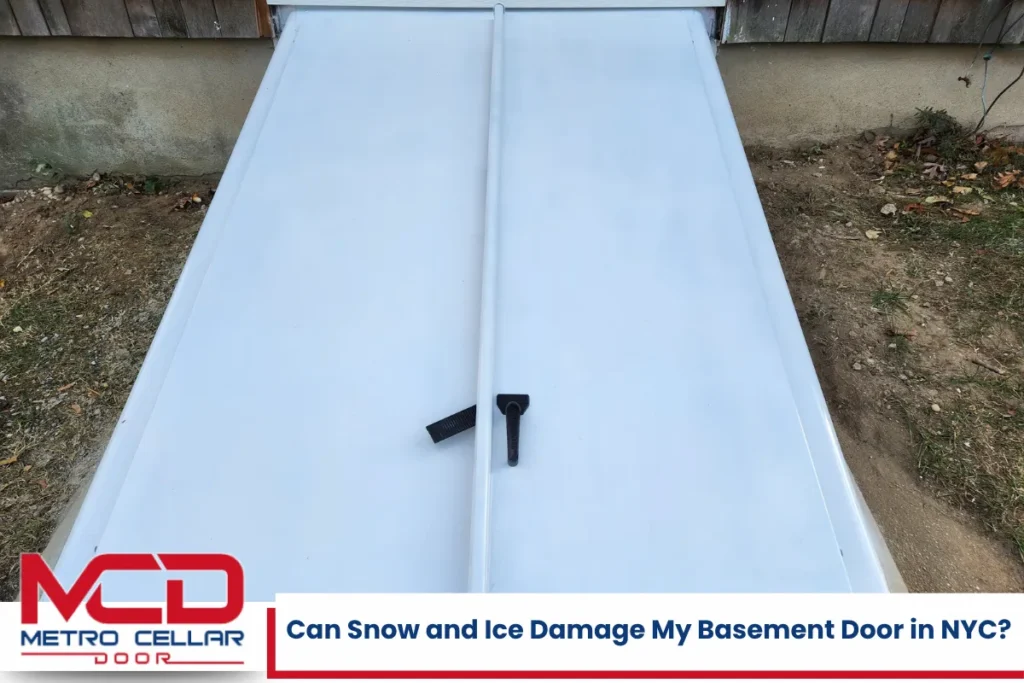
Seasonal hazards demand attention. Snow, ice, and rain change the walking surface dramatically. Periodic de-icing, cleaning, and inspection of seals and thresholds help maintain traction through the worst months. Adding warning paint stripes on edges near entrances or busy crossings improves visibility for pedestrian traffic. Where applicable, verify compliance with local accessibility requirements so the door does not create barriers for people with mobility aids navigating constant foot traffic areas.
Locking Systems and Access Control for Sidewalk Doors
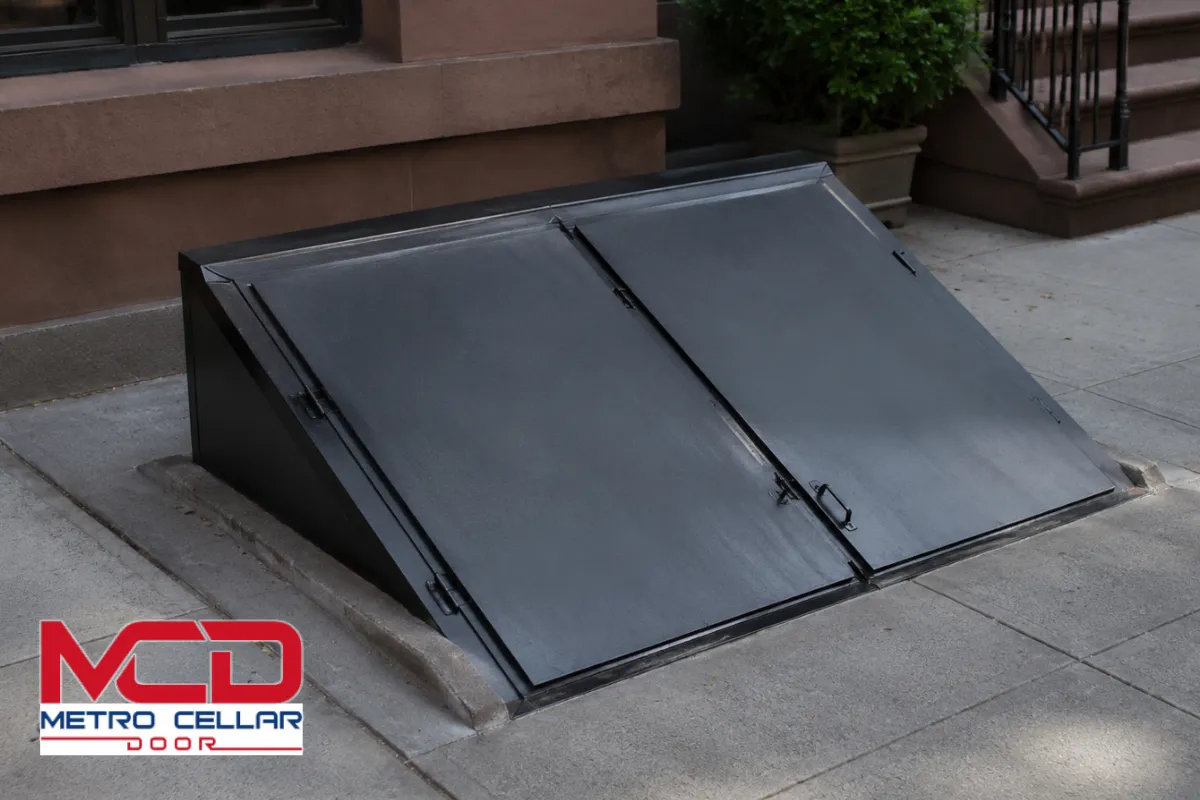
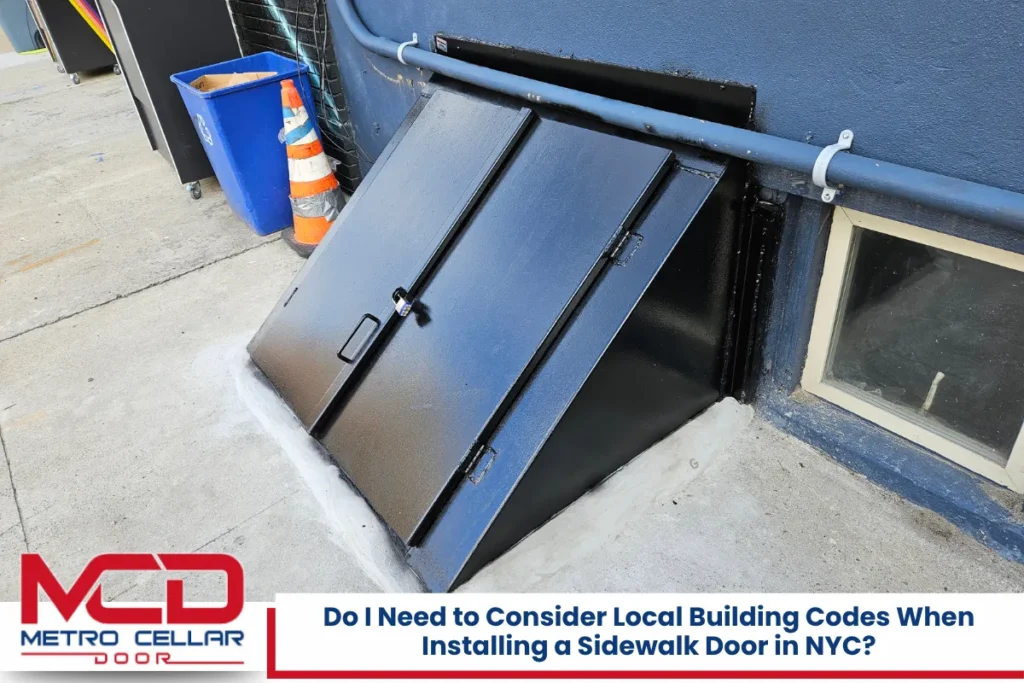
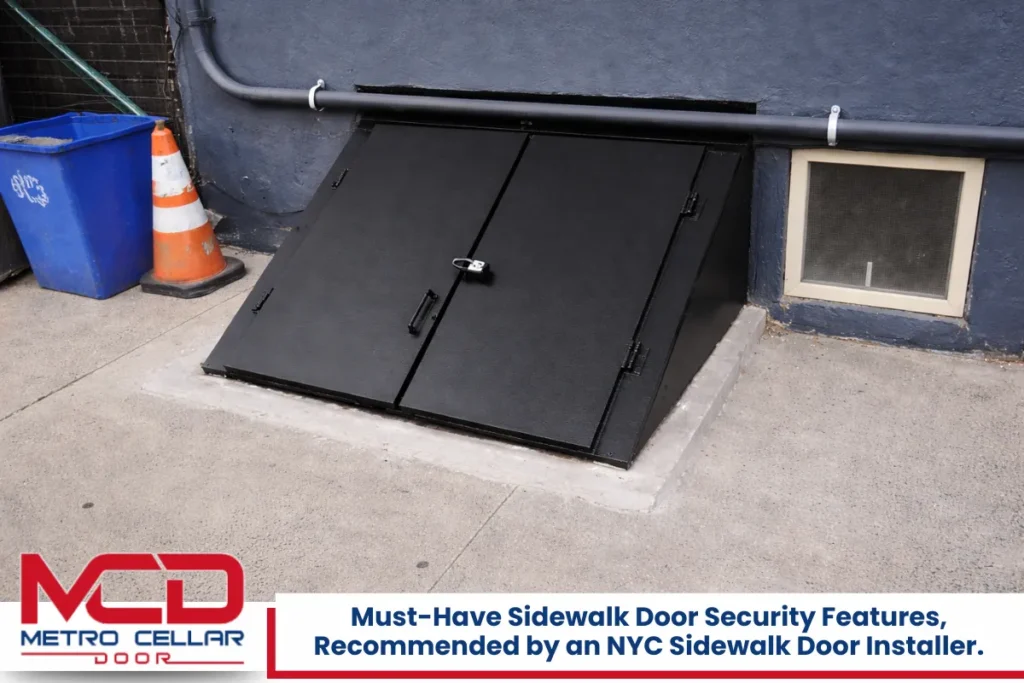
The lock is often the only barrier between a thief and your basement storage, mechanical equipment, or inventory below a sidewalk door. Security features include recessed or flush locking mechanisms to prevent tampering, which also keeps the surface profile low enough to meet NYC hardware defect rules.
Preferred locking options include:
- Heavy-duty mortise or rim cylinders for durability and internal bolt control
- Concealed slam locks that engage automatically when the door closes
- Keyed hasps shielded from bolt cutters with hardened steel guards
- Tamper-resistant padlocks where external locks are unavoidable
Tamper-resistant locks enhance sidewalk door security significantly over cheap surface-mounted hardware. Internal latch mechanisms that operate only from inside the basement eliminate street-level tampering entirely. Avoid exposed padlock loops that are easy to cut. Specify hardened steel components and tamper-proof security screws for all external fasteners.
Key control matters in commercial storefronts: use different keys for staff versus building maintenance, and coordinate with alarm systems or CCTV. Integrated alarms can enhance security for sidewalk cellar doors in urban areas where break-ins through cellar access points are not uncommon. Commercial storefronts must have security gates that are at least 70 percent transparent for visibility, a rule worth noting when cellar access is near a storefront entrance.
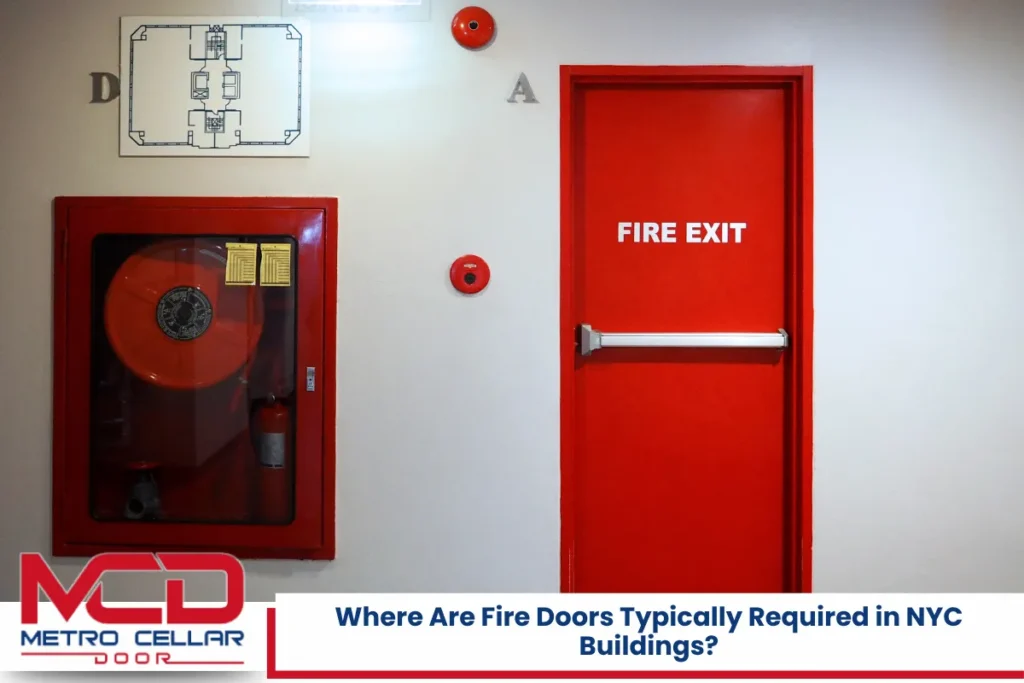
Fire and emergency considerations cannot be overlooked. FDNY expects access to certain basement spaces, so locked doors must still allow safe internal escape paths. Never install a locking system that blocks a secondary egress route or traps someone inside the cellar during an emergency. Secure your doors, but keep them code-compliant.
Hinges, Hardware, and Tamper-Resistance in High-Traffic Areas
Hardware is the first component vandals and opportunistic thieves attack on a sidewalk cellar door. Weak hinges and exposed fasteners make forced entry fast and quiet. Install heavy-duty hinges and frames to reinforce security at every mounting point.
Best practices for hardware selection include:
- Heavy-duty welded hinges or continuous piano hinges for maximum strength
- Hinge pins that are non-removable from the exterior side
- Protected mounting points that cannot be accessed from the street
- Security-head bolts and welded nuts on all critical fasteners
- Hinge guard welds that prevent panel removal even if a pin is attacked
Hydraulic EZ lift doors open smoothly with hydraulic assistance, reducing slamming, finger injuries, and the mechanical stress that wears out hinges prematurely. Hydraulic assist doors open smoothly without strain, which also means employees can operate heavy panels safely during daily deliveries without risking back injuries.
Weather-resistant hardware extends the useful life of every component. Stainless-steel pins, greasable bushings, and corrosion-resistant coatings keep cellar door repair needs low over time, even in New York’s salt-heavy winters. Routine lubrication and bolt checks should be part of any serious sidewalk door maintenance plan. A neglected hinge in a high foot traffic area can fail without warning, creating an immediate public safety hazard.
Read How Tamper-Resistant Locks Protect Sidewalk Doors: An NYC Sidewalk Door Installer Explains
Weather, Water, and Flood Security for Sidewalk and Cellar Doors
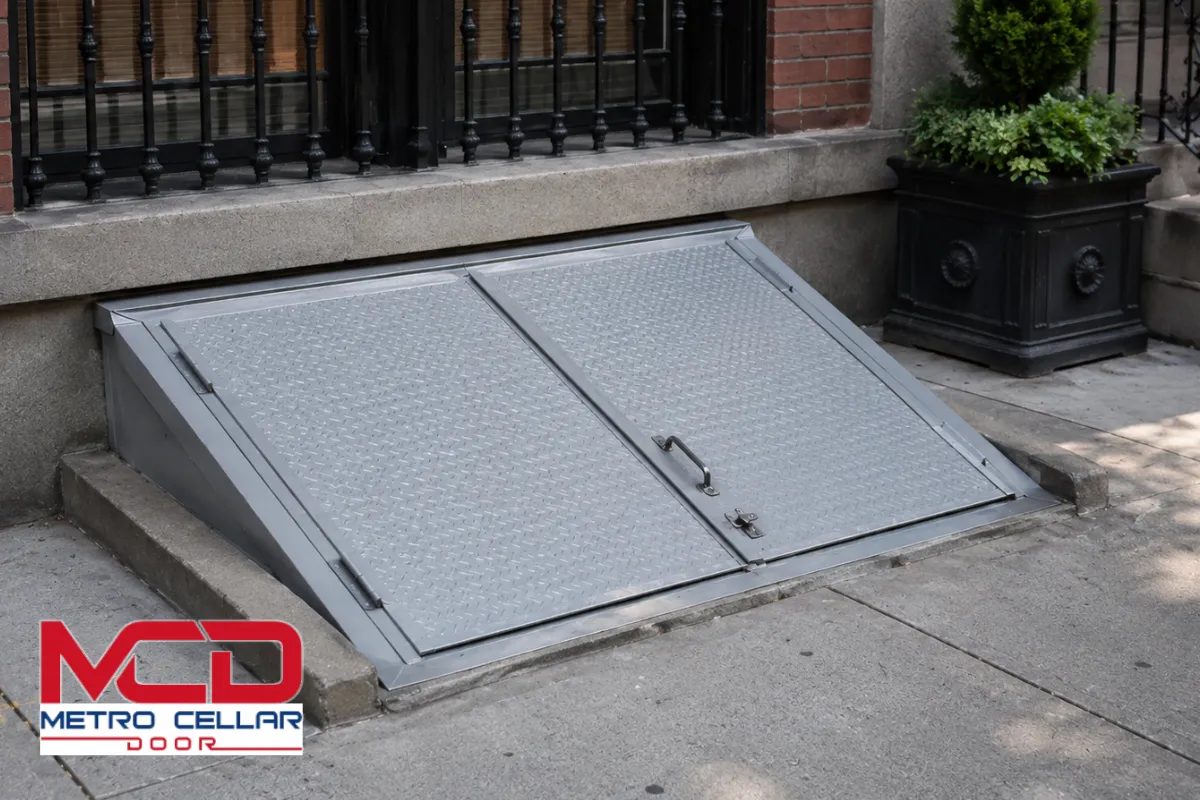
NYC weather is relentless. Intense rain, nor’easters, snowmelt, and clogged city drains can quickly turn a weak sidewalk door into a flood path straight into your basement. Weatherproofing is necessary to prevent corrosion from street salt, which accelerates rust on steel panels, frames, and fasteners every winter.
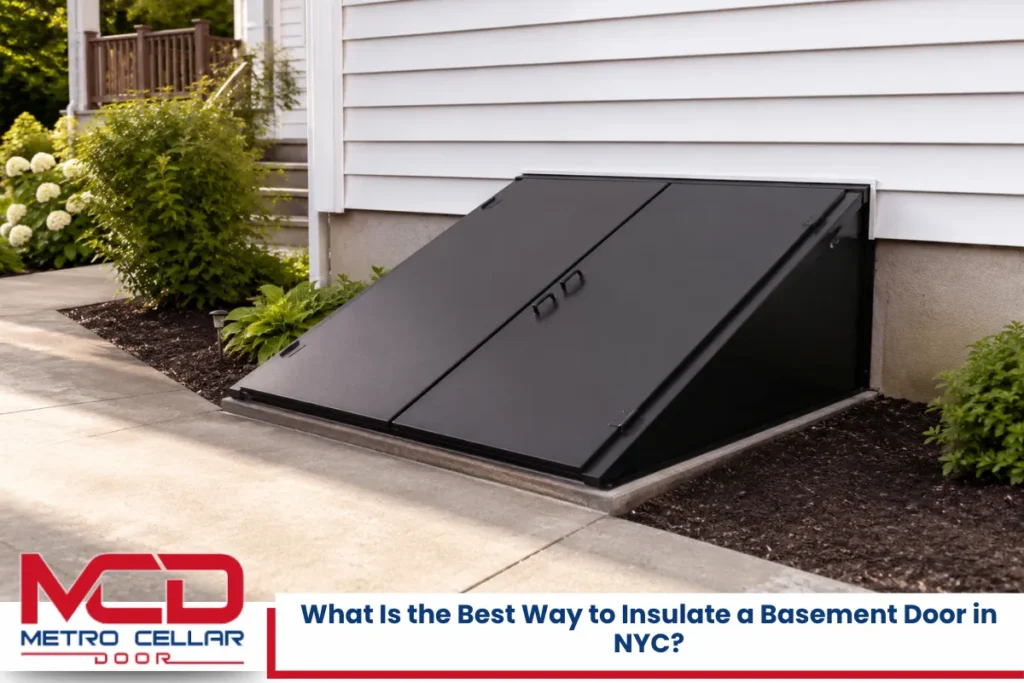
Sloped bulkhead doors provide backyard access to basements while shedding water away from the opening. For flat installations in low-lying locations, raised waterproof designs with integral perimeter panels direct runoff before it reaches the threshold. Both configurations need continuous gaskets and compression seals to block wind-driven rain.
Sidewalk doors should have drainage systems to prevent water accumulation. Pitched concrete around the frame, drain channels, and clear debris paths ensure no standing water sits against hinges or frame edges where rust weakens structure. Check for water leaks to maintain sidewalk door integrity, particularly after heavy storms or seasonal freeze-thaw cycles.
A qualified door installer can coordinate with waterproofing contractors when a cellar regularly floods, creating a combined long-term solution that addresses both the door and the surrounding infrastructure. Timely cellar doors repair for rust holes, warped panels, or failed seals prevents minor leaks from becoming major flood events that damage inventory, equipment, and the building’s foundation.
Fire, Emergency Egress, and Safe Daily Operation
Many basement cellar doors in NYC serve a dual role: secure exterior entry for deliveries and a potential emergency egress point or access route for first responders. This dual function means the door leaf size, opening angle, and clear interior space all affect safe evacuation and quick FDNY access to utilities, storage rooms, or mechanical systems. Basement access doors must be sized to allow easy access for both daily operations and emergency situations.
Heavy panels require lift-assist or counterbalance hardware so staff can safely open and close them without strain injuries. This is especially important in commercial buildings where employees use the basement entry multiple times per day for receiving deliveries or retrieving stock.
Operational habits matter as much as hardware:
- Keep the area around the door clear at all times
- Never prop panels open with crates, bricks, or boxes
- Train employees on safe opening and closing procedures
- Ensure the door can provide access to the basement without obstruction
Lighting and surveillance cameras enhance security at sidewalk entrances. Install exterior lighting and motion sensors to prevent falls when entering or exiting through cellar doors at night. Illuminated interior stairs with marked nosings and secure handrails complete the safe path from street level to basement. Coordinate with fire protection plans and check for any DOB or FDNY rules about locking or blocking secondary exits in commercial occupancies.
When to Repair vs Replace: Keeping Sidewalk Doors Secure Over Time
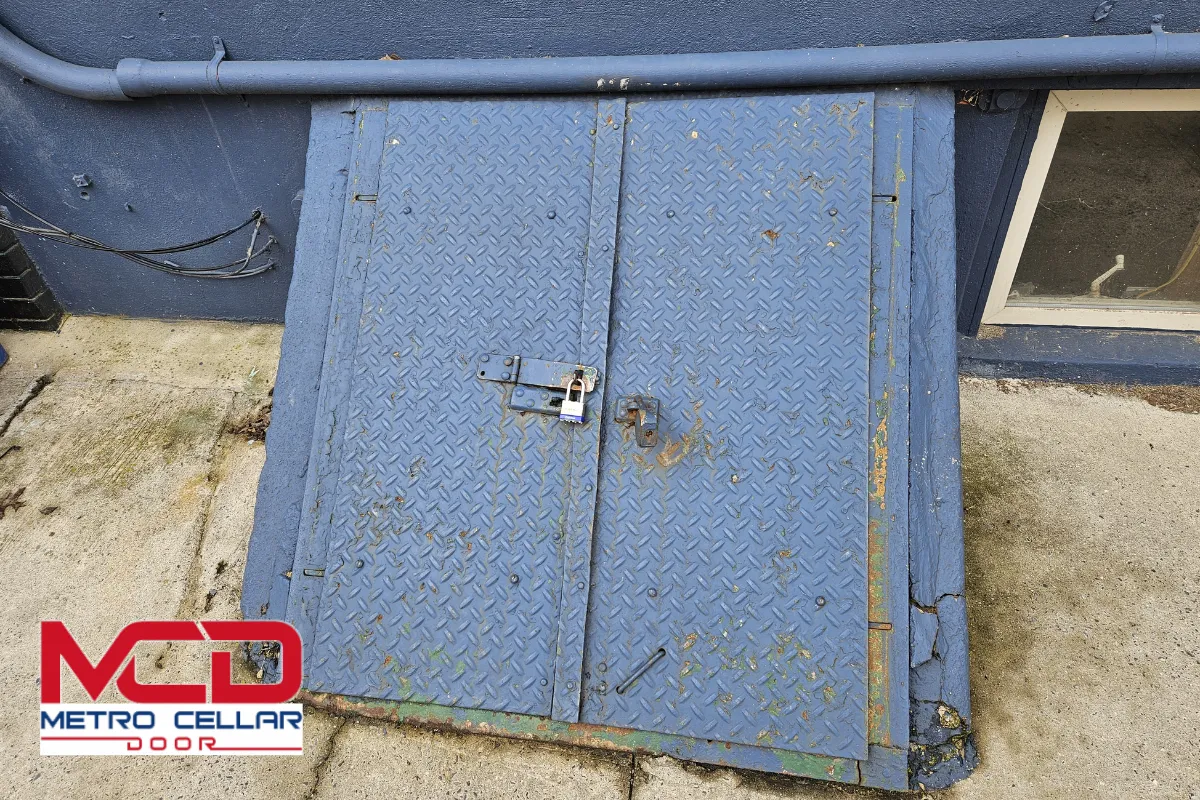
Even the best custom fabricated sidewalk doors need periodic inspection, cellar door repair, and eventually full cellar door replacement. Knowing when to fix and when to start fresh saves money and prevents dangerous failures.
Warning signs that demand attention:
- Soft or cracked concrete around the frame
- Excessive rust, flaking steel, or rust-through holes
- Panel deflection under load (anything over one inch is a violation)
- Water infiltration despite intact-looking seals
- Hardware that no longer closes tight or latches properly
- An old cellar door with worn diamond plate that has lost its skid resistance
Spot repairs like welding cracks, replacing hinges, re-caulking, and repainting are reasonable when the underlying structure is sound. Maintenance includes anti-rust prevention and door repainting as part of regular upkeep. But when structural damage is widespread, repeated leaks persist, or the old door no longer meets current NYC standards, a new sidewalk door is the right call. Installation includes removal of the old door and sealing to prevent water and pest intrusion.
Perform semi-annual check-ups for sidewalk door maintenance to catch problems before they escalate. Repair or replace hinges and locking devices as needed. Sidewalk doors can last 15 to 25 years with proper upkeep and regular maintenance, but neglect can cut that lifespan in half. A properly maintained door on a busy commercial block is safer, more secure, and far less expensive over time than repeated emergency fixes. Modern sidewalk cellar door replacement options come with better coatings, improved seals, and upgraded locks compared with decades-old installations. Sidewalk cellar door installation with current materials and techniques means a new door will outperform an aging one in every measurable way.
How to Choose the Right Professional for Secure Sidewalk Door Installation
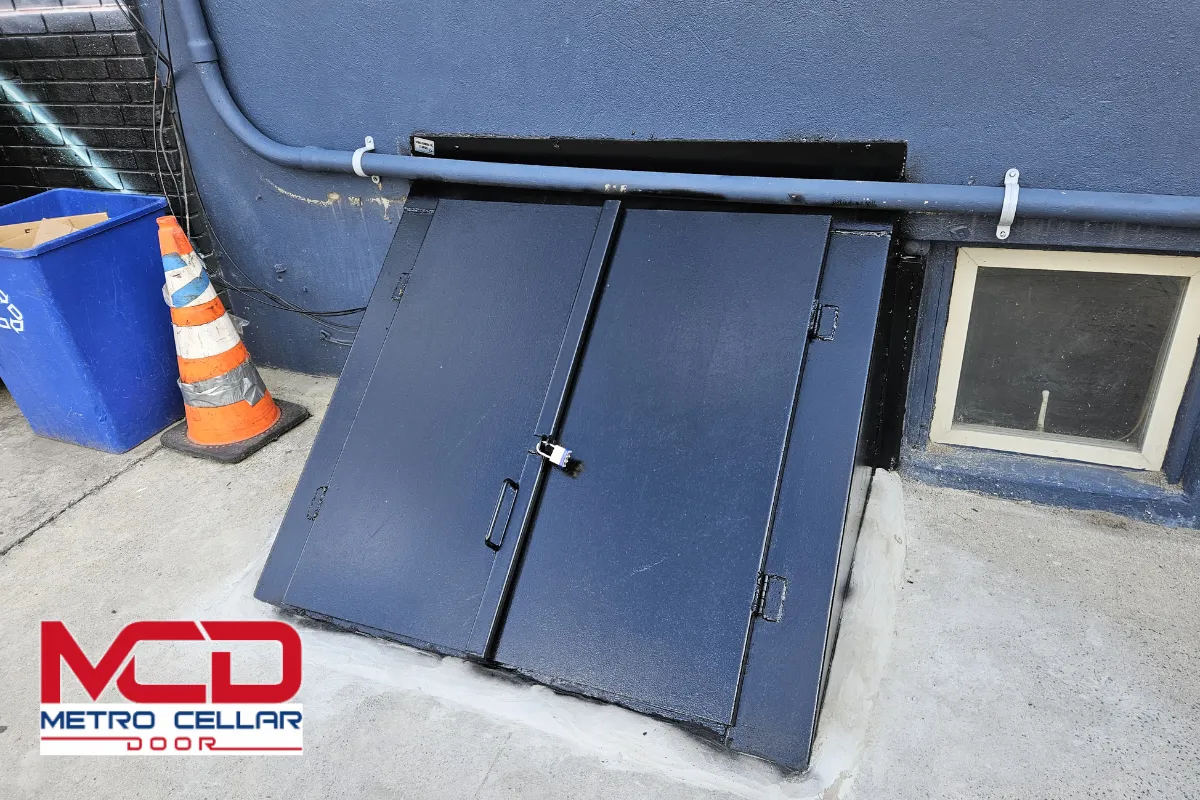
Picking a qualified cellar door installer often matters more than picking a specific product brand. The best materials in the world will fail if the installation is sloppy, the frame is not level, or the anchors are set in crumbling concrete. Proper installation is what separates a door that lasts two decades from one that needs door repair within a few years.
Look for these criteria when evaluating a cellar door company:
- NYC licensing and adequate insurance coverage
- A portfolio of local sidewalk doors across multiple NYC boroughs
- Familiarity with NYC DOT and DOB rules and permit processes
- Proven experience with custom fabrication and steel work
- Ability to install sidewalk cellar doors for both residential and commercial applications
During the quote process, ask about load ratings, welding methods, lock options, non-slip finishes, waterproofing details, and expected lifespan. Standard commercial sidewalk doors cost between $1,500 and $3,000, though pricing varies with size, load rating, and custom options. Installation typically takes 2 to 5 days depending on the scope of work, including concrete repair and haul-away of old materials.
Seek written estimates covering demolition, concrete repair, new door fabrication, painting, hardware, and disposal. The best cellar door services providers handle maintenance services and future upgrades, not just one-time door installation. Check reviews, response time, and warranty terms. Verify the installer will coordinate inspections or permits when required, and confirm they serve your area, whether that is Queens New York, Manhattan, Staten Island, Long Island, or Northern New Jersey.
NYC Sidewalk Door Installer – Metro Cellar Door Bilco Pro
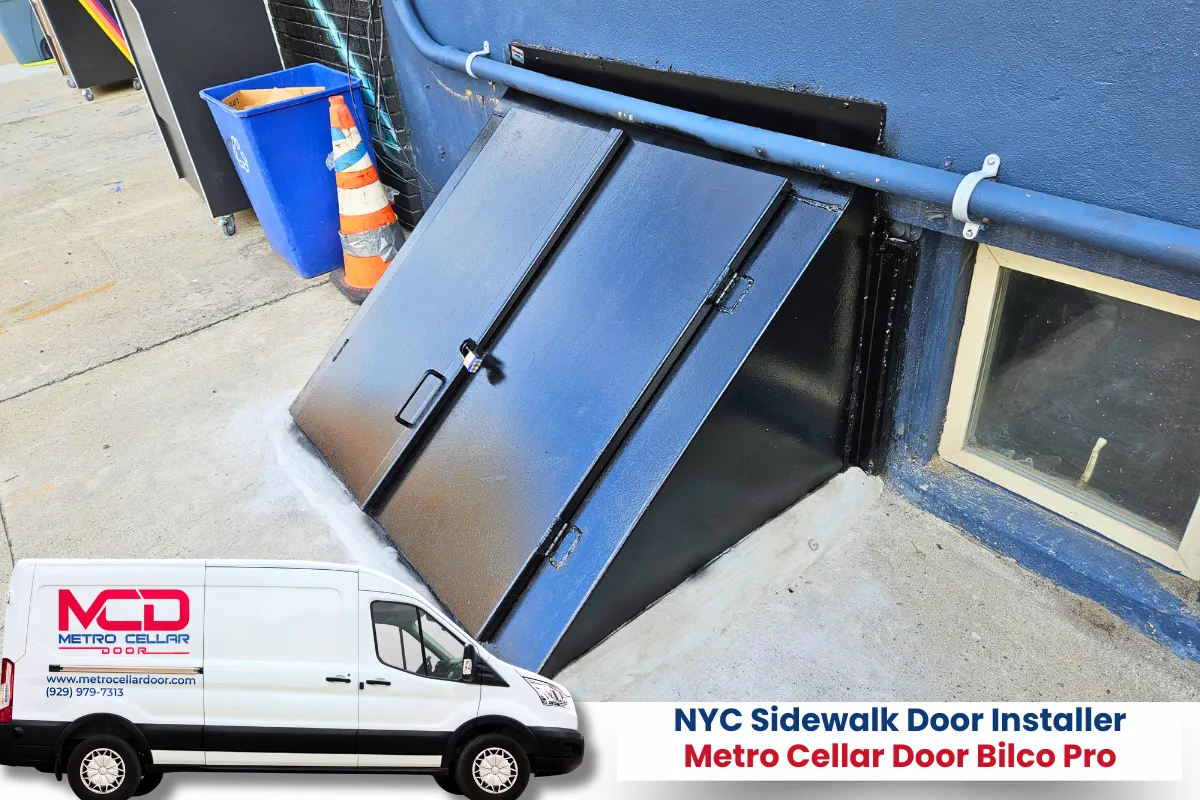
At Metro Cellar Door Bilco Pro, we are a trusted NYC sidewalk door installer serving New York City and the surrounding areas with decades of hands-on experience. We specialize in sidewalk door installation and cellar door replacement for property owners across every borough.
Our team delivers custom fabricated flat sidewalk doors, bulkhead cellar doors, and traffic-rated hatches built to handle NYC foot and vehicle loads. Every door we install meets current code requirements for safety, security, and durability. From tamper-resistant locks and non-slip diamond plate finishes to weatherproof seals and hydraulic lift systems, we build doors that protect your property for years.
Ready to secure your building with a new door built to last? Call us at (929) 979-7313 or fill out our contact form for a free quote. We offer fast turnaround, expert guidance on NYC compliance, and the quality you expect from a dedicated cellar door company.
Frequently Asked Questions
How often should NYC property owners schedule professional inspections of sidewalk doors?
NYC property owners should schedule professional inspections at least twice a year, ideally before winter and again in spring after the freeze-thaw cycle. Semi-annual check-ups catch rust formation, seal deterioration, loose fasteners, and early signs of concrete cracking around frames before they become safety hazards or code violations. Buildings with heavy delivery traffic or exposure to salt spray may benefit from quarterly inspections. Between professional visits, building staff should perform visual checks monthly, looking for gaps, wobbling panels, water stains below the door, and any hardware that feels loose or stiff. Documenting each inspection creates a maintenance record that can protect you in a liability dispute.
What is the difference between residential and commercial sidewalk doors in terms of security features?
Residential sidewalk doors, common on row houses and brownstones, typically use lighter-gauge steel and simpler locking mechanisms because they see less foot traffic and lower break-in risk. Commercial sidewalk doors for retail storefronts and commercial buildings require heavier gauge steel (14 to 16 gauge), higher load ratings to support pedestrian traffic volumes, and more sophisticated locking systems such as mortise cylinders or concealed slam locks. Commercial installations also often integrate with building alarm systems and security cameras. The framing and anchoring requirements are more demanding in commercial settings because the doors endure more daily use, heavier deliveries, and greater exposure to tampering. Both types must meet NYC code, but commercial applications face stricter scrutiny during DOT inspections.
Can property owners add alarms, sensors, or smart locks to existing cellar doors without breaking NYC codes?
Yes, property owners can retrofit existing cellar doors with alarms, sensors, and electronic locks, but the modifications must not compromise fire egress, structural integrity, or the flush surface profile required by NYC rules. Any electronic lock must allow immediate release from the inside without a key, meeting FDNY egress standards. Sensors that detect unauthorized opening or water intrusion are generally permissible and do not require additional permits. However, if the retrofit involves altering the door structure, frame, or sidewalk surface, a DOB permit or DOT approval may be necessary. Work with a licensed installer who understands both the electrical and structural aspects, and always verify that new hardware does not protrude above the half-inch threshold that triggers a hardware defect violation.
What winter-specific security issues affect sidewalk doors, and how do you protect locks and hinges from ice and salt damage?
Winter creates multiple problems for sidewalk doors in NYC. Ice buildup around frames can freeze doors shut, preventing emergency egress and daily operations. De-icing salts accelerate corrosion on steel panels, hinges, and lock cylinders, weakening the very components that keep the door secure. To protect against these issues, apply a marine-grade corrosion inhibitor or lithium grease to all hinges, pins, and lock mechanisms before the first freeze. Use calcium chloride-based de-icers instead of rock salt near the door, as they are less corrosive to steel. Keep drain channels clear so meltwater does not pool against the frame. Inspect weatherstripping and gaskets in early fall and replace any that show cracking or compression set, because failed seals allow water in that freezes and expands, warping panels and frames.
What is the average lifespan of a high-quality sidewalk door in NYC, and does it compare to other basement access products like garage doors?
A high-quality, properly maintained sidewalk door in NYC typically lasts 15 to 25 years. This is comparable to or exceeds the lifespan of standard commercial garage doors, which average 15 to 20 years under similar urban conditions. The key difference is exposure: sidewalk doors endure direct pedestrian loads, water, salt, and temperature extremes on their top surface, which garage doors generally avoid. What extends lifespan most is consistent maintenance, specifically semi-annual inspections, prompt rust treatment, seal replacement, and hardware lubrication. Doors with hot-dipped galvanized or powder-coated finishes outlast bare painted steel by several years. Investing in thicker gauge steel and premium hardware upfront pays off significantly over the door’s lifetime compared to replacing a cheaper door every eight to ten years.
Important Note on Safety and Regulations
This article is for informational purposes only and does not replace professional legal, engineering, or code compliance advice. Always consult current NYC DOT and DOB regulations and work with licensed professionals before modifying or installing any sidewalk door or public-facing structure.
Read How to Stop Basement Door Drafts: Solutions from an NYC Basement Door Installer