
A fire door that separates your building’s corridors, stairwells, or rated shafts from a fire emergency is only as reliable as its last inspection. Yet many property owners across New York City either overlook or misjudge how frequently these assemblies need to be checked. The result can be violations, steep fines, and worst of all, doors that fail when lives depend on them. The answer is straightforward: every fire rated door in NYC must be inspected at least once every twelve months, plus after installation and after any repair or alteration.
NFPA 80 establishes the annual fire door inspection requirement, and NYC adopts and enforces these standards through the Fire Code, Building Code, and Housing Maintenance Code. Annual fire door inspections mean once per calendar year, documented in writing with a dated report – not occasional spot checks by maintenance staff. High-risk areas such as stairwell doors, egress corridor openings, and doors serving fire rated shafts are checked more frequently by building staff, even though the code minimum is yearly. Missing annual inspection reports can trigger violations from FDNY, HPD, or DOB during routine or complaint-based building visits.
Key Takeaways
- Fire doors must be inspected annually per NFPA 80, and annual inspections of fire doors are required by NYC law for most fire rated assemblies across residential and commercial properties.
- Inspections are required immediately after installation and annually thereafter, plus after any repair or modification that could affect the door’s rating.
- Apartment buildings and commercial buildings in New York City face fines, class C violations, and enforcement actions from FDNY, HPD, or DOB for missed or failed inspections.
- Consistent fire door inspection is a life safety issue that protects building occupants, not just a paperwork exercise.
What a Fire Door Is and Why NYC Requires It
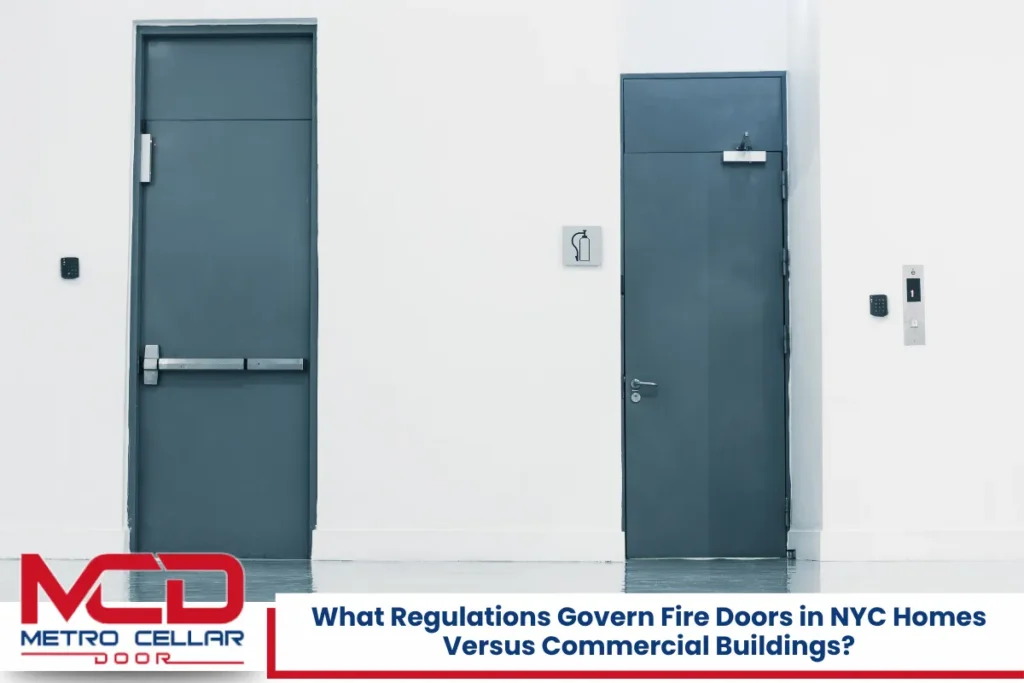
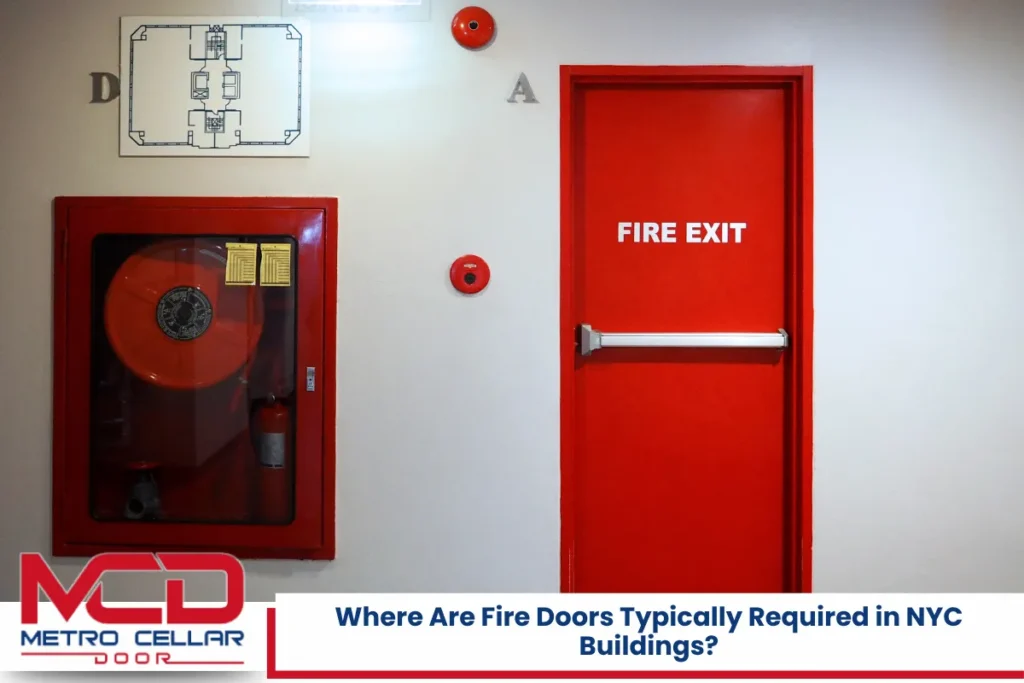
A fire door is a tested, labeled, fire rated assembly that includes the door leaf, frame, hardware, and closing devices, all working together to slow the spread of fire and smoke through a building. Fire doors can be hollow metal, solid-core wood, or glass, depending on the application and location within the structure.
Hollow metal fire doors are common in commercial settings such as offices, warehouses, and retail spaces. Solid-core wood fire doors are often used in residential spaces, including apartment entrance doors opening onto corridors. Fire-rated glass doors are used in commercial lobbies for visibility while still meeting code. Fire doors are rated to withstand fire for 20 to 90 minutes. These ratings correspond to the fire resistance level of the surrounding wall – a 60-minute wall typically requires a 45-minute door, for example.
These doors protect escape routes, elevator lobbies, and vertical openings like stairwells and shafts, buying critical time for safe evacuation and FDNY response. Because of the density and mixed uses found across NYC buildings, the city strictly enforces proper fire door installation in multi-family and commercial properties alike.
NYC Codes and Standards That Drive Fire Door Inspections
Several layers of regulation work together to govern fire doors and inspection frequency in New York City. The NYC Building Code, Fire Code, Housing Maintenance Code, and NFPA 80 each address different aspects of fire rated door systems, from where they must be installed to how often they must be tested.
NFPA 80, titled “Standard for Fire Doors and Other Opening Protectives,” requires fire door assemblies and other opening protectives to be inspected and tested upon installation, then at least annually throughout their service life. Inspection of fire doors is governed by the NYC Fire Code and NFPA 80 standards together. Horizontal and vertical sliding or rolling fire doors must be inspected and tested annually under Fire Code section 703.4, including full drop tests and verification of automatic closing mechanisms.
The NYC Department of Buildings and FDNY enforce compliance for commercial buildings and egress doors across many occupancy types. HPD enforces self-closing apartment and corridor doors under the Housing Maintenance Code, issuing class C immediately hazardous violations when self-closing devices are broken or missing. Swinging fire doors must close and latch automatically under the NYC Fire Code, and fire doors must be self-closing and self-latching according to NYC codes. Certificates of occupancy and approved plans specify where fire rated doors are required, and those locations must follow the annual inspection rules.
When and How Often Different NYC Building Types Need Fire Door Inspections
Inspection obligations apply across many occupancies, but the enforcement agencies and risk profiles differ by building type. The frequency remains at least annual for all fire rated doors, though some owners go beyond the minimum.
- Apartment buildings with three or more units typically require yearly inspection of corridor, stair, compactor room, and other fire rated doors that serve as smoke and fire barriers. HPD’s Local Law 71 program annually selects 300 Class A multiple dwellings for proactive self-closing door inspections.
- Fire doors are mandatory in many NYC commercial buildings, including offices, retail spaces, warehouses, and mixed-use properties. All fire rated doors protecting exits, shafts, and rated rooms in commercial properties must be inspected annually.
- Institutional occupancies such as schools, hospitals, and nursing facilities must document inspections for accreditation and life safety compliance in addition to NYC fire codes. Many of these buildings schedule semi-annual inspections because the consequences of failure are severe.
Property owners and facility managers should treat annual fire door inspection as part of their overall life safety program, regardless of building type. The inspection schedule should be documented and accessible for any agency audit.
What a Compliant Fire Door Inspection in NYC Should Cover
A compliant inspection must be performed by a qualified person familiar with fire door components, the NYC building code, and NFPA 80 expectations. Inspections must ensure that no unauthorized modifications compromise fire doors. Here is what a thorough fire door inspection includes:
- Verifying the presence and legibility of fire door labels identifying the manufacturer, fire rating, and listing information
- Checking the door leaf, fire door frames, and door frames for damage, warping, or misalignment
- Confirming self-closing mechanisms bring the door fully shut and that the latch engages the strike so the door can latch securely
- Inspecting gasketing, smoke seals, and perimeter clearances – clearance at the bottom of fire doors generally cannot exceed three-quarters of an inch, and gaps around the door frame cannot exceed one-eighth of an inch according to the NYC Fire Code
- Verifying that panic hardware, hinges, and all other hardware are fire rated and match the listed assembly
- Ensuring no wedges, doorstops, or unauthorized hold-open devices are defeating self-closing features in corridors and stairwells
- Checking that no field modifications such as unapproved vision panels, extra holes, non-rated hardware, or removed edge seals have voided the rating
Inspectors must document deficiencies, specify corrective actions, and create a dated report kept on file for FDNY, HPD, or DOB review during any future service visit or agency audit.
Read What NFPA 80 Requires for Fire Door Inspections in NYC
Common Fire Door Problems NYC Inspections Frequently Uncover
Many NYC buildings, especially older apartment buildings and commercial spaces, have recurring fire door issues that show up during inspections. Knowing the most common types of deficiencies can help you address them proactively.
Damaged frames and warped doors are among the most frequent problems. A warped leaf or bent frame creates gaps that prevent a tight seal against fire and smoke, allowing dangerous conditions to develop during a fire emergency. Visible signs of frame corrosion or impact damage should never be ignored.
Missing or broken door closers are another leading cause of failed inspections. Self closing devices that do not bring the door fully shut, or latches that fail to engage the strike, mean the door cannot close properly when it matters most. Fire doors should never be propped open or blocked, yet inspectors regularly find wedges and objects holding doors in corridors and stairwells.
Unauthorized modifications such as unapproved vision lites, extra holes drilled for signage, non-rated hardware, or removed edge seals can void the fire rating entirely. Similarly, paint-over labels, removed labels, or mismatched frames and leaves make it impossible to verify the assembly’s fire rated status during inspection. These issues often require full replacement rather than repair.
Annual Fire Door Inspections vs. Ongoing In-House Checks
There is an important distinction between formal annual inspections and the routine checks your building staff should perform more frequently. Both matter for ensuring compliance and protecting occupants.
Annual fire door inspections must follow NFPA 80 standards and should be completed by a qualified inspector or third-party fire protection company. Fire door assemblies must be inspected by qualified professionals annually, and annual inspections should be performed by trained or licensed professionals who can sign off on findings and recommendations.
Building staff should perform routine visual checks of fire doors monthly or bi-monthly. Monthly or bi-monthly inspections can be performed by trained staff who walk through the building to confirm that self-closing doors latch, are not propped open, and show no obvious damage. These checks catch problems early and reduce the odds of failing the formal inspection.
Catching issues between annual cycles also helps avoid a last-minute scramble before FDNY or insurance visits. Some high-risk occupancies proactively schedule semi-annual third-party inspections even though the code minimum is yearly. Buildings that are inspected periodically throughout the year tend to have fewer surprises and lower long-term costs.
What Happens If Fire Doors Are Not Inspected or Fail in NYC
The safety consequences of noncompliant fire doors are severe: uncontrolled fire and smoke spread, blocked egress routes, and increased risk of injuries or fatalities. A door that does not close automatically during a fire can turn a contained incident into a building-wide emergency, preventing safe evacuation and allowing smoke to fill corridors and stairwells.
Regulatory consequences are equally serious. HPD issues class C violations for non-working self-closing doors, FDNY can issue orders to correct life safety defects, and DOB can levy penalties for noncompliant egress components. Failure to inspect fire doors can result in fines starting at one thousand dollars per door, and repeated violations compound quickly across buildings with dozens of rated openings.
Failed inspections can delay certificates of occupancy, leasing, or renovation approvals for commercial buildings and commercial properties. Insurers may raise premiums or question coverage if longstanding deficiencies with fire doors are documented and uncorrected. A building owner who cannot produce inspection records after a fire incident faces both legal and financial exposure.
When inspection reports reveal assemblies that cannot be economically brought back into compliance, property owners should budget for timely fire rated door installation or full replacement.
Planning, Documenting, and Budgeting Your NYC Fire Door Inspection Program
For owners, coop boards, and facility managers managing large portfolios in New York City, a structured approach to fire door compliance saves money and reduces risk.
Start by creating an inventory of all fire rated doors, including locations, ratings, and last inspection dates, to track annual compliance across each building. Standardize inspection forms aligned with NFPA 80 and NYC requirements, and store them digitally for easy building access during agency audits. Written records of fire door inspections must be maintained for at least three years. Annual inspections must be documented to comply with local fire authorities, so keeping organized records is non-negotiable.
Coordinate inspection schedules around other life safety work such as sprinkler testing or alarm inspections to minimize tenant disruption. Plan capital budgets for future fire door installation or replacement in high-wear locations, especially heavily used stairwells and public corridors.
Here is a general cost framework for budgeting purposes:
| Cost Category | Typical Range |
| Fire door installation per door | $1,500 to $3,000 |
| Certified fire rated hardware per door | $200 to $500+ |
| Permit fees per installation | $150 to $600 |
| Structural framing for non-standard openings | $300 to $800 |
| NYC labor premium above national average | 15% to 30% |
These numbers reflect general market conditions. Labor costs in NYC are fifteen to thirty percent above national averages, so budgeting accurately from the start helps avoid surprises. Planning ahead for professional installation and ensuring compliance before the next inspection cycle is always more cost-effective than reacting to violations.
NYC Fire Door Installer – Metro Cellar Door Bilco Pro
At Metro Cellar Door Bilco Pro, we specialize in fire door installation and replacement across New York City and the surrounding areas, including Long Island and all five boroughs. We understand what NYC fire codes and safety standards demand, and every door assembly we install is built to pass annual fire door inspections from day one. Whether you manage apartment buildings or commercial properties, we handle code compliant fire rated door installation with a fast turnaround so your building stays protected and your inspection reports stay clean. We are your trusted partner for professional installation of fire rated steel doors, door frames, and complete assemblies. We do not perform repairs – we focus on getting it right with new installation and full replacement. Call us at (929) 979-7313 or fill out our contact form for free estimates on your next project.
Frequently Asked Questions
Do Interior Apartment Doors Need Yearly Fire Door Inspections?
Not every interior door inside a dwelling unit qualifies as a fire door. However, doors that open directly onto a fire rated corridor or stair enclosure are typically installed as part of the fire and smoke barrier protecting the means of egress, and they must be inspected annually. The key factor is whether the door is identified on approved building plans as a fire rated opening. Many apartment entrance doors in NYC are required to be self-closing and fire rated, which places them under the annual inspection requirement. Building owners should review their approved plans or consult a design professional to identify which openings are subject to these rules. If a door serves a fire rated partition, it needs to be on your inspection list regardless of whether it faces a corridor or a stairwell.
Who Can Legally Perform a Fire Door Inspection in NYC?
NFPA 80 requires that inspections be performed by a “qualified person” with demonstrated knowledge of fire door construction, installation, and operation – not just any maintenance worker or porter. In practice, many NYC building owners rely on third-party fire protection companies or door specialists with documented training in NFPA 80 and local code requirements to perform annual inspections and sign reports. Some large institutions train in-house staff to this level, but those individuals must be able to demonstrate competence if FDNY or DOB questions the inspection process. NYC codes do not currently define a single mandatory license or certification for fire door inspectors, but using someone without relevant training and experience creates significant liability. Always confirm that whoever conducts your inspection can produce credentials and a properly formatted written report.
How Long Should I Keep My NYC Fire Door Inspection Records?
NFPA 80 recommends retaining fire door inspection records for at least three years, and that is the minimum you should follow. In practice, holding onto records for a longer period is wise, particularly for larger commercial buildings and multi-property portfolios. Digital copies with date stamps, inspector details, deficiency notes, and corrective work records make it easy to produce documentation during an FDNY, DOB, or HPD audit. A multi-year inspection history also helps track recurring issues, justify replacement decisions, and demonstrate due diligence in the event of a fire incident investigation. Insurers often request several years of records when evaluating claims, so thorough documentation protects you financially as well as legally. Treat your inspection files as permanent building records whenever possible.
Can I Retrofit an Existing Non-Rated Opening With Only a New Fire Door?
A proper fire rated opening typically requires a listed combination of door leaf, frame, and hardware that have been tested and labeled together as a complete door assembly. Simply hanging a new fire rated door on a non-rated or damaged frame generally does not satisfy NYC building code requirements because the entire assembly must carry a valid listing. In most cases, full fire rated door installation with a matched frame and certified hardware is the most reliable path to documented compliance. Before starting any work, have a design professional or qualified fire door installer evaluate whether the existing frame and surrounding wall construction can accept a listed assembly. Cutting corners on the frame almost always leads to a failed inspection and wasted money.
What Should I Do If a Fire Door Fails Inspection Right Before an Agency Visit?
The most important step is to immediately document every deficiency in writing, including photographs and a clear description of each problem. Then schedule prompt corrective work, prioritizing life safety critical openings such as stair and corridor doors serving multiple dwelling units or high-occupancy commercial spaces. Bringing in a qualified fire door installer quickly for replacement can help reduce the risk of enforcement actions and demonstrate to inspectors that you are actively addressing the issue. Keep a clear paper trail showing the timeline of discovery, the corrective steps taken, and the expected completion date. When speaking with FDNY, DOB, or HPD inspectors, be transparent about the deficiency and your correction timetable. Agencies generally respond better to owners who show proactive effort rather than those who attempt to conceal problems.
Disclaimer
Disclaimer: This article provides general information about fire door inspection requirements in New York City and does not constitute legal, engineering, or code compliance advice. Always verify current requirements with NYC agencies, licensed design professionals, and your authority having jurisdiction before making compliance decisions.
Read The Most Energy-Efficient Basement Door Options for NYC Properties