
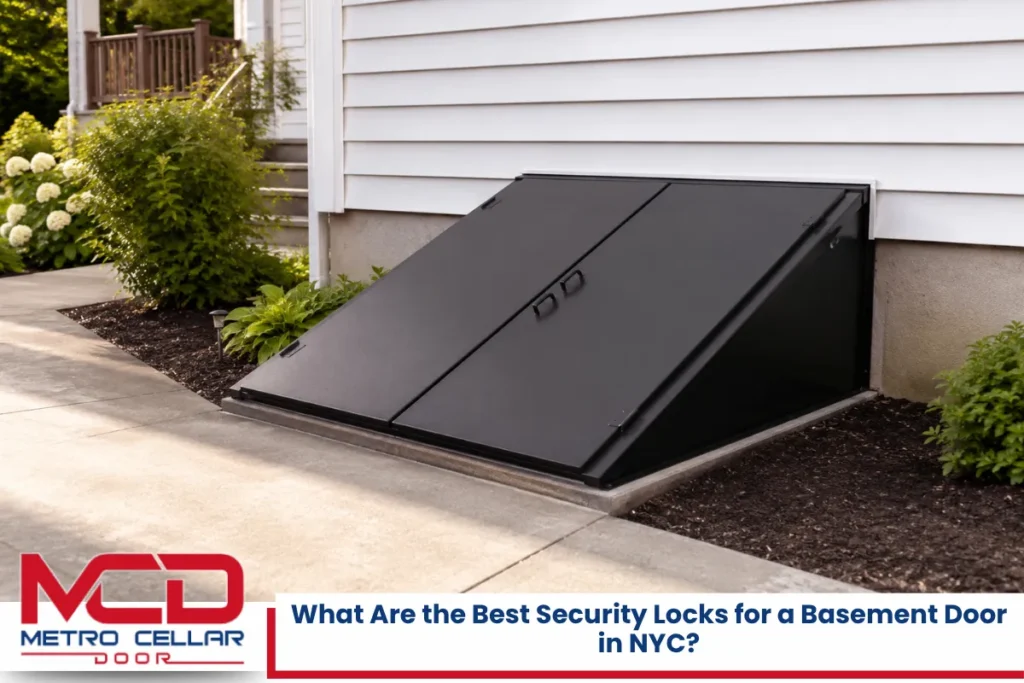
Basement Door Security in NYC: Why It Matters More Than You Think
Your basement door is one of the most vulnerable entry points on any New York City property. Tucked away in back alleys, narrow side yards, or embedded flush into a busy sidewalk, these access points sit out of sight and out of mind for most building owners – but not for intruders. Older hardware, rusted frames, and minimal lighting make basement entries a prime target for forced entry. Securing a basement door in New York City requires robust physical protection against break-ins, the right lock hardware, and compliance with local safety codes. This guide breaks down the best lock options for every type of basement and cellar door you will encounter across the five boroughs, and explains why working with a professional basement door installer can make all the difference.
Key Takeaways
- The best locks for a NYC basement door are typically ANSI Grade 1 deadbolts paired with reinforced strike hardware and tamper-resistant cylinders, selected to match the specific door type and location.
- New York City building and fire codes require that egress doors allow occupants to exit quickly without a key, so any lock solution must balance forced-entry resistance on the outside with rapid escape capability on the inside.
- Traditional deadbolts, high-security cylinders, and select smart locks can all work well when they are weather-rated and professionally installed on solid steel or reinforced wood frames.
- NYC basement doors face elevated risks from low visibility, alley or sidewalk placement, and constant moisture exposure, making corrosion-resistant hardware and routine maintenance non-negotiable.
- Consulting a qualified cellar door professional for both hardware selection and installation delivers the best combination of security, code compliance, and everyday usability.
How NYC Building and Fire Codes Affect Basement Door Lock Choices
Choosing a lock for a basement entry is not just a security decision. In New York City, it is also a legal one. Basement doors must comply with local safety and fire codes in NYC, and getting the hardware wrong can result in violations from the Department of Buildings or FDNY.
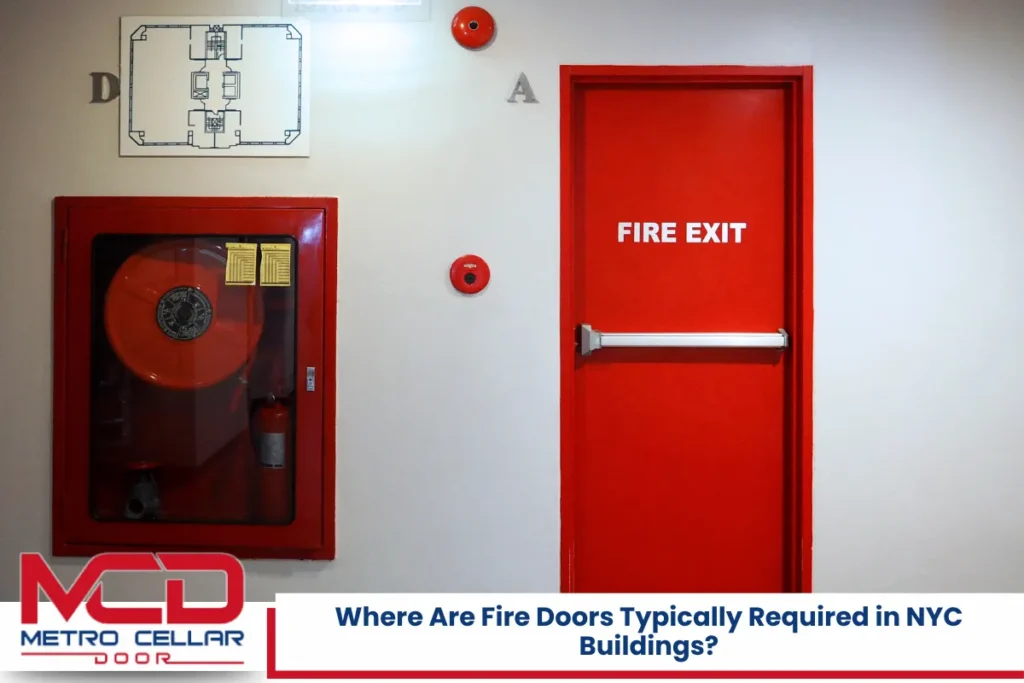
The most critical rule is straightforward. Emergency egress doors must be openable without a key or special effort per NYC codes. If a basement serves as a living area, workspace, or required exit path, the door must open from the inside using only a simple motion – no keys, no tools, no special knowledge. This is why double-cylinder deadbolts, which require a key on both sides, are generally not permitted on doors designated as part of a means of egress.
Single-cylinder deadbolts with an interior thumbturn are the standard solution. The occupant can turn the thumb piece and exit immediately, while the exterior side still requires a key for entry.
Sidewalk cellar doors that are not used as primary exits have slightly more flexibility in lock selection. However, they must still close securely, sit flush with the pavement, and not create obstructions for pedestrians. If you are altering or replacing locks on doors tied to apartment buildings, retail storefronts, or commercial spaces, the work may trigger inspections. Always verify requirements with local authorities or a design professional before making changes.
Types of Basement Doors You Will See in New York City
The best lock for your situation depends entirely on the type of door you are working with, where it sits on the building, and how frequently it is used. Here are the most common configurations across the city.
- Rear or side basement doors at ground level are typically swinging wood or steel doors, often solid core, sometimes with a small glass panel. They face threats from kick-ins and prying, especially in low-visibility areas behind buildings.
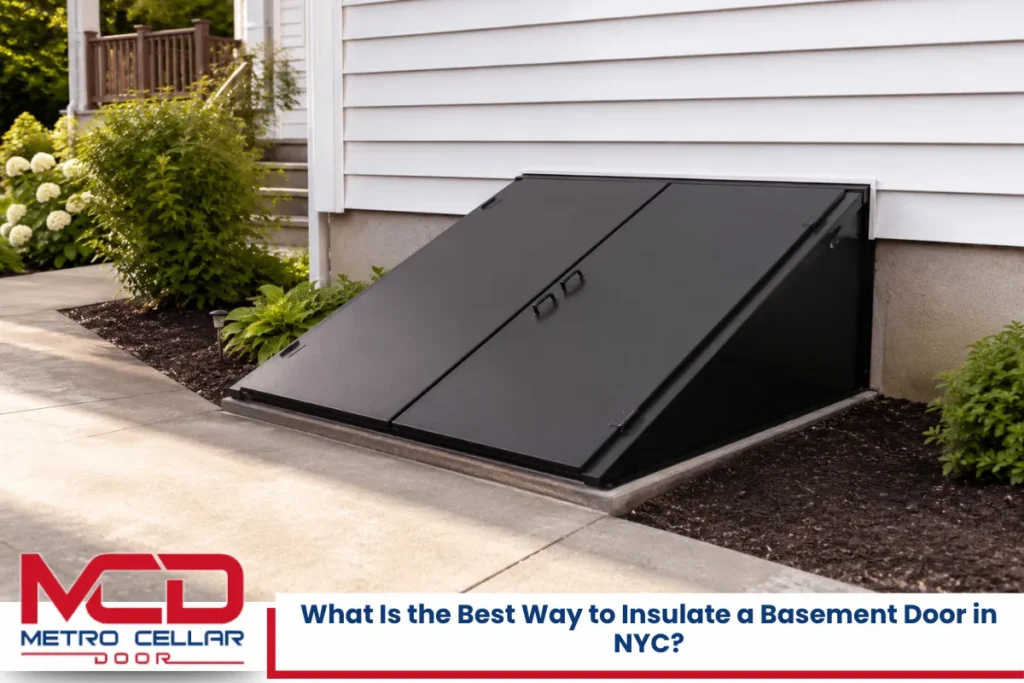
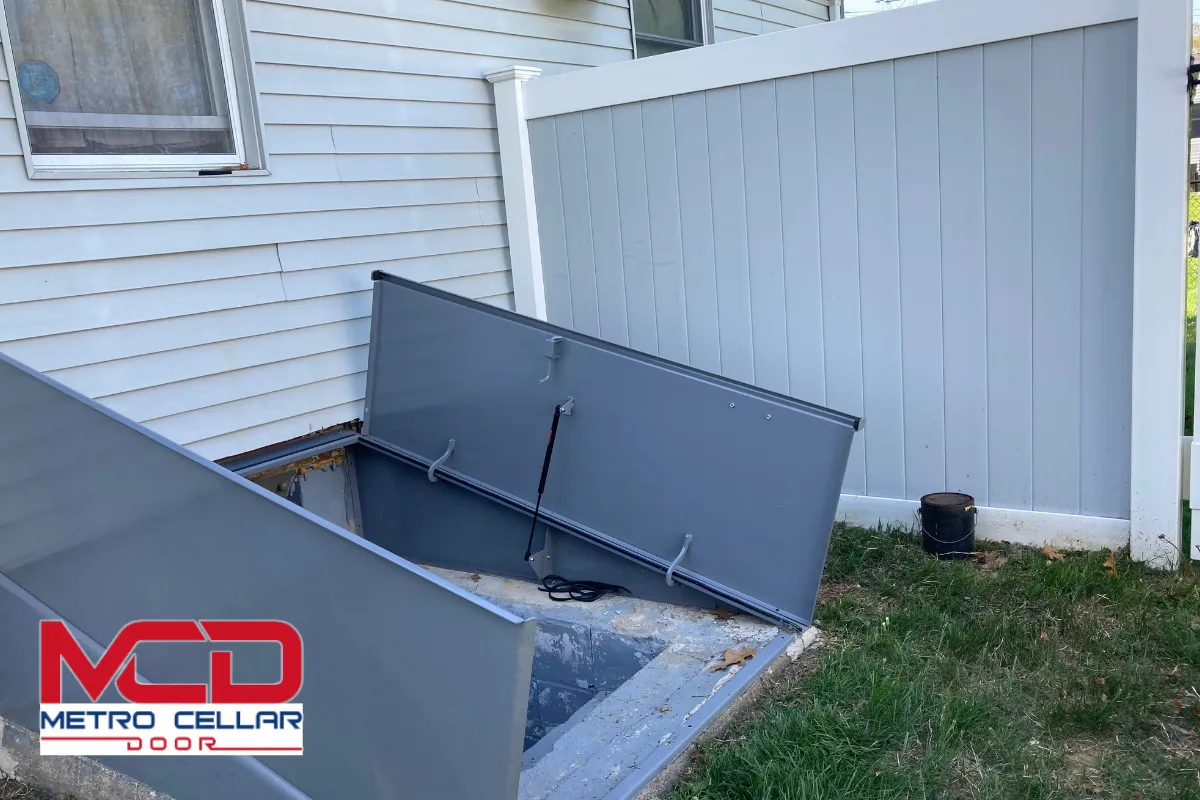
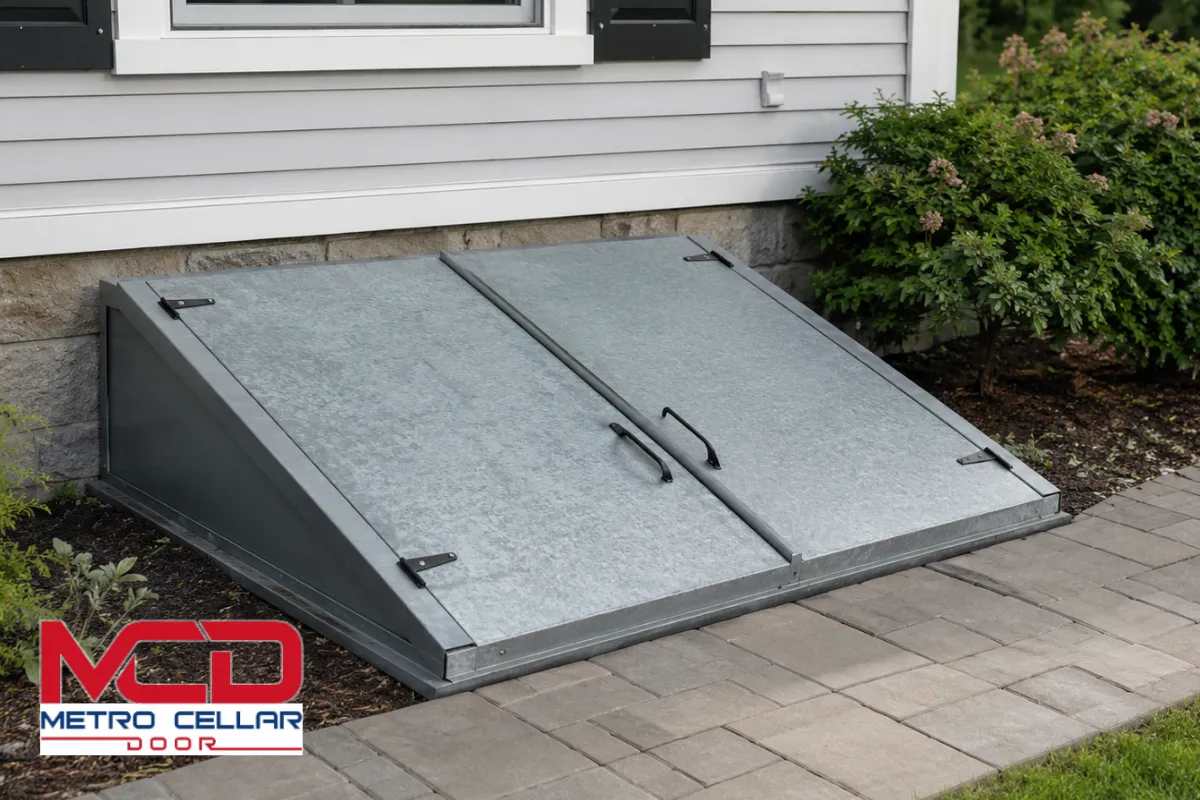
- Bulkhead or angled cellar doors lead down to stairs and are often made of metal panels that hinge or lift upward. Heavy-duty slide bolts are common on bulkhead cellar doors, but exposed edges remain vulnerable to crowbar attacks.
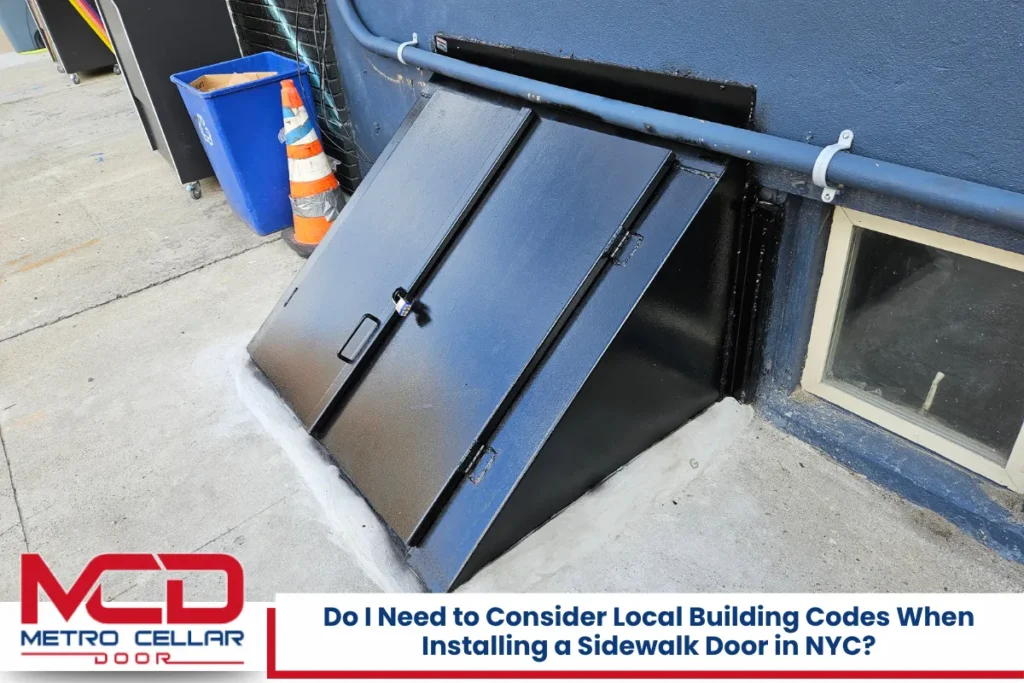
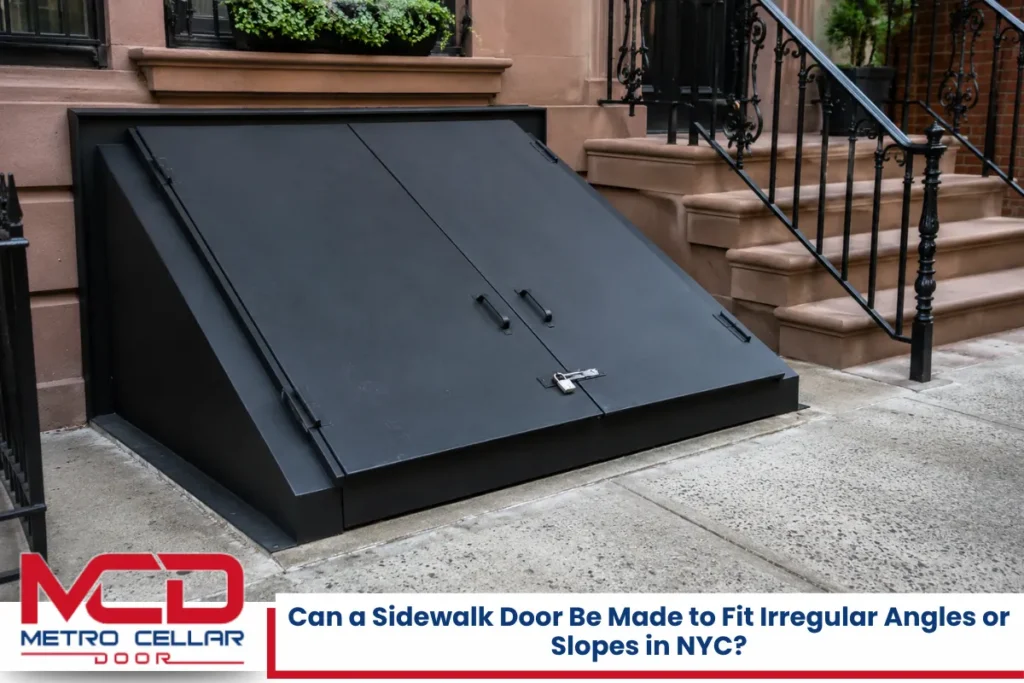
- Sidewalk cellar doors sit flush with the pavement and usually consist of two flat panels that open downward. They endure heavy pedestrian traffic, snow, ice, salt, and vandalism attempts at the street level.
- Commercial steel basement entries, common in restaurants, shops, and small businesses throughout Brooklyn, Manhattan, and other boroughs, are typically traffic-rated steel doors designed to handle frequent use and heavier security demands.
Solid-core or exterior-rated doors are essential for securing basement entrances, regardless of the configuration. A thin, hollow door cannot support even the best lock hardware.
Core Lock Styles for Securing a Basement Door
Before selecting a specific product, it helps to understand the main categories of door lock hardware that apply to basement and cellar doors in New York City.
- Single-cylinder deadbolts are the workhorse of residential and light commercial security. A key operates the exterior side while a thumbturn on the interior allows quick exit. They deliver strong bolt throw and are widely available in multiple security grades.
- Mortise locks are recessed into the body of the door and typically combine a latch and a deadbolt into a single housing. They offer excellent strength and are well suited to steel doors.
- Rim cylinder and surface-mounted deadlocks attach to the door surface rather than sitting inside it. They work on doors that are too thin for a full mortise cut, though they are more exposed to pry attacks.
- Surface bolts and hasps provide supplemental security from the inside. Padlocks threaded through a hasp can be targeted and cut, so they should never serve as the sole lock on an exterior basement door.
- Smart locks bring keypad entry, smartphone control, and access codes to the table. They are increasingly popular for managing tenant or contractor access but must include a mechanical backup key for reliability.
ANSI Grade 1 locks offer the highest durability and security, tested to withstand 250,000 locking cycles and over 360 pounds of applied force. Grade 2 is acceptable for moderate-risk doors, while Grade 3 is reserved for interior or low-risk applications. The Builders Hardware Manufacturers Association and the American National Standards Institute classify locks into these three categories to help buyers compare performance objectively.
Tamper-resistant locks deter forced entry effectively. They make break-ins slow, loud, and visually obvious – which is exactly the kind of deterrent that works in a dense urban environment where a neighbor or passerby might notice the attempt.
Best High-Security Deadbolts for NYC Basement Doors
For most rear or side basement doors, a quality Grade 1 deadbolt is the starting point. It provides the core resistance against kicking, ramming, and tool-based attacks that NYC basement entries need.
A Grade 1 single-cylinder deadbolt is a strong mid-range option. It holds up well under impact testing and is widely available from hardware suppliers across the city. For higher-security needs, high-security cylinders and deadbolts with restricted keyways provide superior resistance to picking, drilling, and bumping. High-security cylinders may also carry a UL 437 listing, a standard that evaluates resistance to picking, drilling, and other physical attacks on the cylinder itself.
High-security lock cylinders feature hardened steel pins and restricted keyways that prevent unauthorized duplication of keys for greater security. Pick-resistant cylinders provide an added layer of physical security for locks, which matters in neighborhoods with higher property crime rates.
Single-cylinder deadbolts allow rapid egress during an emergency without searching for keys, making them the preferred choice for any door that serves as a required exit. Drill-resistant plates deter professional lock-picking or brute-force drilling, and they can be added to most quality deadbolt assemblies.
A few important points to remember:
- Bolt throw should be at least one inch for adequate engagement with the strike plate.
- Always pair a high-grade deadbolt with a solid steel or reinforced wood door. The best lock in the world cannot compensate for a weak door slab.
- Avoid replacing just the old lock without inspecting the frame. A full replacement of both the door and the hardware often makes more sense than patching an aging system.
Mortise, Rim, and Surface-Mounted Locks for Metal Basement Doors
Many steel basement cellar doors and commercial entries across New York City are better served by mortise or rim locks than by standard tubular deadbolts. The door construction and thickness often dictate the best lock style for the application.
Mortise locks offer better pry resistance than surface-mounted options. Because the lock body sits inside the door, it is harder to attack with a crowbar or flat bar. Mortise hardware typically includes both a latch and a deadbolt in a single unit, which simplifies the overall lock system. It is compatible with high-security cylinders with restricted keyways, giving property owners the option to upgrade the cylinder without replacing the entire lockset.
Rim cylinder deadlocks mount on the interior surface of the door and project a bolt into a strike on the frame. They work well on older or thinner doors where cutting a full mortise pocket is impractical. Adding an armor plate over the exterior cylinder can protect it from wrenching or pulling attacks.
For sidewalk cellar doors and some bulkhead applications, low-profile surface locks are essential. Protruding hardware creates trip hazards on the sidewalk and catches debris, so recessed cylinders or flush-mount locks are the standard approach.
Hiring a professional familiar with NYC conditions ensures the lock case is properly anchored to the door’s steel structure and that the strike aligns correctly with the frame.
Smart Lock Options for Basement Doors in New York City
Property owners increasingly consider smart locks for basement access management, especially in multi-tenant residential buildings or properties with frequent contractor visits. The convenience of remote control and digital access codes can simplify operations, but the technology comes with trade-offs.
Popular smart lock categories for basement use include:
- Smart deadbolt replacements, which replace the existing deadbolt with a keypad or Bluetooth-enabled unit.
- Retrofit adapters that attach to the interior side and motorize the existing deadbolt, keeping the exterior hardware unchanged.
- Keypad levers for utility or service doors that see moderate traffic.
Smart features that add real value for basement door management include temporary access codes for delivery staff, activity logs that track who used the door and when, and smartphone control that lets you lock or unlock remotely. Smart monitoring options for locks can provide activity logs and remote alerts, which is useful when you cannot physically check the door every day. Many of these devices integrate with popular smart-home platforms, offering voice commands and wide compatibility with other devices on your home network. Some models offer built-in Wi-Fi connectivity, while others rely on a separate Wi-Fi hub for internet access.
However, there are critical requirements for outdoor basement use. Electronic locks require weatherproof housings for outdoor use, and battery life drops significantly in cold weather. A backup key or mechanical override is essential – no building owner wants to be locked out of their own basement during a January power outage. A fingerprint scanner or auto lock feature may appeal to some household members, but these add complexity and potential failure points.
For harsh sidewalk cellar environments exposed to snow, ice, and salt, traditional heavy-duty mechanical hardware often outperforms most smart lock devices in long-term reliability.
Matching Lock Style to Each Basement Door Configuration
Selecting the right hardware means pairing the lock to the door – not the other way around. Here is how the recommendations map to the most common NYC basement door types.
For rear yard wood or steel basement doors, a Grade 1 single-cylinder deadbolt is the foundation. Add a reinforced strike plate with long screws, and consider a high-security cylinder if the area has low foot traffic and limited visibility. A smart lock can work here if the door is semi-sheltered from direct weather exposure.
For bulkhead or angled basement cellar doors, internal slide bolts or mortise deadlocks provide strong resistance without exposing hardware to the elements. If a padlock hasp is used, choose one with a shielded shackle that cannot be reached with bolt cutters from the outside. Heavy-duty slide bolts are a reliable and cost-effective layer of protection in this configuration.
For sidewalk cellar doors, the hardware must sit flush with the pavement. Slam locks engage automatically when a sidewalk door closes, eliminating the risk of someone forgetting to lock up after a delivery. Integrated mortise cylinders or low-profile locking vault hardware are designed specifically for this purpose. Tamper-resistant locks are essential for NYC sidewalk doors because of the constant exposure to foot traffic and potential tampering.
For commercial steel entries, full mortise locksets with multiple locking points, anti-drill cylinders, and possibly electronic access with an emergency release bar deliver the level of security that restaurants, shops, and storage facilities need. Easy access for staff must be balanced with resistance to unauthorized entry from the outside.
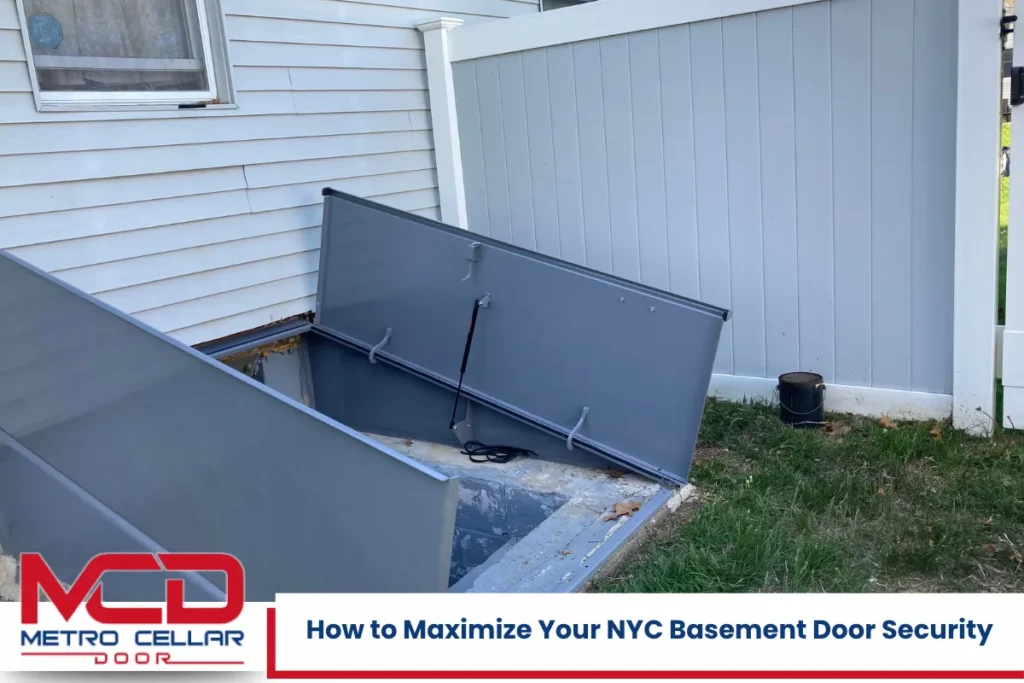
Read How to Maximize Your NYC Basement Door Security
Special Considerations for Sidewalk Cellar Doors and Street-Level Access
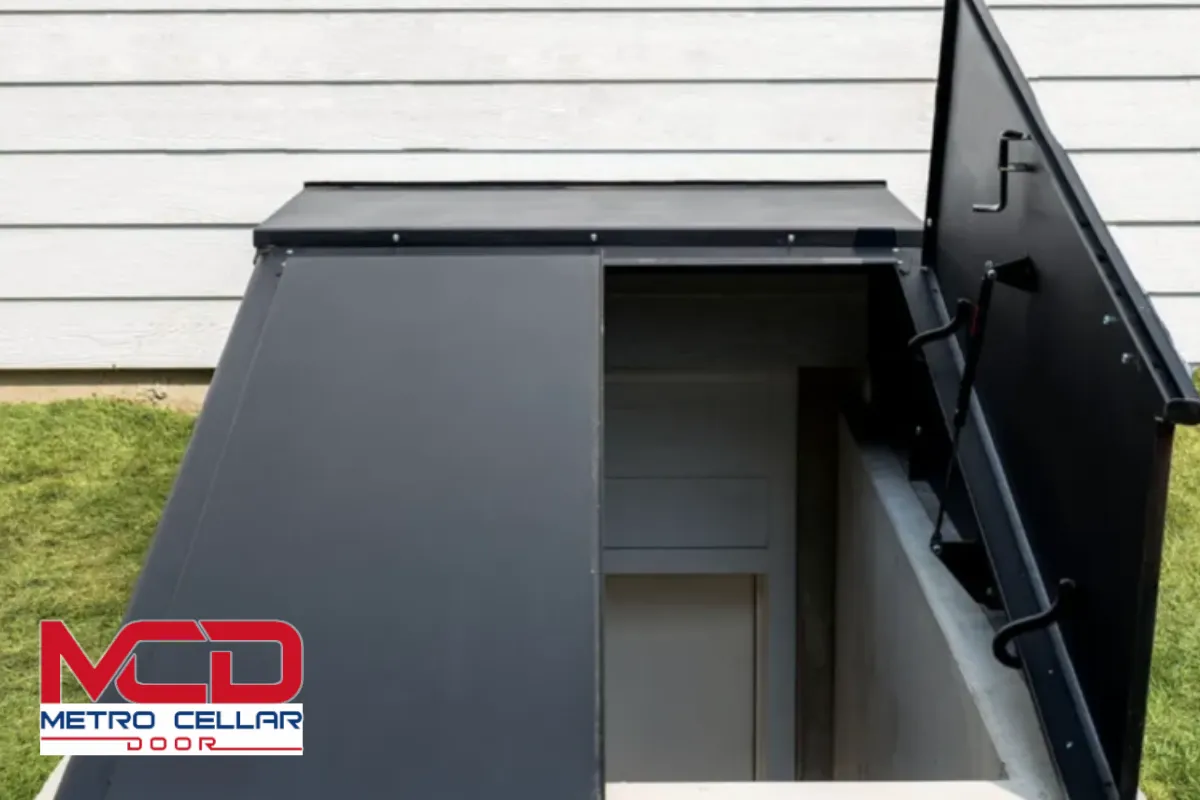
Sidewalk cellar doors in dense neighborhoods across Brooklyn, Manhattan, and other commercial corridors face a unique combination of risks that standard basement doors do not. These panels must support pedestrian loads, sit perfectly flush, and resist repeated abuse from foot traffic, delivery carts, and weather.
Protruding lock hardware is a liability on every level. It creates trip hazards for pedestrians and gives would-be intruders a grip point. Proper installation prevents trip hazards and enhances safety, which is why professional cellar door installation typically uses recessed cylinders, interior slide bolts, armored escutcheons, and slam locks that automatically engage when the panels close.
They enhance security against vandalism and break-ins while keeping the door surface smooth and unobstructed. New York City agencies can issue violations for sidewalk doors that do not close properly or that create a hazard on the public right-of-way.
Periodic professional inspections – ideally as part of a site visit – can confirm that locks, hinges, and door frames remain aligned and secure after freeze-thaw cycles, heavy use, and seasonal wear.
Weather, Corrosion, and Durability Challenges in NYC Basements
Basement and cellar door locks in New York City face moisture, condensation, road salt, and temperature swings that can quickly corrode unprotected hardware. A lock that works perfectly in October may seize up entirely by February if it is not rated for exterior conditions.
Choose locks with stainless steel components, corrosion-resistant finishes, and weather seals. This is especially important for sidewalk and exterior stair doors where direct exposure is unavoidable. Common failures include rusted deadbolts that no longer throw fully into the strike, frozen cylinders that will not turn in winter, and swollen wood frames that push the strike out of alignment.
High-quality cellar doors can last over 20 years with proper care, and high-quality steel cellar doors can last over 20 years when paired with the right hardware and a consistent maintenance routine. Basic maintenance for cellar doors includes yearly inspections and repairs – lubricate the cylinder and bolt with a lock-safe product, clean debris from hatch gaps, and replace any visibly rusted screws or strike plates.
Durable hardware plus consistent upkeep significantly extends the life of both the door and its lock system.
Reinforcing Frames, Strikes, and Hinges Around the Lock
The strongest deadbolt still fails if the jamb, frame, or hinges around a basement door are weak or deteriorated. Basement door frames must be reinforced to prevent prying or kick-in attempts, and this step is just as important as selecting the right cylinder.
Key reinforcement measures include:
- Heavy-duty strike plates should be anchored with 3-inch screws for added security, driving into the studs or masonry behind the door frame rather than just into the trim.
- Jamb wraps made from steel channel protect the frame edge from splitting under impact.
- Continuous hinges distribute load evenly along the full height of the door, which is particularly useful on heavy bulkhead or steel cellar doors.
- Hinge-side security features include non-removable pins or security studs that prevent attackers from popping the hinge pins and lifting the door off its mount.
A high-security lock must be reinforced by proper frame reinforcement to be effective. Heavy-duty components resist wear and forced manipulation, but only when they are anchored into solid material. In older apartment buildings across the city, patched frames and rusted steel at the sill are common. Sometimes a new cellar door and frame are the smarter long-term investment compared to repeatedly reinforcing a structure that is past its useful life.
Think of the door as a complete system – slab, frame, hinges, and hardware all working together.
Balancing Security With Everyday Usability and Emergency Egress
An overly complex lock system creates a different kind of problem. When tenants or staff find a door difficult to operate, they prop it open with a wedge or a brick – and security evaporates. The best lock setup is one that people actually use correctly every single time.
Select locks that are intuitive: a simple thumbturn on the inside, a clear keypad layout, and minimal key management overhead. For spaces where multiple household members or employees need access, avoid exotic key blanks or complicated sequences that slow down daily movement.
For any door that serves as a living space, workspace, or code-required exit, the lock must allow quick escape while resisting attack from the exterior side. A physical key override on the outside and a free-turning thumbturn or lever on the inside is the baseline.
Layer your security beyond just the lock. Good lighting at the door, a camera covering the approach, and an alarm sensor on the frame all reduce the burden on the lock itself and keep the overall system user-friendly.
Signs Your Current Basement Door Lock System Needs an Upgrade
Many NYC buildings still rely on outdated knob locks, thin slide bolts, or rusted padlocks on their basement access points. If your current hardware falls into any of the following categories, it is time to act.
- Visible rust, corrosion, or physical damage on the lock body or bolt
- Keys that turn without fully throwing the bolt into the strike
- A door that does not close fully or a latch that does not engage without force
- Evidence of tampering, tool marks, or scraping around the strike area
- Residents or staff avoiding the door because they fear getting locked in or cannot operate the lock reliably
Compliance triggers also warrant an upgrade: a recent insurance inspection, a building violation, or a fire safety review that flags non-compliant hardware. When a broken cellar door or a broken lock compromises the space, acting quickly prevents larger losses.
Major door replacement moments – for example, a new steel cellar door installation or a full replacement of a rotted wood entry – are ideal opportunities to install cellar doors with upgraded, tamper-resistant locks from the start.
Cost Ranges and Value Considerations for Basement Door Lock Upgrades
Lock costs depend on hardware grade, door type, and whether the frame needs reinforcement or full replacement.
| Category | Approximate Range | Notes |
|---|---|---|
| Residential Grade 2 deadbolt | Lower cost | Suitable for interior or low-risk basement doors |
| Grade 1 single-cylinder deadbolt | Mid-range | Standard recommendation for exterior basement access |
| High-security cylinder (restricted keyway) | Higher cost | Restricted keyways, pick/drill resistance |
| Mortise lockset for steel door | Mid to higher cost | Includes latch and deadbolt, professional install recommended |
| Slam lock for sidewalk cellar doors | Varies by configuration | Often requires custom fitting |
| Professional installation labor | Varies | Installation typically takes about two hours for residential doors |
Custom sidewalk doors may take one to two weeks for fabrication before hardware can be installed, so plan ahead if a full replacement is on the table. Garage doors and front door hardware often receive more attention from building owners, but neglecting the basement entry is a mistake that can be far more costly in the long run.
Better locks reduce burglary risk, protect stored inventory or personal property, and help avoid liability or violation fines. View the lock upgrade as part of a broader investment in a secure, code-compliant basement door system rather than a standalone purchase.
Working With a Professional Basement Door Installer vs. DIY
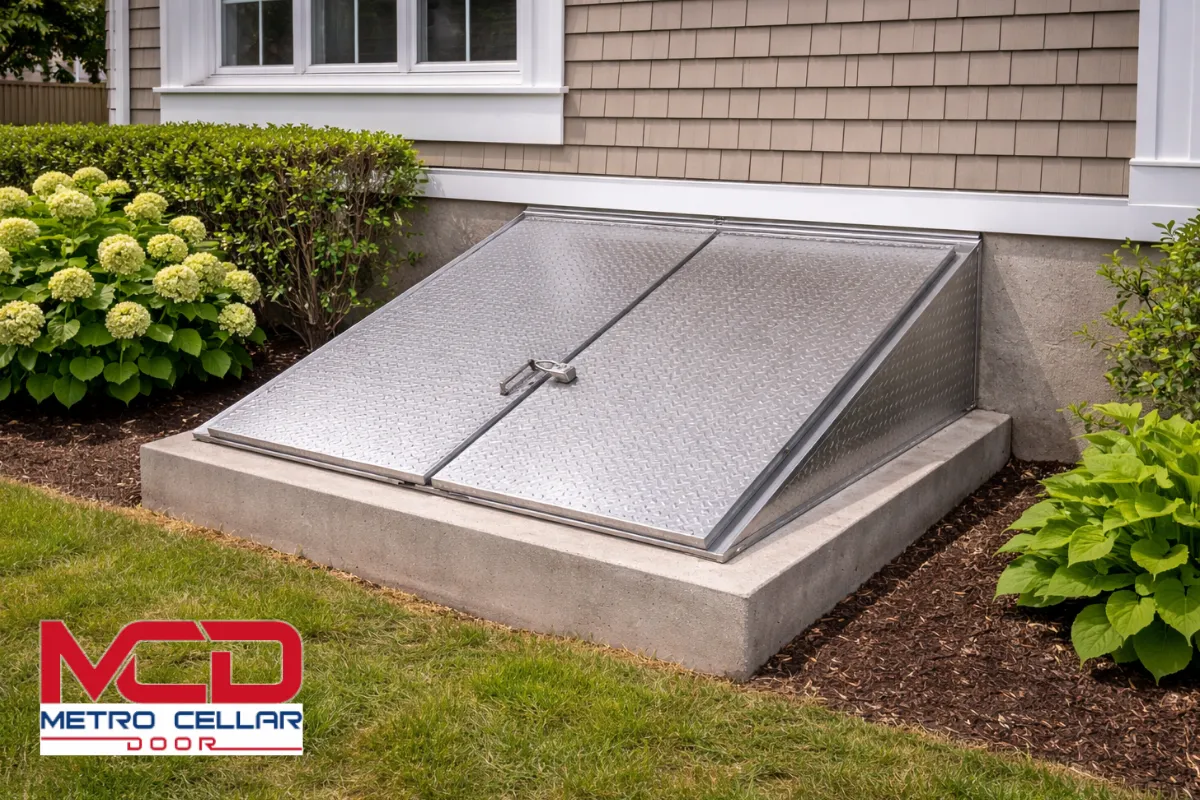
Some homeowners can swap out a simple deadbolt on their own. But NYC’s basement doors – steel hatches, mortise-ready commercial entries, sidewalk cellar doors anchored into concrete – often demand professional basement door installation.
Reasons to hire an expert:
- Correct lock selection for steel, concrete, or masonry conditions
- Code awareness for egress requirements and fire safety
- Proper drilling and reinforcement without weakening the door or frame
- Clean, weather-tight finishes that prevent water infiltration
DIY risks include misaligned strikes that weaken the door, over-drilling thin metal hatch covers with heavy duty power tools, or installing locks that conflict with emergency exit requirements. A mistake on a sidewalk cellar door can also create a trip hazard and potential liability.
A qualified contractor can assess whether the existing door and frame are worth upgrading or whether a full replacement – door, frame, and lock system together – is the safer, more cost-effective choice. Before calling, gather basic information: door type, material, approximate age, and current lock style. This streamlines the consultation and helps the installer prepare for a site visit.
NYC Basement Door Installer – Metro Cellar Door Bilco Pro
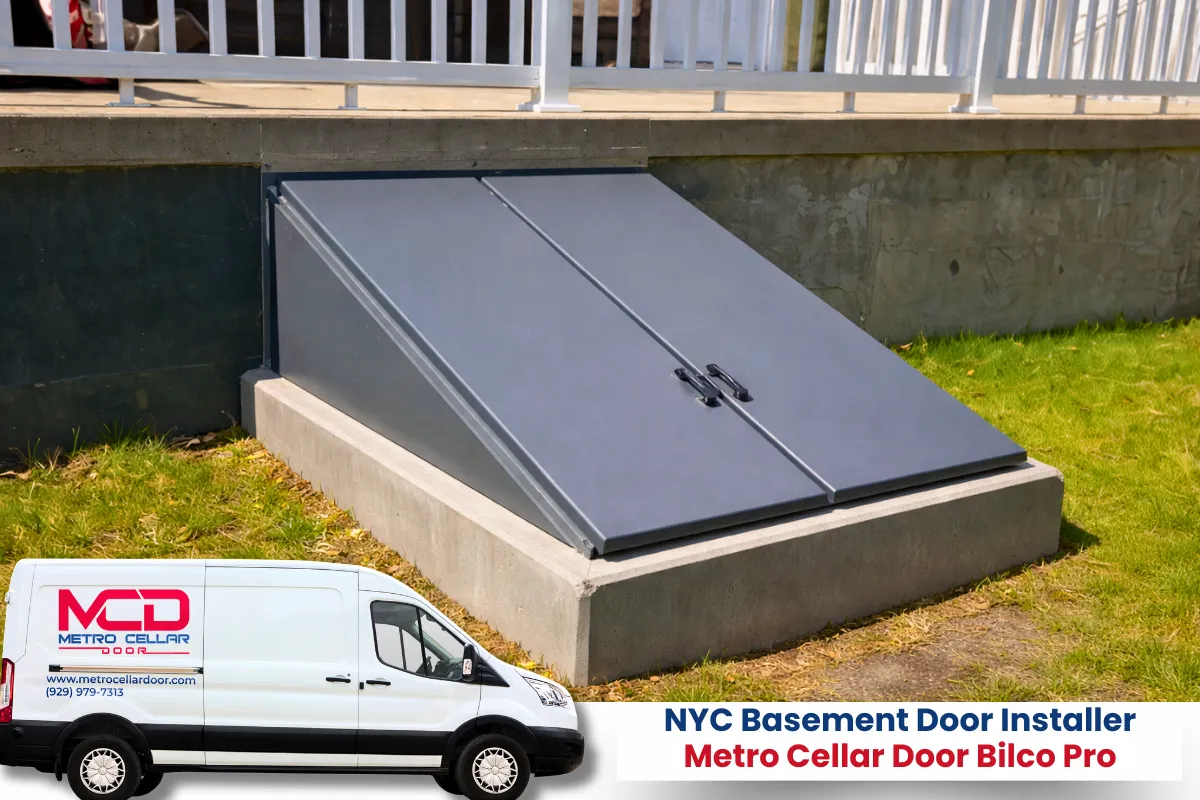
When your basement door needs more than just a new lock, we are here to help. At Metro Cellar Door Bilco Pro, we specialize in the installation and replacement of basement doors and sidewalk cellar doors across New York City and the surrounding areas. We do not handle repairs – our focus is on giving you a brand-new, properly fitted door paired with the right hardware for your property and your security needs.
We understand NYC building codes, fire safety requirements, and the environmental demands that come with operating in this city. Whether you need to install sidewalk cellar doors on a busy commercial block or replace a rusted steel cellar door behind a residential building, our team handles the full scope of work. We install hydraulic EZ lift doors and standard configurations alike.
Call us at (929) 979-7313 or fill out our contact form to schedule a consultation. We will help you choose the right basement door and lock setup for long-term performance and peace of mind.
Frequently Asked Questions
How do I secure a basement door inside a multi-family building where the door separates a shared hallway from a private space?
Interior basement doors in multi-family buildings still benefit from a Grade 1 or Grade 2 deadbolt, even though they are not exposed to weather. The primary concern is controlling access between shared and private areas. A single-cylinder deadbolt with a thumbturn on the private side ensures residents can exit quickly while keeping the shared side locked. In buildings with many tenants, a keypad lock can eliminate the hassle of managing physical keys for every resident. Make sure the door itself is solid core – a hollow interior door will not hold up to forced entry regardless of the lock you install. Coordinate with your building management to ensure the hardware meets any house rules or insurance requirements.
Does a windowless basement door need a different lock than a door with glass panels?
A windowless basement door does not need a fundamentally different lock type, but it does simplify your options. When there is no glass, there is no risk of an intruder breaking a pane to reach a thumbturn. This makes a standard single-cylinder deadbolt safe and practical. On doors with glass, the thumbturn could theoretically be accessed by breaking the glass, which leads some property owners to consider double-cylinder deadbolts. However, because NYC codes generally require egress doors to open freely from the inside, a double-cylinder model may violate those rules. The safer approach for a glass-panel basement door is to use reinforced or laminated glass and stick with a single-cylinder deadbolt.
How often should I rekey the locks on a basement door after tenant turnover?
Rekeying after every tenant turnover is a smart practice, especially in apartment buildings and mixed-use properties. Former tenants, their guests, or anyone who had a copy of the old lock key could retain access to the basement. If you are using a restricted keyway system, unauthorized key copying is much harder, which reduces urgency slightly. For standard keyways, rekeying is inexpensive and can usually be completed in a single visit. If your property uses a keypad or smart lock system, simply changing the access codes after each turnover accomplishes the same goal without calling a locksmith. Keep a record of code changes for your own reference and for any insurance documentation.
Can adding a security bar or crossbar to a basement door improve protection beyond what a deadbolt provides?
A security bar or crossbar installed on the interior side of a basement door does add meaningful resistance to forced entry. It distributes impact force across the full width of the door rather than concentrating it at the lock and strike point. This is particularly useful on older wood doors or doors with frames that are not ideal candidates for full reinforcement. However, a crossbar only works from the inside, so it is best suited for doors that you secure when you are inside the space. It should never be the sole security measure on a door that needs to operate from both sides. Combine it with a quality deadbolt and reinforced strike plate for a layered approach that covers both occupied and unoccupied scenarios.
Do insurance companies in New York City require specific lock grades on basement doors?
Insurance policies vary, but many property insurance providers in New York City do consider the quality of exterior locks when underwriting coverage or processing claims. Some policies explicitly require deadbolts on all exterior doors, including basement entries, and a few may specify ANSI Grade 1 or Grade 2 hardware for full coverage. If a break-in occurs and the insurer determines that the lock was substandard or that the door was left unsecured, a claim could be reduced or denied. It is worth reviewing your policy language and asking your insurance agent what hardware standards they expect. Upgrading to a certified Grade 1 deadbolt and documenting the installation can strengthen your position if you ever need to file a claim.
Disclaimer: This article provides general information about basement door locks and security practices in New York City. It is not legal, engineering, or code-compliance advice. Always verify current requirements with NYC authorities or qualified professionals before modifying any door or lock system.