
When a Stuck Basement Door Puts Your Home at Risk
NYC Basement Door Installer services are often needed when a homeowner suddenly realizes their basement door won’t close properly. At first, it may seem like a minor inconvenience. But in New York City, a basement door that won’t shut can expose your home to water damage, pest intrusion, heat loss, and even security threats.
You may try forcing it shut. You might blame the weather. But ignoring the issue can lead to warped framing, foundation deterioration, and violations of local building requirements.
The good news? Most basement doors fail to close for predictable reasons. With the right diagnosis—and help from a qualified basement door installer—you can restore safety, security, and compliance without unnecessary stress.
Why Basement Doors in NYC Frequently Stop Closing Properly
Basement doors in New York City face unique challenges. From freeze-thaw cycles to heavy rainfall and aging brownstone foundations, exterior cellar doors take a beating.
Here are the most common causes:
1. Foundation Shifting and Settlement
NYC buildings—especially older townhouses and pre-war properties—often experience gradual foundation movement. When the foundation shifts, even slightly, it can throw the door frame out of alignment.
Signs include:
- Uneven gaps around the door
- Doors that scrape along the frame
- Visible cracks in masonry near the entry
Even a few millimeters of structural movement can prevent proper closure.
2. Warped or Swollen Door Panels
Many traditional basement doors are steel or wood. Wood doors, in particular, absorb moisture during humid summers or heavy storms. Over time, they swell and lose their square shape.
Steel doors can also warp if:
- Hinges loosen
- Fasteners corrode
- The frame rusts from water pooling
When warping occurs, no amount of pushing will create a tight seal.
3. Rusted or Damaged Hinges
Cellar doors sit low to the ground, where moisture collects. Hinges frequently corrode due to:
- Snow and road salt
- Standing water
- Poor drainage
If hinges are misaligned or deteriorated, the door may sag and refuse to close flush.
4. Debris and Drainage Problems
Leaves, dirt, and urban debris can collect along the threshold. In NYC, clogged sidewalk drains can cause water buildup near basement entry points.
If the threshold area is uneven or obstructed, the door may not latch properly.
5. Improper Installation
Sometimes the issue traces back to incorrect basement door installation. If the frame wasn’t leveled, anchored securely, or flashed properly against masonry, problems may surface months or years later.
Why You Shouldn’t Ignore a Basement Door That Won’t Close
A malfunctioning cellar entry is more than an annoyance.
Water Intrusion and Mold Growth
New York City receives significant rainfall annually, and sudden storms can overwhelm improperly sealed doors. A door that won’t close tightly allows water into the basement, leading to:
- Mold and mildew
- Structural wood rot
- Damaged electrical systems
- Increased humidity levels
Moisture problems can escalate quickly, especially in finished basements.
Security Vulnerabilities
Basement doors are entry points. If yours doesn’t latch securely, it creates a safety risk.
Urban properties require strong locking mechanisms and tight closures to prevent unauthorized access.
Energy Loss
Gaps around basement doors allow cold air in during winter and conditioned air out during summer. This impacts heating and cooling efficiency.
Possible Building Code Issues
New York City construction and repair work falls under the NYC Construction Codes and the NYC Building Code. When performing basement door installation or replacement, contractors must comply with:
- Proper anchoring standards
- Weatherproofing requirements
- Safe egress clearances
- Structural integrity guidelines
Failure to maintain safe access points can lead to inspection concerns, particularly during property sales or renovations.
Step-by-Step: What to Check Before Calling a Basement Door Installer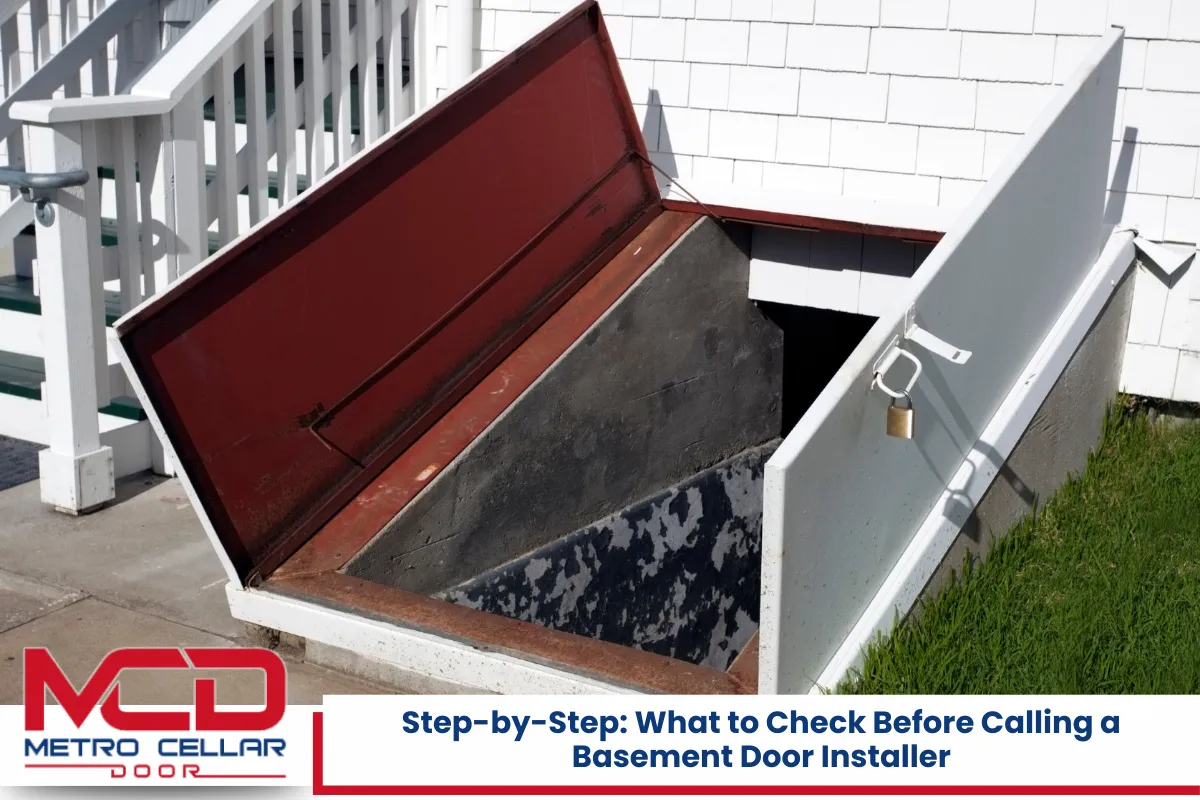
Before scheduling professional service, inspect the following:
1. Look for Visible Frame Gaps
Stand inside the basement during daylight. If light comes through around the perimeter, alignment issues are likely.
2. Test the Hinges
Open and close the door slowly. Does it sag? Does one side drop lower? Tightening hinge screws may temporarily help—but if rust is present, replacement may be needed.
3. Inspect the Threshold
Remove debris. Check whether concrete has cracked or settled unevenly.
4. Check the Latch Mechanism
Sometimes the problem isn’t the door—it’s the latch plate. If the strike plate is misaligned by even a fraction of an inch, the door won’t close securely.
5. Evaluate Drainage Around the Entry
NYC properties often lack proper grading near basement stairwells. Pooling water can weaken the surrounding structure.
If these checks don’t solve the issue, it’s time to contact a professional basement door installer.
Repair or Replace? How to Decide
Homeowners often ask whether repair is enough or full replacement is necessary.
Repair May Be Enough If:
- Hinges are loose but not corroded
- Strike plate needs adjustment
- Minor frame misalignment is present
- Weather stripping has deteriorated
Replacement Is Recommended If:
- The door is severely warped
- Rust has compromised structural integrity
- Frame is cracked or rotted
- Water intrusion has damaged the surrounding masonry
Modern basement doors—especially powder-coated steel cellar doors—offer improved durability and weather resistance compared to older models.
Read 5 Common Signs of Basement Door Failure: Advice from NYC Basement Door Installer
Popular Basement Door Options for NYC Homes
When replacement becomes necessary, selecting the right product matters.
Steel Cellar Doors
Steel doors are common in NYC brownstones and row houses. They provide:
- Strong security
- Weather resistance
- Long lifespan
- Low maintenance
Powder-coated finishes help resist corrosion from snow and salt exposure.
Pre-Fabricated Cellar Entry Systems
Many installers use pre-engineered systems designed specifically for below-grade entryways. These systems are built to handle:
- Heavy rainfall
- Freeze-thaw expansion
- Urban debris exposure
Custom-Fabricated Doors
For historic properties or unique openings, custom fabrication ensures proper fit and compliance with building standards.
NYC Building Code Considerations for Basement Doors
In New York City, construction projects—including door replacement—may require permits depending on the scope of work.
Key Legal Considerations:
- Structural modifications to masonry may require DOB permits.
- Egress doors must meet minimum clearance standards.
- Work affecting building envelope integrity must maintain weatherproofing.
- Contractors must follow OSHA and NYC safety standards.
If replacing an exterior cellar door, it’s critical that the installer understands local compliance requirements. Improper installation can lead to fines or correction notices.
How Professional Basement Door Installation Prevents Future Problems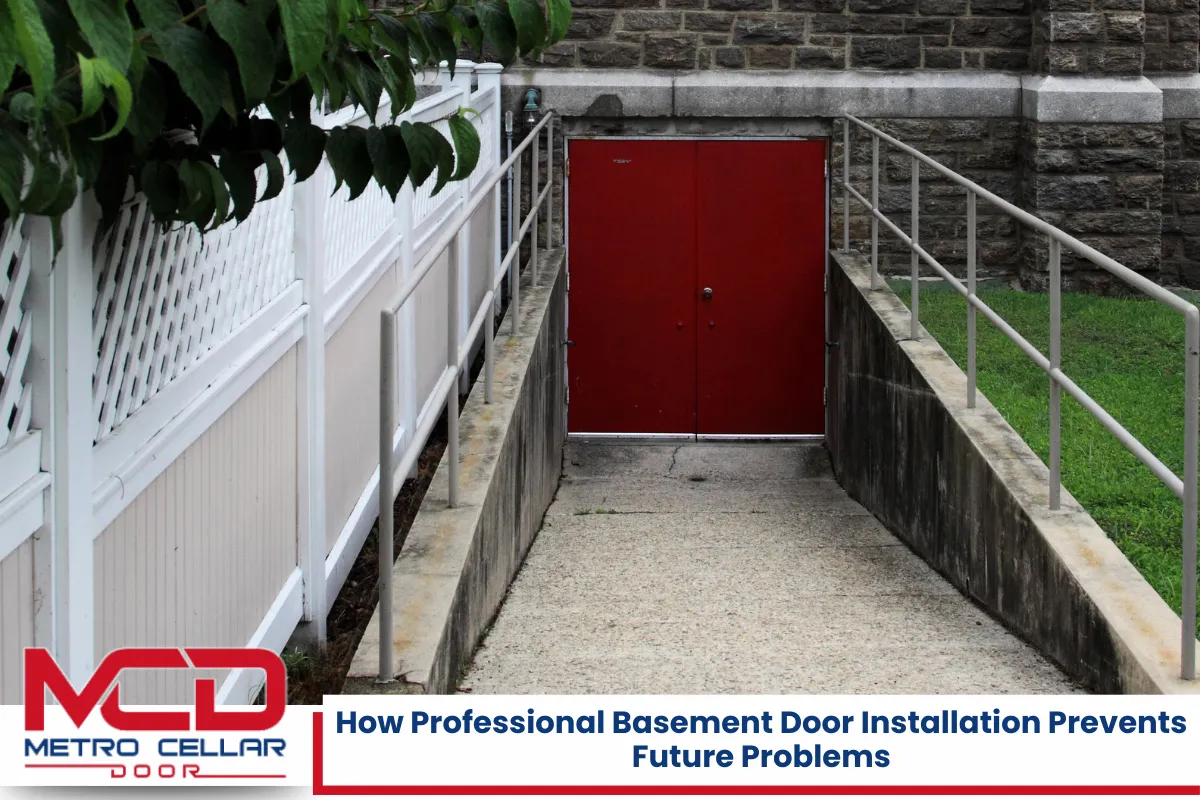
Working with a qualified basement door installer ensures:
- Accurate measurements
- Proper leveling and anchoring
- Flashing and waterproofing
- Secure locking mechanisms
- Code-compliant installation
Professionals also evaluate surrounding masonry and drainage conditions before installation. This reduces the risk of repeated failure.
Seasonal Challenges Unique to New York City
Winter Freeze-Thaw Cycles
Water enters tiny cracks, freezes, expands, and weakens surrounding concrete. Over time, this shifts the door frame.
Heavy Rainfall and Flash Flooding
Basement stairwells are vulnerable to flash flooding. Proper drainage and tightly sealed basement doors are essential.
Urban Debris Accumulation
City environments increase dirt buildup around thresholds, impacting closure.
Preventative Maintenance Tips
To extend the life of your basement doors:
- Inspect hinges twice yearly
- Clean debris from threshold areas
- Apply rust-resistant lubricant
- Check weather stripping annually
- Ensure drainage systems are clear
Preventative maintenance costs far less than emergency replacement.
Protect Your Home Before Small Problems Become Major Repairs
A basement door that won’t close is rarely just a minor inconvenience. It often signals underlying structural movement, corrosion, or drainage failure. Acting quickly can prevent costly foundation repairs and water damage.
Choosing a qualified basement door installer ensures the issue is corrected properly the first time. Whether the solution is hinge replacement, frame adjustment, or full basement door installation, addressing the root cause protects your home’s value and safety.
New York City properties demand durable materials and code-compliant workmanship. Investing in proper installation today prevents recurring headaches tomorrow.
NYC Basement Door Installer – Metro Cellar Door Bilco Pro
When your basement door won’t close, we know how stressful it can feel. At Metro Cellar Door Bilco Pro, we provide professional basement door installation and repair throughout New York City and the surrounding areas. As an experienced basement door installer, we understand local building codes, structural requirements, and weather challenges unique to NYC properties.
We evaluate alignment, framing, drainage, and structural integrity before recommending repair or replacement. Our team installs durable steel basement doors built to withstand heavy rain, snow, and daily wear. We focus on precision installation to prevent future issues.
If your cellar entry is sticking, sagging, or leaking, call us today at (929) 979-7313 or fill out our contact form. We’re ready to restore security and protection to your home.
Frequently Asked Questions
1. Does replacing a basement door require a permit in NYC?
Permit requirements depend on the scope of work. If the project involves structural changes to masonry, resizing the opening, or altering load-bearing components, a permit from the NYC Department of Buildings may be required. Simple door swaps within the same opening often do not require major permitting, but compliance with building code standards is still mandatory. It’s important to work with a professional who understands local regulations. Improper work can lead to violations during inspections or property sales. Always confirm whether your specific project triggers permit requirements before beginning work.
2. How long does professional basement door installation take?
Most standard basement door installation projects can be completed in one day. However, if the opening requires masonry repair, structural reinforcement, or drainage improvements, the timeline may extend. Weather conditions also affect scheduling, especially during winter. A professional installer will measure carefully, order the correct door system, and prepare the opening before installation day. Custom-fabricated doors may require additional lead time. Proper preparation ensures the door closes securely and performs well for years to come.
3. What materials last longest in NYC weather conditions?
Powder-coated steel is widely considered one of the most durable materials for basement doors in New York City. It resists corrosion from snow, salt, and heavy rain. Galvanized steel also performs well in urban environments. Wood doors tend to require more maintenance and may warp over time due to humidity. Fiberglass is less common for cellar entries but can offer moisture resistance. Choosing materials specifically designed for below-grade applications is essential for longevity.
4. Can poor drainage cause a basement door to stop closing?
Yes. Improper drainage can weaken the concrete or masonry around the door frame. Over time, soil erosion or water pooling may shift the surrounding structure, causing alignment problems. Water exposure can also accelerate hinge corrosion and metal expansion. Addressing drainage issues—such as clearing blocked drains or improving grading—is often part of a long-term solution. Simply replacing the door without correcting water flow may result in recurring issues.
5. How often should basement doors be inspected?
Basement doors should be inspected at least twice per year—ideally in spring and fall. Seasonal weather changes in NYC can affect alignment and hardware performance. Inspections should include checking hinges, seals, locks, frame condition, and surrounding masonry. Early detection of minor misalignment or corrosion prevents larger structural problems. Routine maintenance extends the life of the door and protects your home from water damage and security risks.
Disclaimer: This article is for general informational purposes only and does not constitute legal, engineering, or construction advice. Always consult a licensed professional and verify applicable New York City building codes and permit requirements before performing structural modifications.
Read New York City Cellar Door Installer: Do All Homes Need Cellar Doors?